
You are viewing your 1 free article this month.
Sign in to make the most of your access to expert book trade coverage.
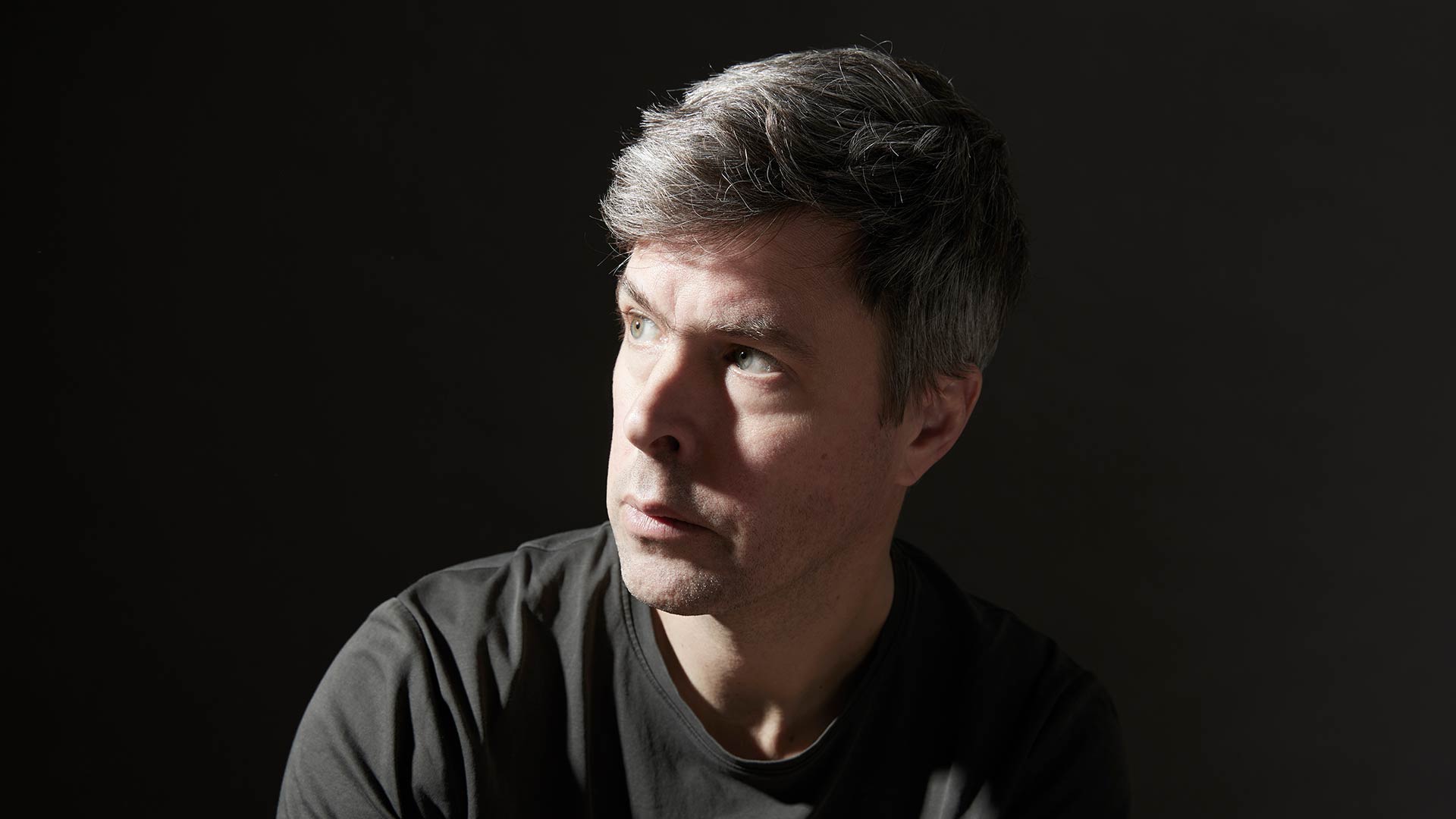
Days after winning the Booker Prize for 2025 with his novel Flesh (Jonathan Cape), David Szalay has shared his thoughts with The Bookseller on his next project, juggling parenting priorities and the extent to which artificial intelligence (AI) is a threat for writers.
The author is the midst of publicity duties after winning the £50,000 award on Monday (10th November) for his sixth novel, almost a decade after a previous shortlisting. Flesh follows the life of István, from when he is 15 and living with his mother in an apartment in 1980s Hungary, and was dubbed “an extraordinary, singular novel” by chair of the judges Roddy Doyle, with Jonathan Cape reprinting 150,000 copies in anticipation of surging sales.
Ten months after his last interview with The Bookseller, Szalay said of the Booker experience: “It’s been very intense. An overwhelming experience. Monday morning already seems like about a month ago.” The prize money will go on “general expenses... keeping the wolf a bit further from the door” rather than any blow-out holidays.
On his next project, the British-Hungarian author said: “It will certainly be called a novel... It will play with the form a little bit, but, yes, it will be a novel effectively. I’ve been working on it for, I guess, about a year because obviously Flesh was finished two years ago.
“It’s similar to most of the other things I’ve written recently in that it has several parts that are sort of somewhat independent of each other. It’s set between various European countries.” Szalay had hoped the next book could be published in 2027 but said it was more likely to be 2028 because of publicity commitments over the past few months.
The writer believes that his publicity engagements generally complement his writing life. He told The Bookseller, over Zoom, how he balances it all. “I mean, my life, I could say it sort of has two modes... The mode in which I’m living a fairly secluded life now in Vienna – and before that it was in Hungary for some years – where I write and get on with my life quietly and don’t travel much. And then the other mode, which I’m pretty much in now, which is to do with supporting a book that’s already been published and that involves a lot of travel, a lot of meeting people, talking to people about that book, audiences. So it’s very different. And there’s something very nice and complementary about those two ways of living, one quite solitary and one quite public. I spend more time in solitary mode, if you want to call it that, but every few years this quite intense burst of ‘public mode’ is great. I enjoy it.”
He feels that his writing life fits well with being a father-of-two. “Being a parent and a novelist, that’s in a way quite a good fit, because having a job where you don’t have fixed hours, where you’re mostly at home anyway, it’s quite good for the parenting.”
While he said he missed London, he added: “I suppose I’ve become used to living in smaller and quieter cities than London. And so when I come back now, I’m always sort of slightly overwhelmed by the size and energy of it. But I still love being in London and I visit several times a year.”
And he believes AI is not the most serious threat to writing just now. “I might be being very naive, but I don’t really regard it as the sort of imminent existential threat to the act of writing. I always see writing a book and reading a book as a communication between two human beings, ultimately.
“So the idea of an AI-written thing, in a way, I feel it’s just sort of meaningless. I mean, it would have to be an AI thing that was pretending to be written by a human and doing it so well that... I mean, of course, it’s possible to conceive of that, [but] I’m not sure what the point would be.”
In general, he is encouraged by the younger generation’s appetite for books. “There seem to be some grounds for optimism about that and it seems that younger people, by which I mean people under 30 or so, are reading. I did this event in New York a couple of months ago with [pop star and book podcaster] Dua Lipa, and she has a book club and she’s very passionate about reading and books, and obviously has a very large number of people in her book club and social media followers and so on. I mean, she’s 30 and probably most of the people who follow her are about the same age or younger.
“And so I think there is a sense that reading has become something which is recognised by younger people as beautiful and rewarding and fulfilling, and something which is just unique. And so, yeah, I’m not too pessimistic about that either.”