





You are viewing your 1 free article this month.
Sign in to make the most of your access to expert book trade coverage.
David Szalay wins 2025 Booker Prize marking second victory in a row for Jonathan Cape


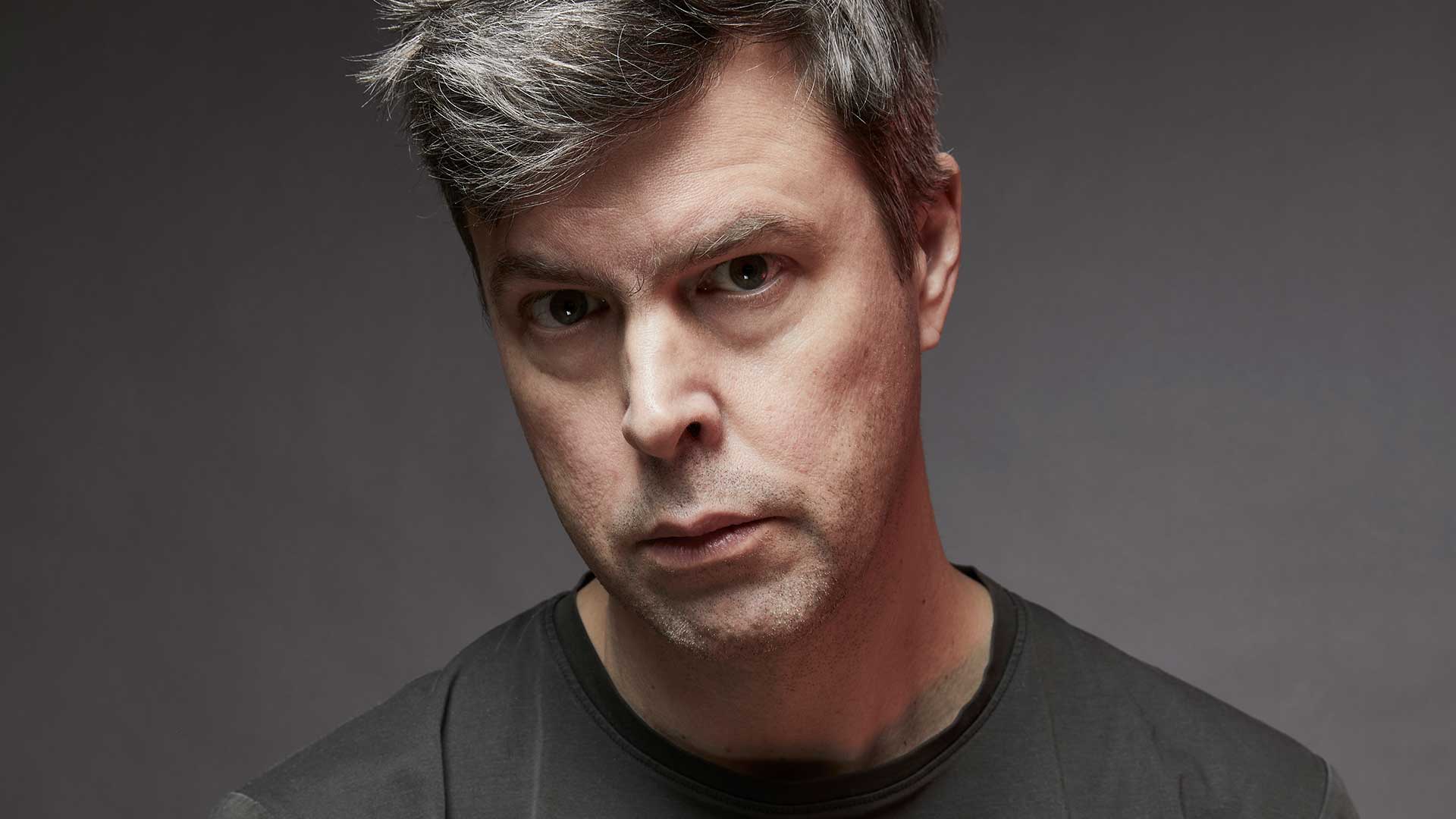
David Szalay’s Flesh has become the second Jonathan Cape title to win the Booker Prize in a row, and the first British-Hungarian author to win the award.
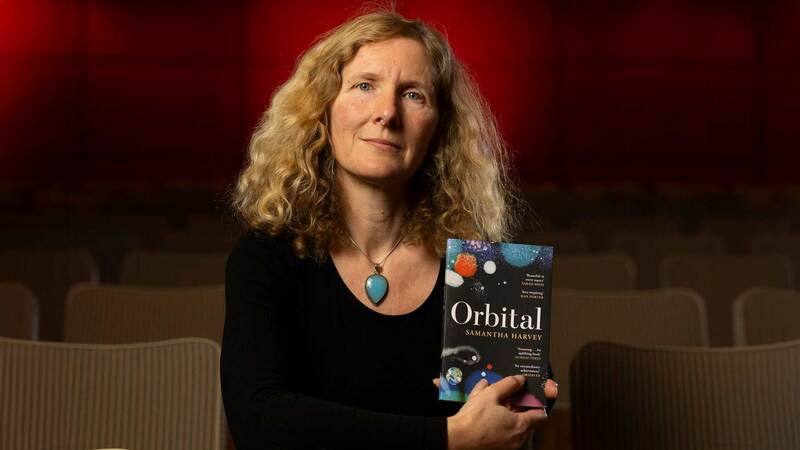
The author won £50,000 and a trophy, presented by last year’s winner Samantha Harvey, at a ceremony held at Old Billingsgate in London on Monday (10th November). The ceremony – dedicated to the world’s most significant award for a single work of fiction – was broadcast live as a special episode of BBC Radio 4’s Front Row, hosted by Samira Ahmed.
Flesh follows the life of a single protagonist, István, from the age of 15 when he is living with his mother in an apartment in 1980s Hungary. Prize organisers said: “Written in spare prose, Flesh – Szalay’s sixth work of fiction [and fourth novel] – is a propulsive novel about a man who is unravelled by a series of events beyond his grasp. Spanning decades, it charts István’s rise from a housing estate in Hungary to the mansions of London’s super-rich. A meditation on class, power, intimacy, migration and masculinity, Flesh is a compelling portrait of one man, and the formative experiences that can reverberate across a lifetime.”
Flesh was selected as the best work of long-form fiction by writers of any nationality – written in English and published in the UK and/or Ireland between 1st October 2024 and 30th September 2025 – by this year’s judging panel who all attended the ceremony on Monday evening. Overall, the judges considered 153 books.
The panel was chaired by 1993 Booker Prize winner Roddy Doyle – the first Booker Prize winner to chair the award’s judging panel. He was joined by Sarah Jessica Parker, the actor, producer and publisher, and several writers including the critic and author Chris Power and the Booker Prize-longlisted novelists Ayọ̀bámi Adébáyọ̀ and Kiley Reid.
Doyle revealed, during a press conference on Monday morning, that there had been “no formal vote” but that Flesh had gradually emerged as the judges’ favourite. “What became quite apparent was that we all really felt that one book in particular was the winner. And that book is Flesh. What we particularly liked about Flesh was its singularity. It’s just not like any other book. It stood out in that way.
“We didn’t need a formal vote. I didn’t ask for a show of hands. It was very clear that this was the book that all five of us liked more – it seems cruel even to say it like that, but it’s the one we liked most. When Flesh was mentioned, people kind of sat up and smiled… So it was an emotional response, as much as it was it an intellectual response.”
Doyle added: “It’s the spareness of the writing. It’s just extraordinary how he uses white space. Grief is depicted by blank pages, a few blank pages. And as I said, it’s a dark book, but we all found it quite a joy to read.”
When asked about the book’s themes of “society, class and masculinity”, Doyle told journalists: “I suppose, as a man of a certain vintage, I do think it presents us with a certain type of man that invites us to look behind the face. You know, without being aware of it, either myself or my parents or the school, without anybody being consciously aware of it, I was reared, for example, never to cry… But he [the protaganist] is that type of man. He lets the guard down and he cries.”
On the book’s use of language – and repeated use of the word "Ok", Doyle said: “If you were dealing with a real-life person trying to have a decent conversation with them, it would frustrate you somewhat. But when it’s presented on the page I found it riveting. I just loved it. I thought the dialogue was superb. And the absence of it was superb. And then the courage, the creative courage not to fill it with this facial expression, or to add an adverb to the verb, and sometimes even just to add a verb, to let it live by itself, I thought was brilliant.”
Szalay told The Bookseller back in January: “I was very drawn to the idea of having a character who wasn’t articulate, who wasn’t able to tell the reader what the significance of his own story was.” He described Flesh as a “a story collection hiding inside a novel”.
On the fact it was the second Jonathan Cape winner in a row with 10 wins for the imprint overall, Doyle said: “I didn’t pay too much attention to it. I deliberately, personally, have stayed away from knowing too much about the publishing industry. I don’t live in London, as you probably know. I live in Dublin, so there’s a distance there. I rarely get the gossip.”
Jonathan Cape has published the most Booker Prize winners in the history of the prize, with nine previous Booker winners including Harvey’s Orbital last year.
Continues…
Read More


In the press statement, Doyle added: “At the end of the novel, we don’t know what István looks like, but this never feels like a lack; quite the opposite. Somehow, it’s the absence of words – or the absence of István’s words – that allow us to know István. Early in the book, we know that he cries because the person he’s with tells him not to; later in life, we know he’s balding because he envies another man’s hair; we know he grieves because, for several pages, there are no words at all.
“I don’t think I’ve read a novel that uses the white space on the page so well. It’s as if the author, David Szalay, is inviting the reader to fill the space, to observe – almost to create – the character with him. The writing is spare and that is its great strength. Every word matters; the spaces between the words matter. The book is about living, and the strangeness of living and, as we read, as we turn the pages, we’re glad we’re alive and reading – experiencing – this extraordinary, singular novel."
Gaby Wood, CEO of the Booker Prize Foundation, said: “When the five judges took their places at the winner’s meeting, in the same room in Fortnum & Mason where they had first met in early February, they sat in the same seats. And they reflected, not only on the circularity of that moment after nine months of reading together, but on the curious fact that they had discussed half of the books that ended up on their shortlist that very first day. Those set a high standard, and by the end of the process the judges were so loath to part company with any of the six that they kept talking for five hours.”
She added: “Flesh was among the books they had discussed on day one. The judges returned to it, again and again, and felt more invested in it every time. After a third reading, they struggled to think of another writer whose work they could compare it to. They found it spare, disciplined, urgent, honest and heartbreaking. With Flesh, they all agreed, David Szalay breaks new ground. I share the judges’ excitement over the work of an author who has been writing with ferocious and stark commitment for many years.”
Bea Carvalho, head of books at Waterstones, said: “The Booker Prize creates bestsellers, and the phenomenal success of last year’s exquisite winner Orbital demonstrates that its influence is stronger than ever. Flesh is a poignant and visceral portrait of human life and a truly singular winner: like some of the best fiction, it is sure to spark debate amongst readers. Waterstones booksellers have long since admired the startlingly good fiction of David Szalay: we are thrilled that this very well-deserved win will bring his voice to such a wide audience.”
Szalay – the first Hungarian-British writer to win the Booker Prize – was born in Montreal to a Canadian mother and a Hungarian father, but grew up in London, where the family moved for his father’s job. After reading English at Oxford, he worked briefly in the City, which inspired his 2008 Betty Trask-winning debut novel, London and the South-East (Vintage). He moved to Hungary initially for one summer, to take advantage of an empty family flat in which to write, and ended up living there for 12 years with his wife and children.
He has also written BBC radio dramas and short stories and in 2019 he won the Edge Hill Prize for his short-story collection Turbulence (Vintage). He was first shortlisted for the Booker Prize 2016 for All That Man Is (Vintage), winning the Gordon Burn Prize and George Plimpton Prize for Fiction. He was named a Granta Best of Young British Novelists in 2013.
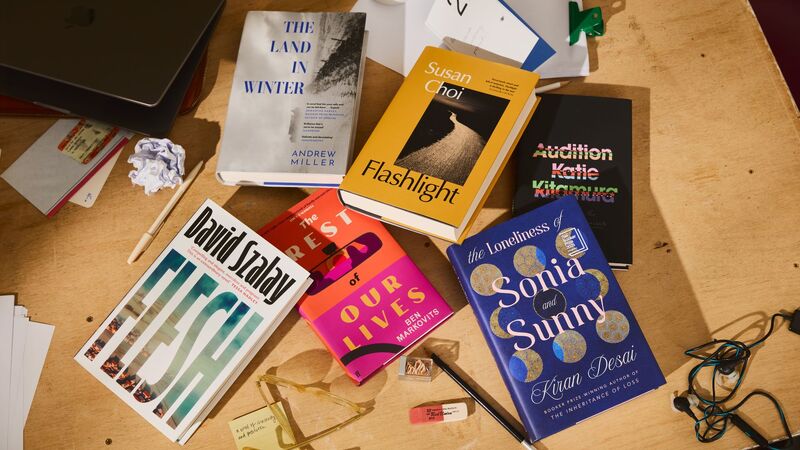
Flesh was the bookmaker William Hill’s third favourite to win at 4/1. Other shortlisted titles included Flashlight (Jonathan Cape) by Susan Choi, The Loneliness of Sonia and Sunny (Hamish Hamilton) by Kiran Desai, Audition (Fern Press) by Katie Kitamura, The Rest of Our Lives (Faber) by Ben Markovits, and The Land in Winter (Sceptre) by Andrew Miller.
In terms of sales, Szalay’s Flesh has gone from 163 copies every week pre-Booker nod to 653 units during shortlisting (+302%), according to Nielsen BookScan.
Monday’s ceremony was also livestreamed on the Booker Prize’s YouTube and Instagram channels, with additional red-carpet coverage – hosted by comedian, broadcaster and author Shabaz Ali – posted on the Booker Prize’s Instagram and TikTok accounts.
This year’s Booker Prize campaign, "Fiction worth talking about", celebrates the act of reading and discussing great books together, featuring videos with the judges and readers from around the world that can be viewed on the Booker Prize Instagram channel.