



Honouring the process
Our obsession with efficiency is diminishing children’s publishing – especially when it comes to art.



It is a twee cliché, but still a simple fact, that most children’s books are made with love. They are works of passion, normally created by people who want to do their best for their young audience. It might seem a strange contradiction then, that children’s book creators can be among the people who are most cynical about the publishing industry, perhaps because they need an extra-hard shell to protect that child-like imagination from what can be a capricious business.
Children’s book publishing has a rich culture of illustration that makes books for younger readers immediately identifiable and contributes to their innocent, playful image, but illustration is a trade first and an art second – we draw and paint for money. In fact, it’s often the case that an illustrator will be supplementing their publishing career with other commercial jobs, in order to keep making books. But even as the business demands of children’s publishing start battering the idealism out of you, the passion endures. This is where you want to be, which is why it can be bewildering to see a strange and growing trend...
Apparently, there are people who get into publishing with the ambition of getting out of it.
Illustration and print grew up together, so a certain degree of pragmatism has always come with the job. Unlike other artists, illustrators in the early days of publishing were restricted to using whatever medium was demanded by the printer and their means of reproducing that image. This meant it also dictated the tools they worked with, which in turn influenced their style. The stark, hard shapes of woodcut; the sharp, delicate lines of engraving and etching; the limited palette and bold hues of early colour separations for cartoons on coarse newsprint.
Offset lithography dominates the printing business today, with plates created from photographic film, and it has given a lot more freedom to illustrators. With full process colour, if you can make a mark, you can print it (with certain exceptions). For an illustrator, your finished art is not the final product – the printed book is.
All of that illustration history has influenced how we make art for print today, and it’s especially true in children’s books. Publishing has a powerful nostalgia for the books we once read as kids. It’s why we use styles of art borrowed from woodcuts and engravings, etching and sixties colour separations, among so many others.
We are at risk of that efficiency becoming the end rather than the means. AI text and imagery produced in seconds; ghostwritten celebrity children’s books; SEO content
Even as you work in the moment, you’re visualising that future printed image and it’s influencing what you do. However, you do this knowing that producing the final image is out of your hands; you have to surrender that part to someone else. And that’s always been a feature of the business; people are possessive about their roles, but feel relief when it’s time to hand the work on. This is my bit, that’s yours. For some, taking a favourite piece of work off them is like taking food off a dog. You’re not touching it until they’re done. These are my people.
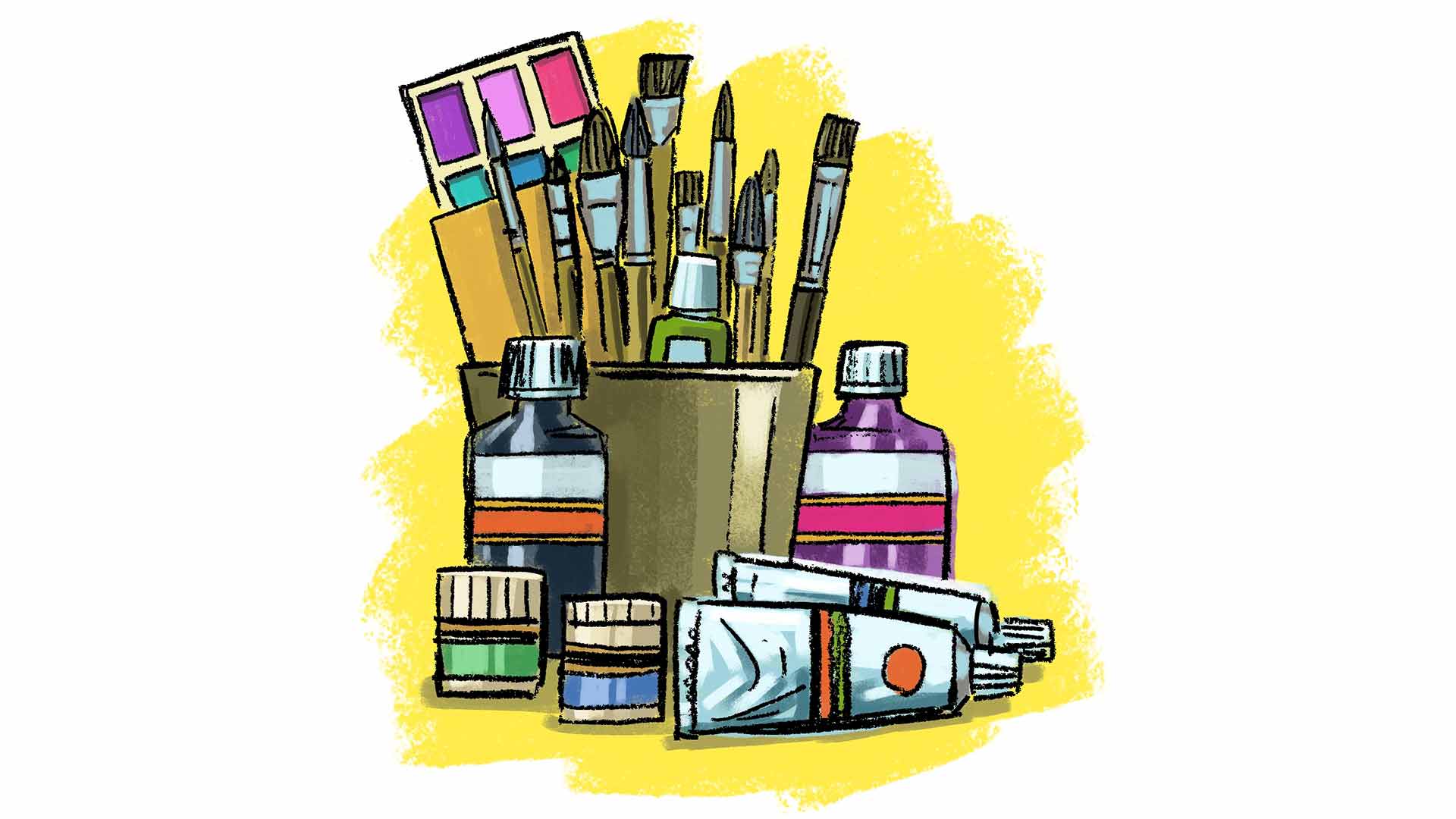
Others take a less precious view of the process. After all, convenience and speed are factors for all of us. For the illustrations: How much time is the job worth? Do you have the time and money to take photos for reference? A cartoony or expressionistic style often takes less time. Line and wash is faster than fully painted. Should you use dip pen or fountain pen or brush or technical pen? You might just prefer the feel of leaning on a nib rather then touching lightly with the tip of a brush. Light paint washes preserve your drawing better, but it takes time to build up strong colours and it’s harder to fix mistakes. Heavy paint can give you stronger colours, but they’ll cover up what might be a lively drawing.
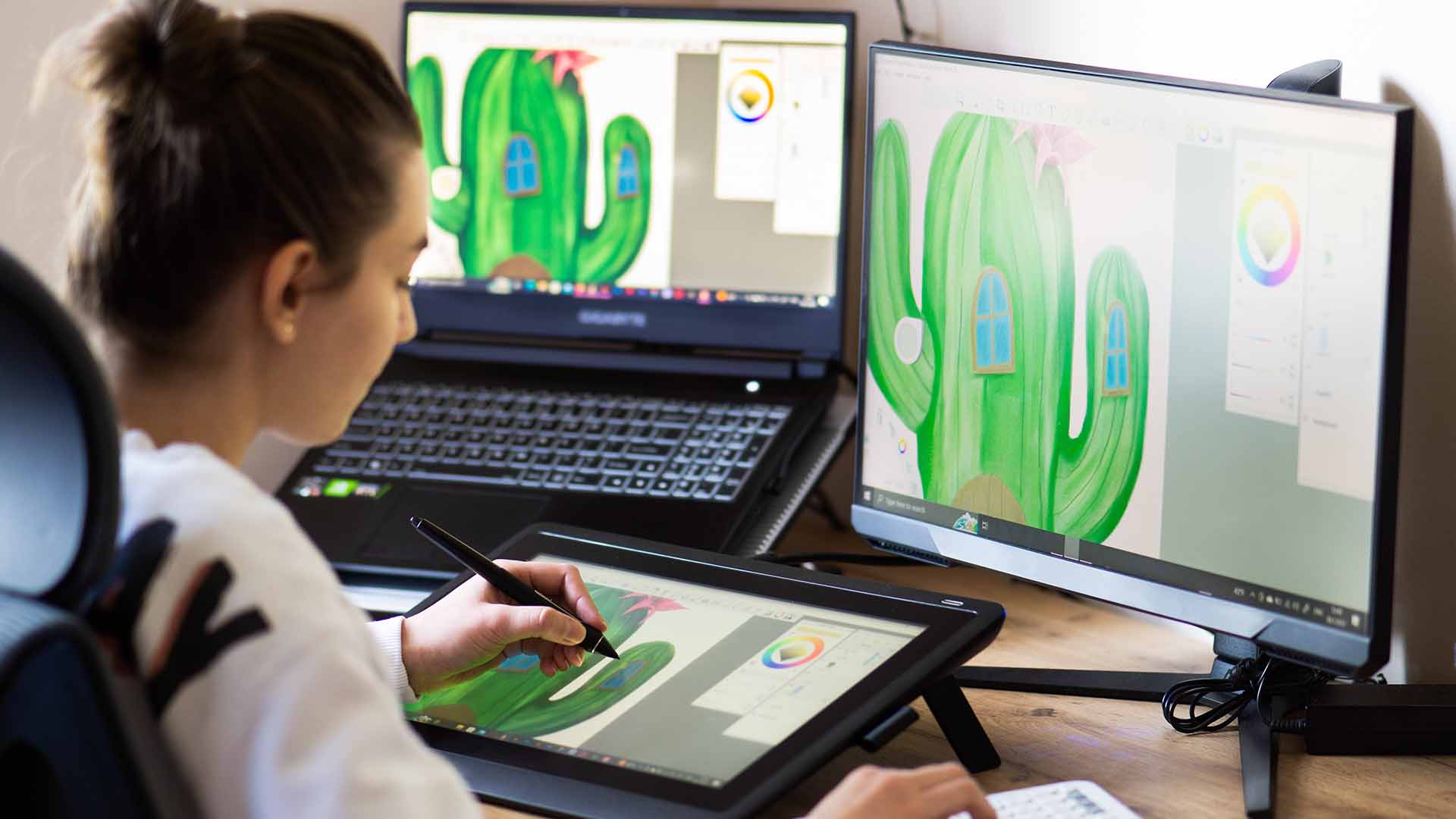
Nowadays, of course, art apps and graphic tablets can reproduce all these effects. They’re faster, more versatile and more efficient. There is the miracle of being able to hit "Undo" if you make a mistake, and if changes are requested, doing it digitally is a lot easier than trying to change ink or paint on paper, enabling you to streamline your process.
It feels like the deadlines get tighter however, even as your process gets faster. Maybe you have six months to do a 32-page picture book, or you could have just a couple of months to complete forty illustrations for a chapter book – including the waiting time for feedback. You’re one of the last stages of production, so this is where time gets pinched. You’re consulting with a designer and editor on the roughs before you do the finished art. Book covers are a committee job, everyone has a view. The opinion of the book buyer in Waterstones might matter more than yours. And always, always, there is the budget. All of these elements affect the look of a children’s book.
But it’s a chance to get paid for doing what you love. Even in the drive for efficiency, in the rush to meet deadlines, artists use these new tools and techniques to try and spend more time on the elements of the work we love most, to find the joy in the process. It’s why we’re here.
The means of making art and the means of reproducing it are getting closer and closer together, using the same technology, to the point where it can be hard to tell where one ends and the other one begins. Take a look at the bigger picture and you can see the same thing is happening in publishing as a whole. We are at risk of that efficiency becoming the end rather than the means. AI text and imagery produced in seconds; ghostwritten celebrity children’s books; AI editors and translators; SEO content; authors expected to sacrifice increasing amounts of writing time to build their social media presence.
It was recently announced that Jimmy Donaldson, YouTube’s Mr Beast, has signed an eight-figure deal to publish a book with James Patterson. We can assume the YouTuber needs an expert author because he doesn’t want to write the book on his own, but Patterson is also very open about the fact that he uses "co-authors" to write for him, so who’ll actually be writing the text? Doesn’t it matter any more?
Think about the writer who is considered to have "made it" when they get a film deal – they have successfully escaped the boundaries of their medium. And yet most authors of books are not yearning to get into the film industry. This is, instead, a little more security that allows them to keep writing. Even if you’re not a writer or illustrator, I think most people are in publishing because... they want to work in publishing.
But why? It certainly can’t just be the money – not for most of us, anyway. Publishing is about communication, connecting minds, and if we get so "efficient" that we can remove our minds from the process, isn’t that defeating the purpose of being involved? Perhaps soon, we can even save ourselves the hassle of having to read those books at all.
I draw and paint for money, but the money is the means to keep drawing and painting. People dream of working in this industry, and if you came to it because of a passion for books, then you have to be wondering about the direction it’s taking now. Does the process not matter as long as we’re turning out the product? Or do we crave success in order to stay in a career that we love?
The first option seems to be happening all by itself. The second one is going to take some work.
And I love my work.