



If AI imagines before we do, what is left for illustrators?



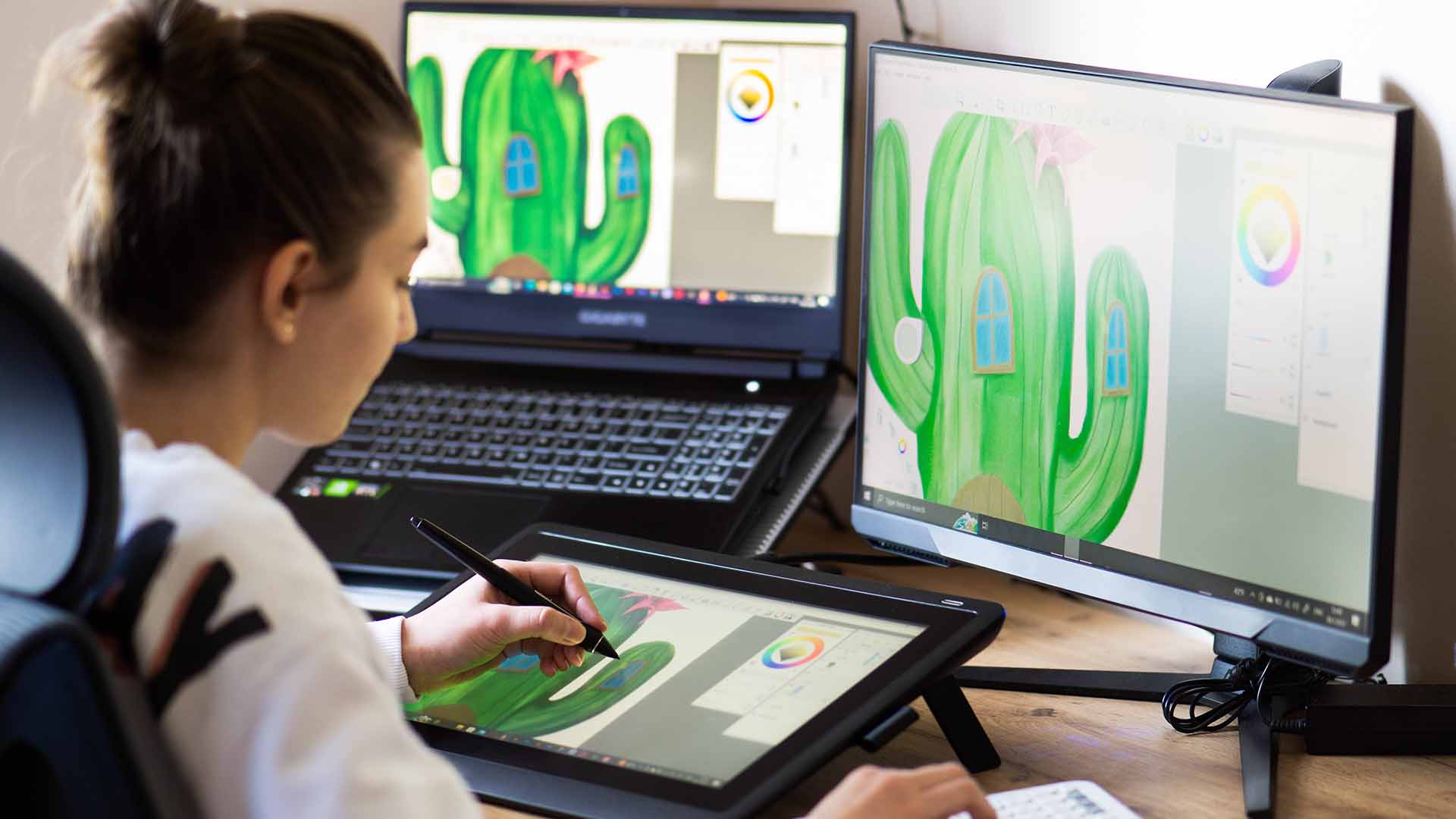
I remember when a major international illustration agency sent me the manuscript for an educational children’s book. The story was about a mother and her daughter taking produce from their garden to sell at the market.
I opened the materials and was puzzled. Every page was already illustrated. I thought they had mistakenly sent me a book that another illustrator had already completed. I asked for clarification. The images had been generated using artificial intelligence, and I was expected to create the final illustrations based on them.
But there was another detail: they wanted me to complete the entire book, around 20 full-colour pages, in one week.
I turned down the project.
That experience made me reflect on two problems: the expectation that artists should work at the speed of machines, and the risk that AI could take away the very moment when an idea is born.
Traditionally, I receive a manuscript, editorial guidance and photographic references. I develop my ideas, share them with the art director, receive feedback and then move on to sketches and colour. Some clients allow a great deal of creative freedom, while others describe every scene in minute detail. Both approaches can work.
But in recent years, I have received briefs in which the team had already used AI to generate characters and scenes. Even when those images are presented as simple references, the visual direction has already been partly decided before the illustrator has begun working. This is where we risk losing something precious.
When I read a manuscript, especially when it describes a character’s personality, passions and fears, that character begins to come to life in my mind. It is like watching an animated film that does not yet exist. I see the character move. I imagine their expressions, the way they walk and how they react to others. Then I begin to bring all of that on to the page. It is pure magic. And perhaps it is at that very moment that I feel most like an artist.
But when I receive a character that has already been generated by AI, that magic is interrupted. Even if the client tells me not to copy it, I have already seen it. That image has entered my mind, and it becomes difficult to free myself from it. The character I might have imagined has not even had the chance to be born.
That experience made me reflect on two problems: the expectation that artists should work at the speed of machines, and the risk that AI could take away the very moment when an idea is born
The same happens with scenes. When I read a story, everything moves in my mind. I can change the perspective, move closer to a character or pull back to show the entire setting. If a scene is frightening, I can use a dramatic angle to draw the reader in. If it is funny, I can exaggerate an expression or introduce small, unexpected details. I like to imagine a child looking at a page and thinking: “Wait a minute… what’s that over there?” A little animal hiding somewhere, a curious object, something that was not necessarily written in the manuscript but makes that world feel more alive.
An illustrator does not simply depict what happens – they enrich the storytelling through their own imagination.
Artificial intelligence has also introduced a new expectation: that everything should be available immediately. I do not believe art directors and publishers have forgotten how much time it takes to create a professional illustration. Rather, I think we are becoming so accustomed to the speed of AI-generated images that we are starting to expect the same pace from artists.
I have left agencies more than once because I refused to work like a machine. My work is creative, and creativity needs time. That does not mean I am against AI. I use it myself as a sounding board to discuss ideas and reflect on certain artistic choices. I love dramatic perspectives and exaggerated details. Sometimes, I discuss them with AI to consider whether an approach might work for a particular project and its intended readers.
But the final decision remains mine. I do not ask it to imagine the book for me.
I would like publishers and art directors to involve illustrators while a project’s visual direction is still open. Give us the manuscript. Tell us who the characters are, what they feel, what they love and what they fear. Share your ideas and any necessary references. Then, let us imagine.