





You are viewing your 1 free article this month.
Sign in to make the most of your access to expert book trade coverage.
Freedom of expression in publishing 'undermined by attitudes towards those with gender critical views', report claims


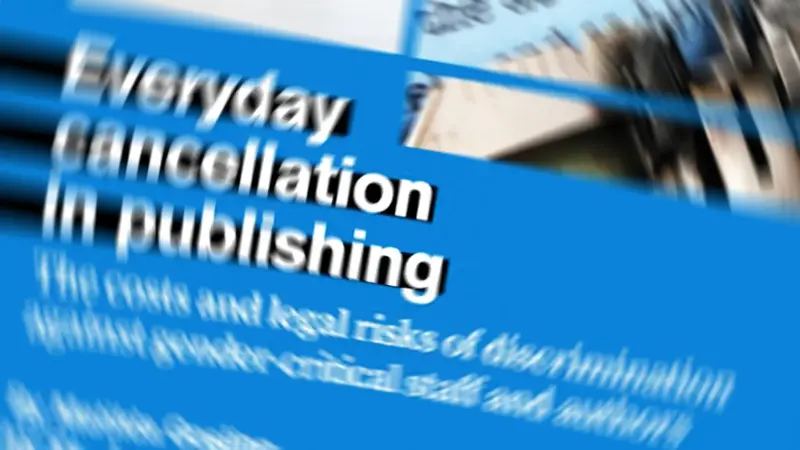
A report into cancellations in publishing, commissioned by charity Sex Matters and SEEN In Publishing, has claimed that freedom of expression within the sector has been undermined by attitudes towards those who have gender-critical views.
The report – Everyday Cancellation in Publishing: The Costs and Legal Risks of Discrimination Against Gender-Critical Staff and Authors – is based on interviews with 25 people working in publishing, including 10 authors, 10 publishers or former publishers, two agents, a funder, a festival director and a representative of SEEN in Publishing. It includes named interviews with authors Gillian Philip, Jenny Lindsay, Rachel Rooney, and Magi Gibson, as well as agent Matthew Hamilton, former editor Sibyl Ruth and Ursula Doyle, former publisher of Hachette’s imprint Fleet. Doyle recently took her former employer to an employment tribunal, but settled out of court with the terms not disclosed.
A number of publishing companies were approached by The Bookseller, but none commented on the report. A Publishers Association spokesperson said: “Books and journals have a huge role to play in building public understanding and facilitating healthy discussion on significant cultural issues, such as this one. As an industry, we are committed to a strong culture of inclusion for all, regardless of background, and are currently consulting on the next iteration of our sector-wide Inclusivity Action Plan.”
According to the Sex Matters/SiP report, the review also looked at statements and polices of The Society of Authors, Publishing Scotland, Arts Council England, as well as 21 publishers, and three agencies.
Continues…
Read More
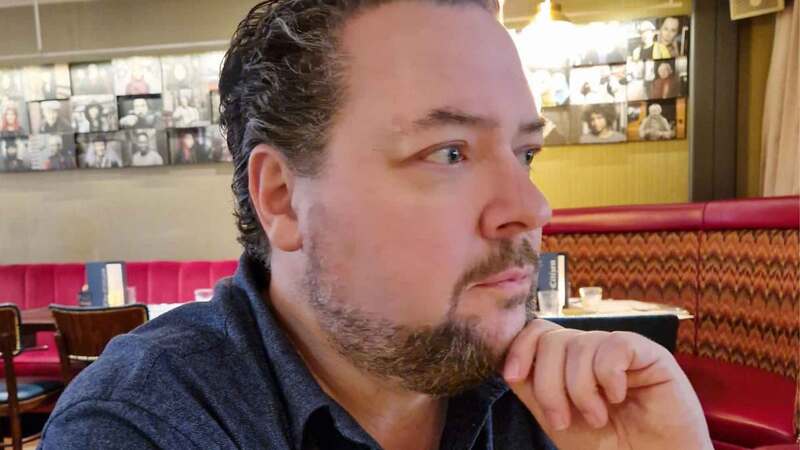


In the introduction to the report, children’s writer Onjali Q Raúf writes: “The publishing industry’s reputation as one of the last precious havens of thought, speech, debate and critique has been all but demolished this past decade, thanks to an ideological status quo which has thrived on a collective silencing of women’s legally protected sex-based rights and realities… It’s time for everyone to sit down now, and listen.”
However, the decision to send the report unasked for to a range of email addresses has been criticised, as have a number of social media posts that have tagged individuals and organisations.
The views of gender critical staff and authors are particularly contested within the book sector, which has largely taken an affirmative approach to trans rights. The recent Supreme Court ruling around biological sex and single sex spaces as regards the Equality Act, will oblige some companies to revisit their policies in these areas, and some are still waiting for guidance from the Equality and Human Rights Commission on the matter. One publisher, commenting on background, said that any changes would need to be handled sensitively, criticising the report for its inflammatory language and positioning.
The report calls for a “course-correction”, including making sure policies are updated to reflect the law, and publishing across a range of views.
A separate review into whether UK universities have protected gender-critical academics garnered 120 completed responses. That report was covered by the Guardian, the Times, the Telegraph, Times Higher Education, BBC Radio 4 Today and Times Radio, and both the government and Universities UK, representing vice-chancellors, commented on its findings.
SEEN in Publishing commented: "Nobody was tagged in any posts from SEEN; we did respond to a publishing communications director who posted on her public social media account that she hadn’t signed up to receive emails from SEEN and asked if receiving a copy of the report was a GDPR violation, which of course it is not. In any case, tagging is a perfectly quotidian practice, so it is unclear what the issue is here."
The organisation also argued that its decision to send the report to individuals within publishing organisations was not unusual: "This is a significant and timely report, written by a respected social researcher, on an issue which has deeply divided the industry. It was sent to key figures within publishing whose email addresses are publicly available, in many cases on their company’s websites. It is not clear how this could be considered a problem."
This report was updated on 9th July with additional comment from SEEN in Publishing.