

You are viewing your 1 free article this month.
Sign in to make the most of your access to expert book trade coverage.
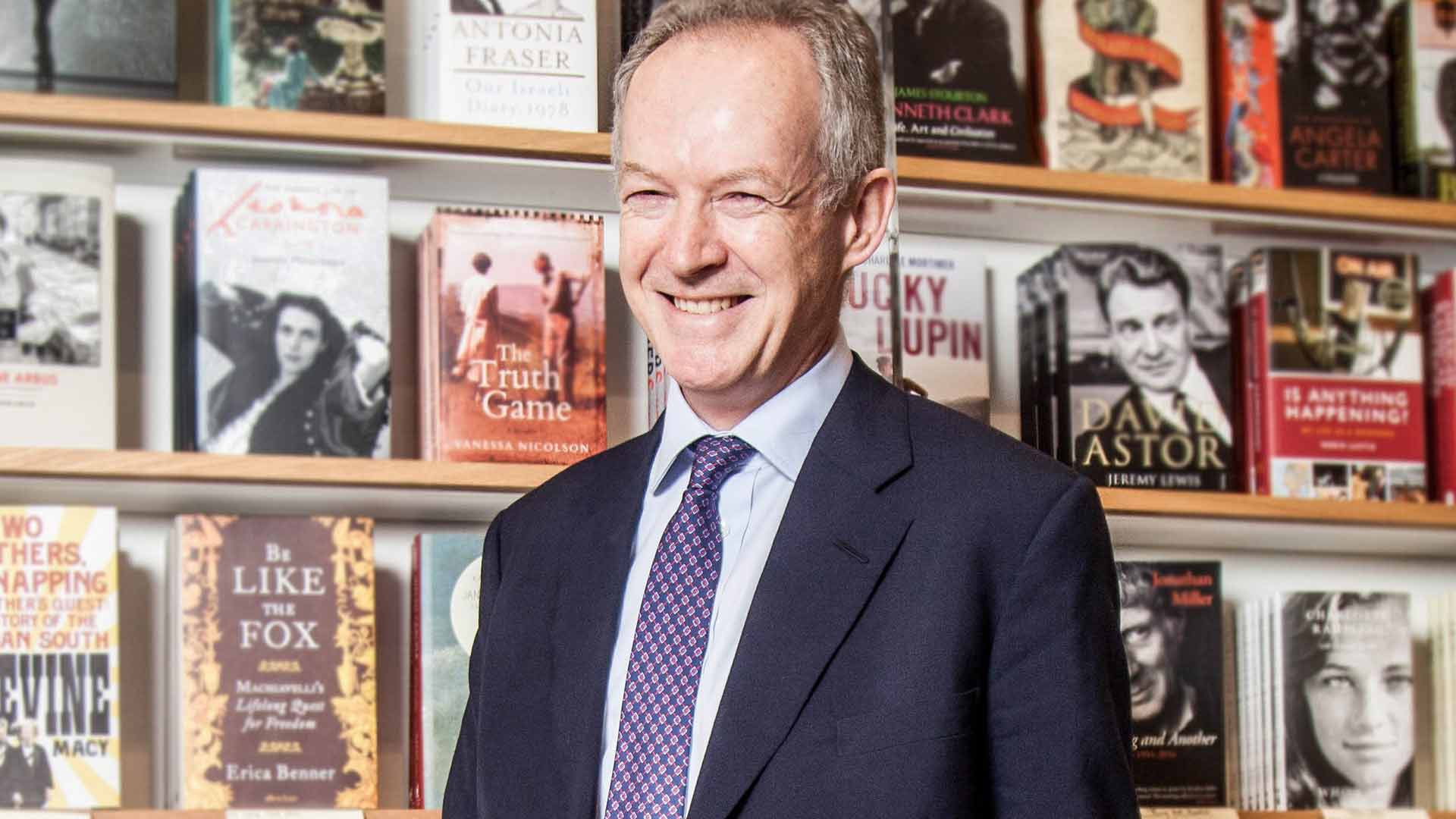
Waterstones would stock books created by AI if customers wanted them and they were clearly labelled, CEO James Daunt has said, but it is “something that we would recoil [from]”.
In an interview on the BBC’s Big Boss Interview podcast, Daunt said he did not expect the retailer to start stocking AI-generated books, however. “There’s a huge proliferation of AI-generated content and most of it are not books that we should be selling," he said, adding that it would ultimately be "up to the reader”.
While Waterstones uses AI for logistics, Daunt continued that the company is currently trying to keep AI-generated content out of stores. “We use it in a limited way. It helps our customer service operation become more efficient. It helps us in logistics and how you deploy your equipment,” he said.
“But we don’t use it in the shops at all. And we spend quite a lot of time trying to keep AI-generated content out of our shops, but also out of our online operation as well.”
When asked by interviewer Felicity Hannah whether this was hard to do, Daunt said: “You can use AI to identify AI, and that’s helpful. But yes, there is a huge proliferation of content, AI-generated content, and most of it is not books that we should be selling.”
A recent University of Cambridge study found that more than half (51%) of published novelists in the UK believe artificial intelligence (AI) is likely to end up entirely replacing their work.
On these findings, Daunt said: “I think it’s possible that the sort of more generic end of publishing and writing, that that’s possible. Hopefully publishers will avoid it. We as booksellers would certainly naturally and instinctively disdain it.
“But at the more literary end, which is predominantly what we sell, I don’t see that being the case. And there is a clear identification of readers with authors. And indeed booksellers play an important role in joining authors and readers, whether it’s through literary festivals, all the events that we have within our shops, the exclusive editions, the signed editions, all of these things which have a personal connection between the book, the author and the reader. That does require a real person.”
Continues...
He said that there are already “some really successful series of books, particularly children’s books” where “there’s a team of writers just kind of churning this stuff out”, “Some of those publishers might think, well, AI could be cheaper and churn that out even faster,” he said, but added: “I’m merely saying, as a bookseller, we sell what publishers publish, but I can say that instinctively that is something that we would recoil [from].”
Daunt said Waterstones would “never intentionally sell an AI-generated book that was disguising itself as being other than that”, but when asked whether he would consider selling it if it was clear what it was, he said: “Yes, if it was clear what it was. I think then it’s up to the reader to decide whether they want to buy it or not. Do I think that our booksellers are likely to put those front and centre? I would be surprised. But we don’t dictate, and we don’t dictate around politics or any other particular issues around books. We try and cover everything and leave it up to the reader to decide.”
Daunt added that “trillions and trillions” are being spent on AI, and if it produced the next War and Peace, and people wanted to read it, “we will be selling it, as long as it doesn’t pretend to be something that it isn’t”.
The place of AI in the book trade continues to be a heated topic of discussion, from the emergence of "AI slop" versions of books on Amazon to the debate around whether books written by humans should be labelled as such, and the emergence within the trade of AI companies such as fiction translation service Globescribe.AI.
Meanwhile, a number of legal cases have been brought against tech giants including Anthropic, OpenAI and Meta for copyright infringement of creators’ works.
Responding to Daunt’s comments, Society of Authors CEO Anna Ganley told The Bookseller: "There’s no doubt that works written by humans need to be distinguished from AI-generated content if these reach booksellers’ shelves, and we’re glad to hear that Waterstones would want them to be clearly labelled as such. Readers will want to know if what they start to read is AI-generated.”
She continued that “until consistent and clear AI labelling happens across all platforms, the Society of Authors will be taking a stand”, adding that that is why in 2026 the trade body is launching a "Human Authored" mark for the UK, which is part of an international collaboration with the US Authors Guild.
"It’s crucial that we distinguish human creativity from what is AI-generated and we’re delighted to hear that James Daunt would instinctively recoil from AI-generated content finding its way onto the shelves,” Ganley said.
As part of the interview, Daunt also discussed the difference between UK and US bookshops, the rise of romantasy, his response to the autumn budget and children’s reading for pleasure. The full episode can be found here.