

You are viewing your 1 free article this month.
Sign in to make the most of your access to expert book trade coverage.
The celebrated actor loves listening to audiobooks as much as narrating them, but she says her husband is her favourite storyteller.
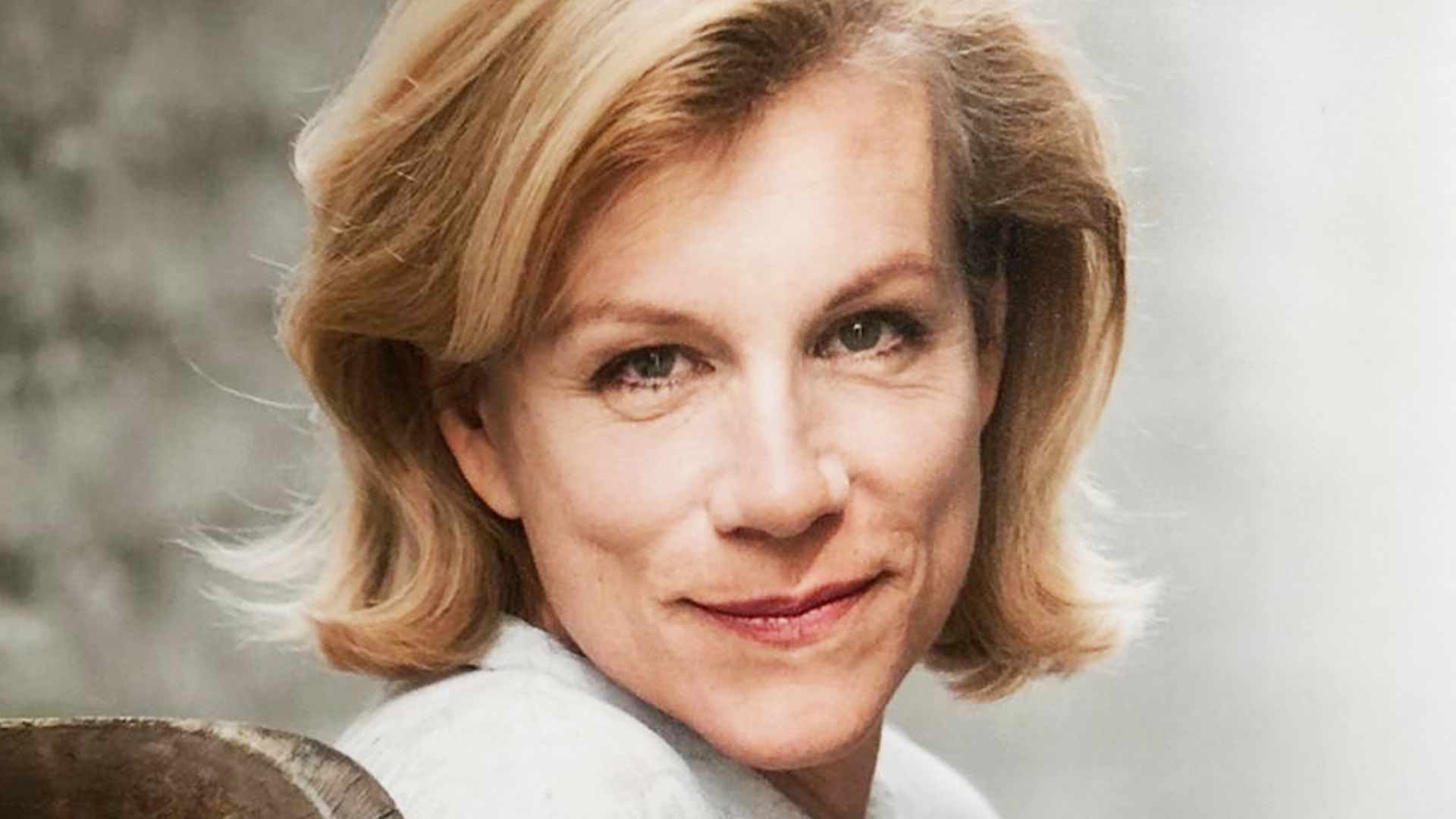
When it came to bedtime stories, Juliet Stevenson’s children did not realise quite how lucky they were. A renowned and award-winning star of stage and screen, Stevenson is also one of our most gifted audiobook narrators. So her daughter and son, who are now grown up, could enjoy her astonishing gift for storytelling every night at bedtime.
“The appeal of audiobooks is profound,” Stevenson says. “I think people’s need to be told stories orally is atavistic. You only have to have a child who you read to from the earliest age, as I read to my children, to know what a huge part of their evening routine it is to read to them. They appreciated that I read to them every night – but I was still just Mum to them.”
Stevenson is shortlisted for a Speakies Award for her compelling narration of Gertrude Bell’s Persian Pictures, an account of the author’s 1892 visit to Iran. “I love travel, I love history, so I thought it was fascinating. This is travel writing at its most interesting because this is an Iran, a Persia, that we will never have access to, written with all the entitlement of the Western traveller, going wherever they please with no political complications and riding over cultural differences with an amazing confidence and ease.
“It paints such vivid pictures that, when you’ve read the book, you feel you’ve watched a film. It’s beautifully told.”
And yet Stevenson, who starred in award-winning drama Truly Madly Deeply alongside Alan Rickman, feels the medium of the audiobook is much richer than film, where everything the audience sees is mediated through the prism of the director’s vision. “When you’re being read to, you can make those pictures in your head.”
Stevenson is an equally assured narrator of classic literature. Her personal favourites include George Eliot’s Middlemarch, “a dazzlingly, impossibly brilliant novel, perhaps the greatest novel in the English language”, though it also presented one of her greatest narratorial challenges to date. When a dozen middle-aged Midlands men congregate at a town council meeting, Stevenson had to make each one sound both authentic and distinct.
She also loves Virginia Woolf and Elizabeth Gaskell, in particular the latter’s “spectacular” North and South. Compared to these dense novels, “with this huge labyrinthine sentence structures… that can go on for an entire paragraph”, she did not find Persian Pictures unduly challenging to read.
So how does she choose which projects to take on? “I would say yes to any audiobook if it’s well written,” she says. But she relishes listening to audiobooks just as much as narrating them.
When I’m going to read an audiobook, I wake up in the morning thinking, ‘What a lovely way to spend the day’
“I’m a voracious listener to audiobooks. I listen to loads of them. I always try them out before I download them because the quality of the voice is hugely important to me. Writers who read their own books can be brilliant. [But] they can be really bad. I think, ‘No, I’ll have to read that one on paper’.”
She particularly admired Elena Ferrante’s Neapolitan Quartet quartet, read by Hillary Huber. “At the very first, I wasn’t sure. And then I got completely seduced by her and I think she does a brilliant job. I’m absolutely obsessed with those books. I was also listening to Dostoevsky recently and I probably would never have sat down and read Crime and Punishment.
“I love reading but I don’t get that much time and a lot of the reading I have to do is scripts or jobs. So at times when I wouldn’t be able to read a book – washing up, cleaning the house, travelling on the tube – I can be listening to an audiobook.”
However, her favourite narrator is her husband, anthropologist Hugh Brody. “I love being read to. My husband reads to me in the night when we can’t sleep. There’s nothing more soothing than for him to read to me in the middle of the night. It takes your mind into other worlds, which immediately enables you to have a perspective on your own.”
Stevenson, now 69, was in her 20s when she narrated her first audiobook – from Catherine Cookson’s The Mallens series – after playing the lead in the 1979 television show.
It was set in Northumberland, with “a really, really challenging accent… Sometimes, there would be seven or eight women standing on the street having a chat and I had to do perfect Geordie in seven or eight different voices. And I’m quite sure I did not achieve it.”
Still, if that sounds daunting, Stevenson says: “It’s not as challenging as being on a film set for 15 hours, or going out every night [onstage], playing a huge role for three hours; six hours on a matinee day.
“I adore it. When I’m going to read an audiobook, I wake up in the morning thinking, ‘What a lovely way to spend the day.’ And the greedy bit of me that wants to play all the parts is deeply satisfied by playing old men, young men, babies, children, dogs, varieties of acts of every possible age, every possible nationality. You can explore your range, whereas you almost never, ever get a chance to do that in any of the other media.”
But she is, she jokes, “furious” that she was not asked to narrate the Harry Potter audiobooks, which she had read aloud to her daughter. “I had all the voices for all those characters, I would have loved to have read it professionally.”
As well as being “really, really thrilled and honoured” by her Speakies nomination, Stevenson is delighted that the awards have been launched. “It is a real art form. It’s really important that these awards are acknowledging that. And the rise of the audiobook in contemporary culture indicates that people do desperately want, and love to be read to. The oral culture is still alive and well.”