





Publishing Scotland’s new CEO Sheila Pinder on navigating an ‘era of challenge’


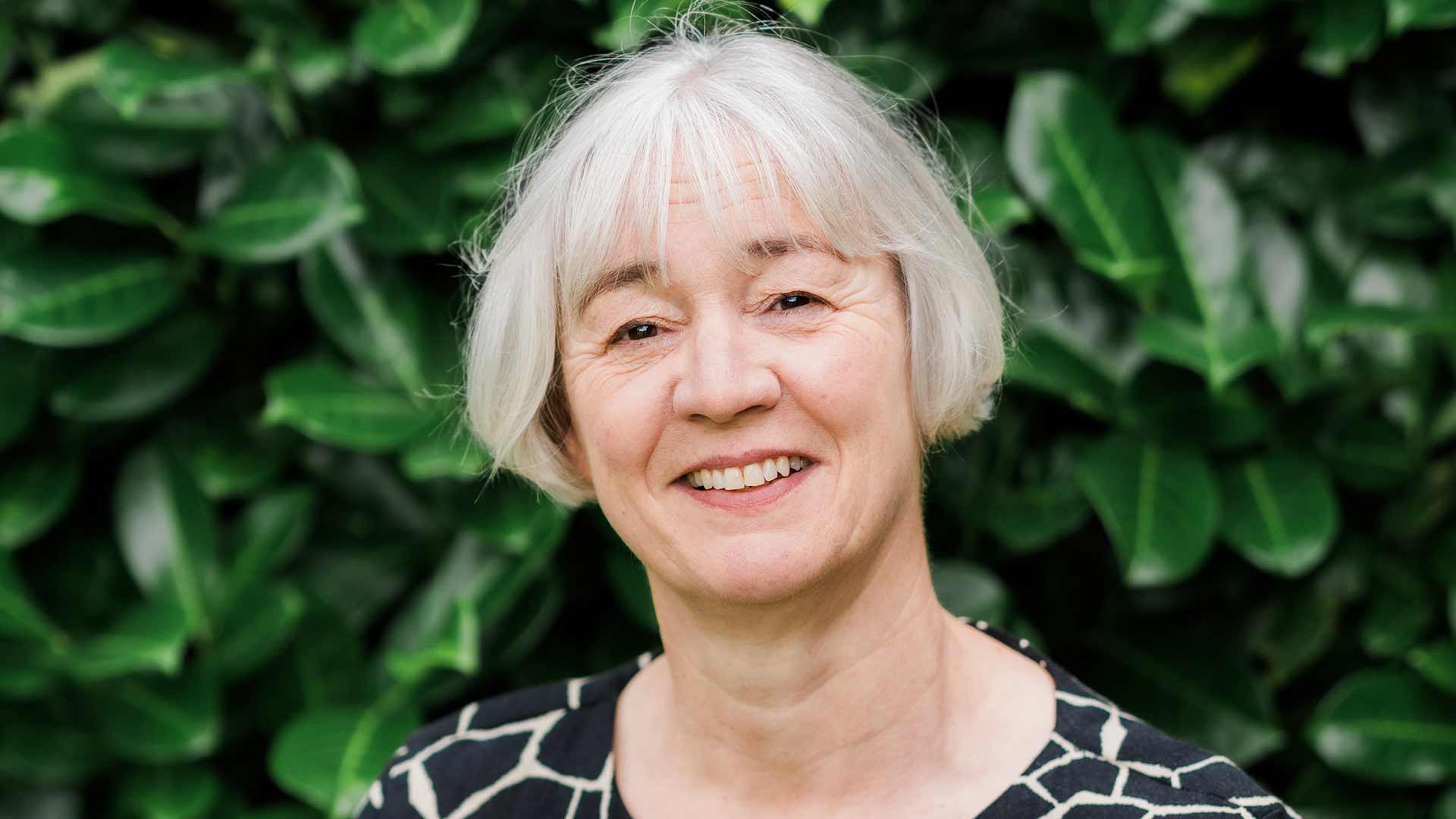
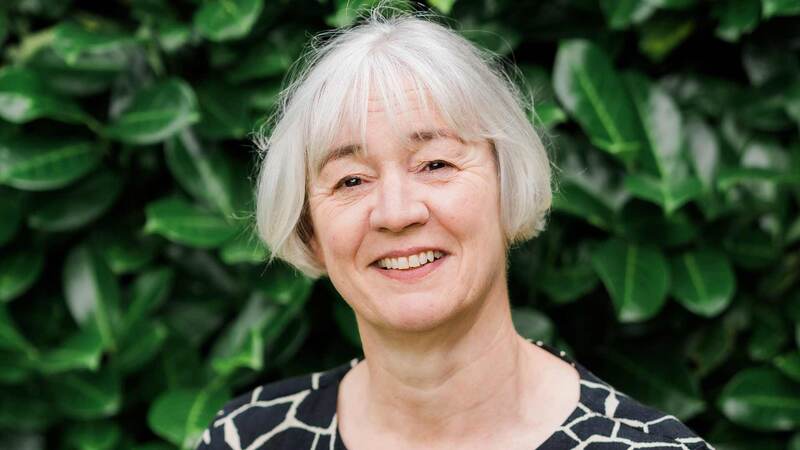
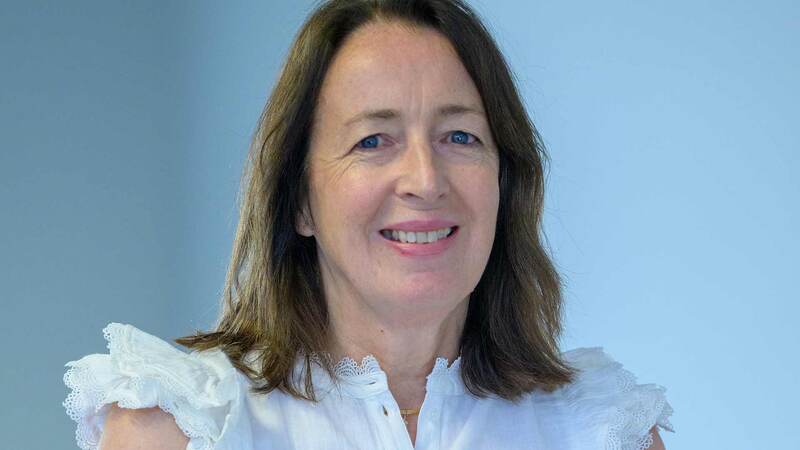
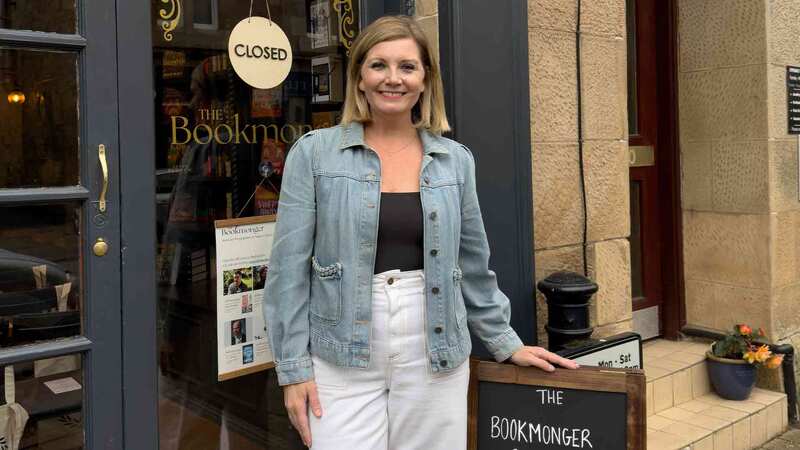
“It almost felt like somebody had written this role for me,” says Sheila Pinder when describing her job as CEO of Publishing Scotland. Following the departure of long-term former CEO Marion Sinclair, Pinder took over the reins of the network, trade and development body for Scotland’s publishing sector last August. When announcing the appointment, Publishing Scotland’s board chair Kate Gibb noted the “deep expertise in publishing, distribution and business delivery” that Pinder would bring to the role from a varied career history.
After starting out at BT Batsford, Pinder set up editorial design and production business Chapman Bounford & Associates with her first husband, working with a range of publishers as well as the United Nations. A decade later, she became executive director of the Independent Publishers Guild, where she stayed for five years. “That was a period of huge change,” she says. “It was a really good, solid little organisation with some amazing publishers, but it just had this slightly dusty, small-scale reputation. By the time I left in 2004, our conference had come to be recognised as an industry-leading conference, and our stands at book fairs had dramatically increased in size and uptake from members… I was there at the right moment and able to make the right internal changes that gave us the capacity to support that growth.”
I have to ask myself: ‘How do we contribute to creating conditions where a 404 Ink can be founded, grow, be sustainable, thrive and continue to exist?’ What needs to change?
From there, she moved to NBN International, helping the company to reposition under its new US-based owner Rowman & Littlefield Publishing Group. Next came a few years “doing various bits of consultancy” for independent publishers, followed by a short period as interim MD at Inpress. Then she made a complete career pivot to teach English, which was cut short by a move back to north England to be closer to her elderly mother. “Publishing sucked me back in, and I’m very happy that it did,” she jokes. She worked with system provider Stison and academic publisher Agenda, before coming across the advert for her current position.
Though she still lives in north-east Cumbria, Pinder has a strong connection to Scotland. Growing up in Northumberland, she spent her “whole life backwards and forwards over the border” and says that she can see “more square miles of Scotland than you do of England” from her current home. Her brother has also lived in Edinburgh for 30 years and she stays with him at least once a week on her regular visits to the Publishing Scotland office.
Pinder calls her new workplace a “brilliant organisation with a very nice and capable team” and credits Sinclair for leaving things in a good place after securing three years of funding. She admits: “I still feel like I’m working my way around… I didn’t come in with a vision of ‘this is where we want to go’. It would have been an incredibly arrogant thing to do because I’m not from within the Scottish sector… My first stage has been very much about getting to know what we do and how we do it.” She has found it a “very pleasant surprise” to realise “the extent to which we are actually a cultural organisation as well as a business-of-publishing organisation”.
Continues…
Read More
Reflecting on her impression of the wider Scottish book industry so far, Pinder shares: “The independent sector has always had a reputation for being very collegiate. I feel like in Scotland it’s collegiate on steroids! It is an incredibly supportive and helpful environment.” She continues: “The thing that’s not a surprise is the sense in which publishing in Scotland has suffered. Globalisation and the way in which the bigger publishers grow by acquisition means that some of the really significant Scottish names over the years have been incorporated into London or even overseas-based companies.”
Though she acknowledges that this is “just part of the cycle”, she warns: “You need the constant flow of smaller, independent publishers being started up and coming in to keep the healthy ecosystem, and that’s a challenge in Scotland.” She references award-winning indie 404 Ink choosing to close this year. “All credit to them for assessing the situation and reaching a mature decision and managing it in an exemplary fashion. But for me, as CEO of Publishing Scotland, the question I have to ask myself is: ‘How do we contribute to creating conditions where a 404 Ink can be founded, grow, be sustainable, thrive and continue to exist?’ What needs to change?”
When Pinder took on her new role, she described the current climate as “an era of challenge” for Scottish publishers. During our conversation, she expands: “It feels like it’s been several years of constant headwinds.” She mentions last year’s EU Deforestation Regulation headache and the ethical questions raised by AI. “It’s very challenging when you work in a membership organisation where there is a complete spectrum of attitudes and deeply held beliefs and points of view. It is not for us to tell publishers what they should or should not be doing. It is for us to make sure they have the best available information to make their own informed choices.”
Coming from a systems background, Pinder is “very interested in supporting publishers in Scotland to make better use of the available systems in the industry”. To achieve this, she is investing in developing Publishing Scotland’s internal systems, which she hopes will enable the team to work “more efficiently”. More broadly, her overall aim is for the organisation to “support the sector to thrive and be sustainable”. She explains: “By sustainable, I mean environmentally sustainable, but also commercially sustainable for the long term.” She feels that, while “literature and writers are much more present in the public consciousness in Scotland”, currently the country’s publishing sector is “stronger on the culture than we are on the business” and she wants to help “the two move in tandem together”.
That said, Pinder notes there has been “a lot of good news” recently, which “speaks to the really high quality of the work being done here in Scotland”. Highlights include: Edinburgh University Press reporting record growth in late 2025; an International Booker Prize shortlisting for Charco Press; Canongate being nominated in both the Publisher of the Year and Independent Publisher of the Year categories at The British Book Awards, as well as having shortlistings for the Women’s Prizes for Fiction and Non-Fiction; Luna Press Publishing having two shortlistings at the British Science Fiction Awards; and Birlinn having titles up for the Walter Scott Prize and the Sherborne Prize for Travel Writing. Meanwhile, Birlinn, Floris Books and Canongate all have books nominated for the Jhalak Prize.
Given the closure of 404 Ink and Haunt Publishing this year, Pinder feels it is “really encouraging to see new Scottish publishers coming into being”. She also believes it is “an exciting time” for Publishing Scotland. “Whenever there’s change within an organisation, it presents problems and it presents opportunities… One of the things that involves is being brave enough to look at your programme and say: ‘Actually, maybe we don’t need to keep doing this in this way’,” she says. “It doesn’t feel exciting when you’re up to your elbows in the review process, but at the same time, it is exciting because you’re unlocking possibility.”
Spotlight on new Publishing Scotland members
Batis Books in Edinburgh
This independent firm founded by Nick Mulgrew launched its South African-focused list early this year.
Bold Wren in Edinburgh
An indie publisher of quality fiction and non-fiction founded by Catie Gladstone in 2024.
MuseumsEtc in Edinburgh
A publisher of powerful books for the museum, gallery and photography sectors since 2008.
North House Press in Sutherland
Founded by David Graham and Kirsty Gunn, its first titles are publishing this month.
Porto Press in St Albans
The press recently acquired the long-established Caithness publisher Whittles Publishing.
Rayany in Aberdeen
An independent digital publisher with a focus on bringing new authors with bold, globally resonating stories to readers.
Wind&Bones Books in Dundee
Run by a social enterprise with the aim to explore “the intersection between writing, creativity and social change”.