


The former educator’s sub-box for teachers has kicked up a gear, just in time for the National Year of Reading.
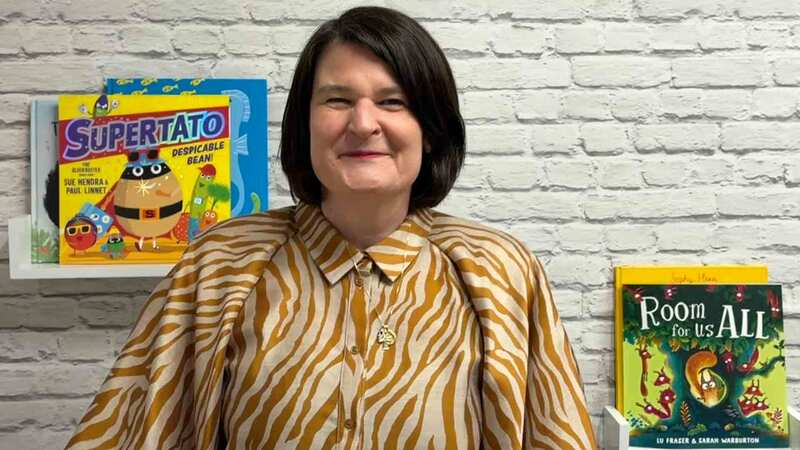
A lot of businesses’ origin stories are about how they developed organically, but that is often retconned guff designed to suit corporate lore. Heather Wright’s Reading Rocks, however, is the real deal, certified Grade A organically grown.
The germ of Reading Rocks – which was shortlisted for Children’s Bookseller of the Year at the 2026 Nibbies – began when Wright was a primary teacher and English lead in St Helens and she spearheaded her school’s Year of Reading in 2014/15. She says: “It was incredible and we just aimed to drench the pupils and families in all things books. It was very successful in improving the school and it won us a local education award and got us shortlisted for a Times Educational Supplement award, too. In all of this, I was sharing reading for pleasure ideas on Twitter and grew quite a following.”
That Twitter following – already under the Reading Rocks branding – grew into a bigger online presence and then a real-life Saturday conference. Wright says: “I thought the conference would be a one off, but the appetite for it was high so it just evolved. I did events across the country with a mix of education professionals speaking – such as Professor Teresa Cremin – and authors, including Maz Evans, Matt Goodfellow and Joshua Seigal, to name just a few. A real community of educators grew from this, supporting each other and shouting out about great books.”
The conference became so successful that in 2019 Wright left full-time education to devote all her time to Reading Rocks, building up the conference side along with selling books into schools and writing resources for children’s publishers. Then Covid-19 hit, which was more than a bit challenging for a newly-fledged company hinged on real-life events (to complicate matters, Wright and her family had also decided to move from the Northwest to Cornwall).
Lemons, lemonade: Wright pivoted Reading Rocks into a subscription-box service. “It seemed a gap in the market,” she says. “I know how time-tight teachers are but also knew there was a huge number of them wanting to keep up to date with amazing children’s books. So in the middle of packing up our house to leave, I was packing the first round of subscription boxes.”
Reading Rocks sold 150 boxes in that initial run, and over the years sales have grown and grown. The model is similar to the sub-boxes that have particularly underpinned the romantasy market of late and part of the idea is to recreate that unboxing experiential joy in the classroom. Each of the basic shipments contains two just-published titles – in some cases they might be even pre-publication or signed copies – along with goodies, treats, merch and point-of-sale material;
subscriptions also come with digital resources for educators. Since launch, the boxes covered Early Years Foundation Stage to Key Stage 2, with Wright adding Key Stage 3 to the mix last year to meet demand from secondary teachers.
I know how time-tight teachers are but also knew there was a huge number of them wanting to keep up to date with amazing children’s books
Wright says the curation of the boxes is one of the best parts of the job: “I’m really trying to give the teachers and schools a diverse collection across the year, so I’m looking for a real range. There are no hard and fast rules: sometimes a book is chosen because it will make a good link to the curriculum, other times I just know it will make a really great read-aloud book for a whole class…and I love when publishers come up with some different POS like Simon & Schuster with underpants bunting for [Claire Freedman and Ben Cort’s] Dragons Love Underpants. I mean, who couldn’t love that?”
Initially, the core customers were individual teachers but now about half of orders come from subject leads and department heads ordering for an entire school. Wright is, of course, sensitive to the funding climate: “School budgets are so tricky and teachers’ own pockets are not much better off. I’m constantly aware of this, so we try our best to make our pricing as best-value as we can.” Reaching out to teachers and schools for new business is a “constant task”, with social media marketing and boots on the ground at education conferences. But, she adds: “Our loyal customers do the best marketing of all: word of mouth. So focusing on doing a great job in what we do is important all the time.”
Along with the sub-boxes, Reading Rocks runs between 20 and 25 virtual authors events annually; in 2025 Wright reckons 20,000 students were able to take part. This style of events stream was launched with an eye to school budgets, too: “The virtual visit can be a value-for-money alternative to an in-person one. And there are added benefits of less time used out of the timetable as we just stream into the classroom and pupils being in their own seat in their own classroom can really make a visit inclusive.” For 2026’s National Year of Reading, Reading Rocks has made virtual visits free to all schools.
Continues…
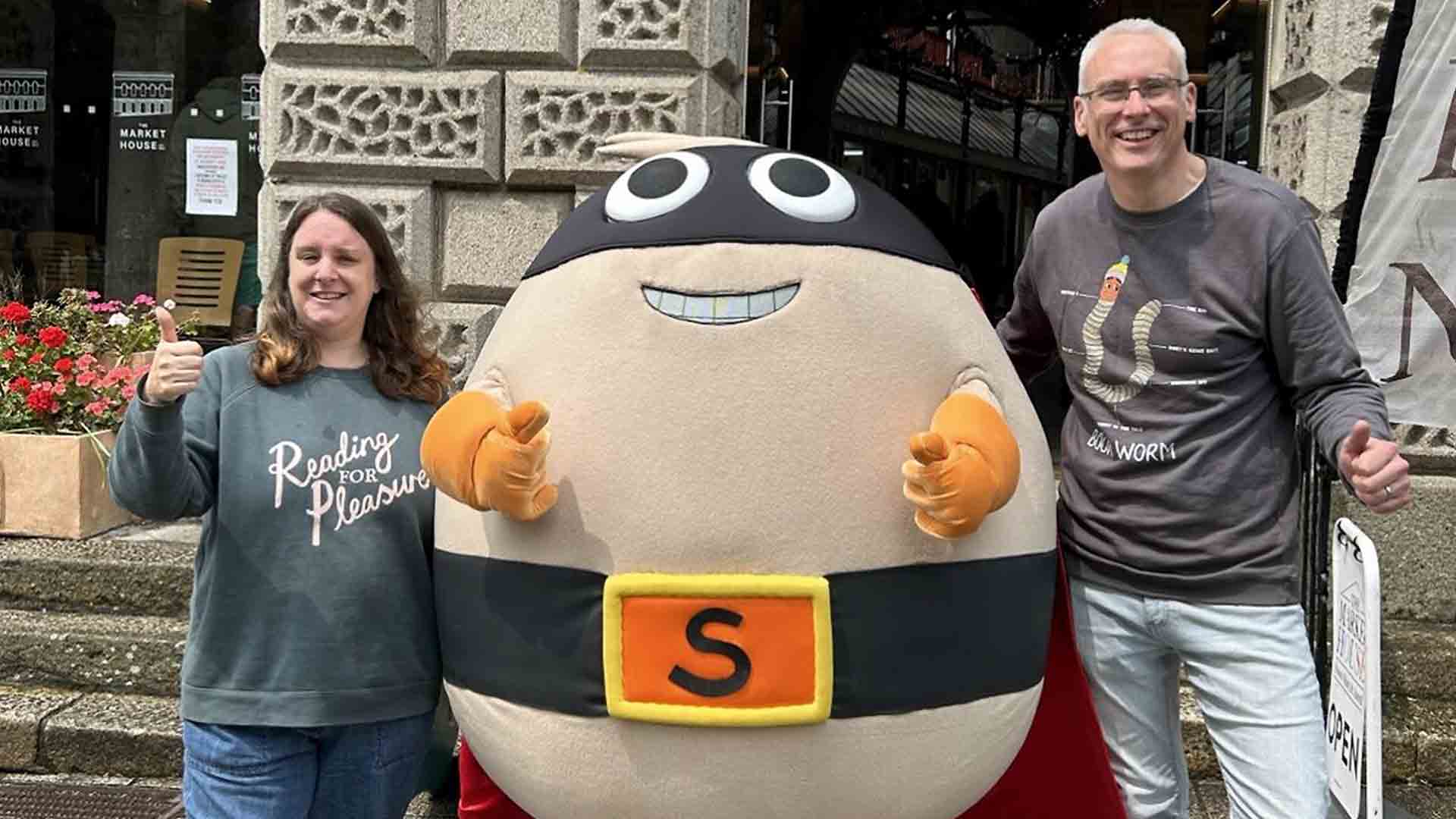
Another digital wrinkle is the Author Advent Calendar, first launched in 2024. Subscribing classrooms get a virtual window to open each school day in school in December within which an author or illustrator appears for a talk or to lead an activity, such as AF Steadman revealing all things Skandar, Daishu Ma conducting draw-alongs, or Sue Hendra crafting superheroes out of potatoes.
One of Wright’s IRL activities has been co-founding St Austell Festival of Children’s Literature in 2023 with Simon Pollard, who at the time was a local headteacher; festival director Amy Enever and author Julie Sykes have since joined as the core team. The idea was “to bring a buzz about books to Cornwall, for all families” and to make it as accessible as possible – all tickets are still just £1. The festival combines a number of in-school events across Cornwall along with a Family Day in St Austell – the 2026 edition of the latter launches on 13th June – with Yuval Zommer, Nazima Pathan and Ravena Guron among the creators scheduled to appear this year.
All of Reading Rocks’ activities, of course, dovetail with the current reading for pleasure crisis and the National Year of Reading. Wright insists we should be optimistic that the problem can be addressed but suggests some bigger swings need to be taken. If she had a magic wand, “with my educator hat on, I’d like to see ring-fenced funding for schools to use on books and author/illustrator visits. Schools need to be able to offer a range of books that are up to date to ensure they can offer all pupils something that suits their preferences”.
She notes a challenge that was highlighted in HarperCollins Children’s division Farshore’s recent research paper, The Reading Paradox, that the messaging around reading being a chore and centred around achievement is so much stronger than reading as being joyful and fun, partially due to an education system built around test data.
She says: “A resolution to this is tricky without curriculum and assessment changes but, as educators and booksellers, we have to try our best to get children and families to make as many positive connections with reading experiences as possible, so that at some point, as a result, reading becomes volitional.”
“It’s been great to see so many schools get on board with The Year of Reading already. I know the first quarter of the year has been about building foundations, so I’m really excited to see what comes next. The Go All In adverts have been great to see, encouraging reading of all themes, genres and formats.
“I’d love to see the messaging really filtering into the mainstream media – characters in favourite soaps dropping in what books they are reading, for example, which could be a bit of modelling of family shared reading and a subtle nod to the benefits. I think more features on programmes like This Morning, The One Show and Sunday Brunch, shouting out about books, audiobooks, e-readers, magazines and comics for families could be really impactful.”