

ao link
Subscribe Today
17th July 202617th July 2026

March 2026: Non-fiction Previews
In early spring, expect a myriad of feminist titles, while the Book of the Month is a debut memoir that confronts the distressing reality behind the ‘small boats crisis’

Linked InTwitterFacebookGoogle Preferred Source

I am woefully late in planting my spring bulbs this year, but doing so is helping to project my thoughts forward to March when we will hopefully be seeing the first buds of spring (if not yet the darling ones), along with a blooming abundance of new non-fiction titles.

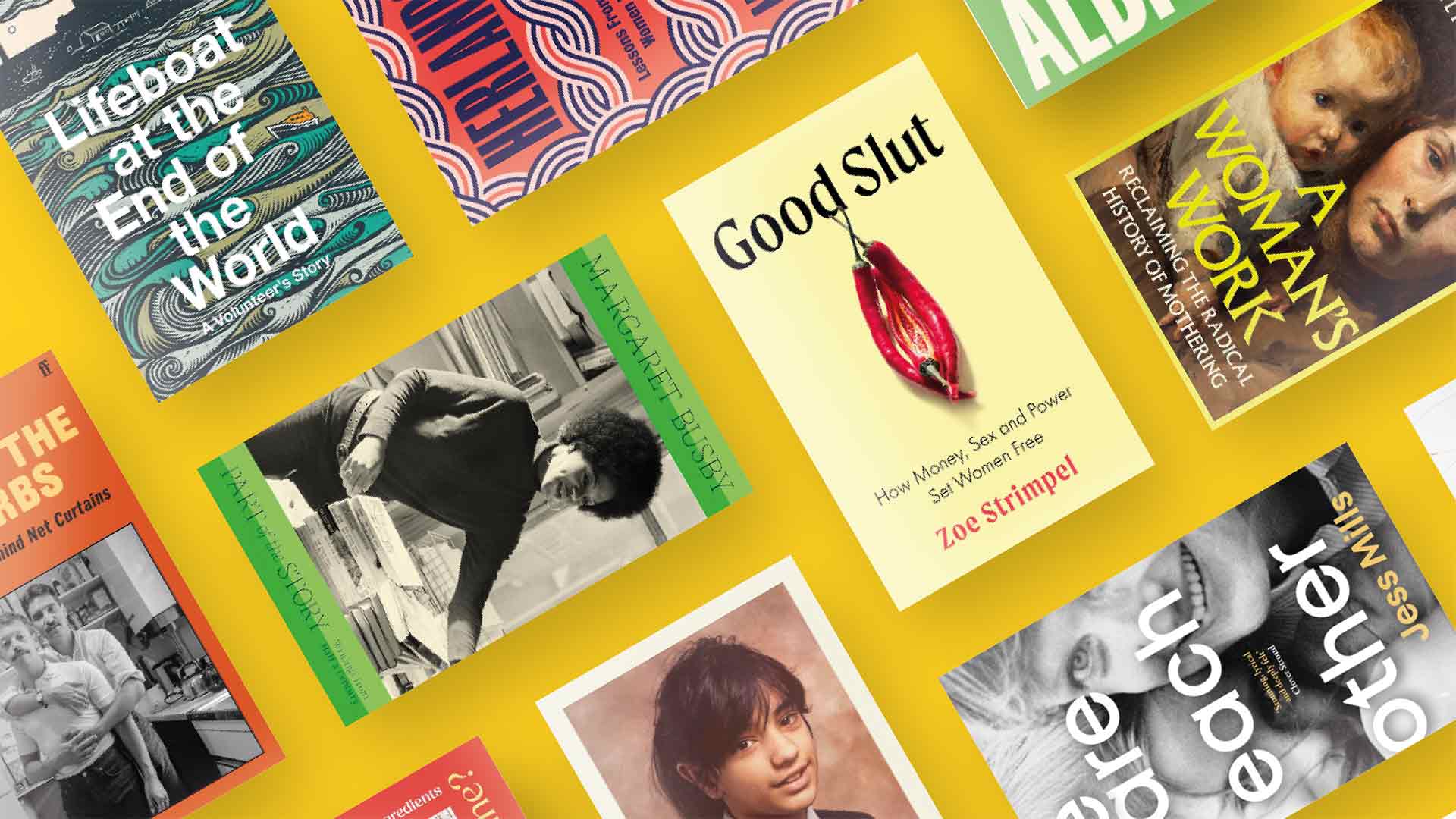
The month also brings International Women’s Day (8th) and Mothering Sunday (15th). Marking the former, we have titles including BBC correspondent Megha Mohan’s Herlands (Harvill) and Zoe Strimpel’s Good Slut: How Money, Sex and Power Set Women Free (Constable), not to mention excellent new books by such notable women as Rebecca Solnit (The Beginning Comes After the End: Notes on a World in Change, Granta), Margaret Busby (Part of the Story: Writings from Half a Century, Hamish Hamilton) and Naz Shah MP (Honoured: Survival, Strength and My Path to Politics, Weidenfeld).

For Mother’s Day, might I place on your morning breakfast tray, Elinor Cleghorn’s A Woman’s Work: Reclaiming the Radical History of Mothering (Weidenfeld) or suggest you spend the day reclining, while weeping at the beautiful words of Jess Mills in her memoir of her mother Dame Tessa Jowell MP, We Are Each Other (Leap). I would also gladly – despite it being Mother’s Day – spend some of it in the kitchen, reading and cooking from Dinner at Mine? by Kate Young (Apollo). And, gracious, what am I thinking? March also brings World Book Day (5th), so there is every excuse to spend your days wherever you like, as long as it is with a newly purchased book by a human author.

Like many writers, I am currently spending more time than I would like thinking about the impact of AI, trying to understand where its application is inevitable – even desirable – and where we have to fight to keep it at bay. Choose your battles, they say, and this feels like good advice. In my parallel role as a Royal Literary Fund fellow, supporting writing skills with NHS staff, I know that in their insanely pressurised, time-deprived roles, using AI to help draft a report, say, can be a great help, at least in getting a first draft down. I am not going to fight that battle. And yet the central message of a workshop I run, Responding to Complaints, is “write a letter from a human to a human”. Any complaint response that smacks of auto-generation is just not going to cut it in this context, and on that we can all agree.

Honing your craft as a writer is a hard graft process and, while AI might have its uses along the way, there are not really any short cuts. It is one reason why we love to celebrate debuts because they herald the injection of finely-wrought new creative talent into the world. I do think it is a crying shame that we so often highlight and celebrate fiction debuts (the Observer’s annual debut novelists feature, Waterstones Debut Fiction Prize, the Nero Debut Fiction Award… need I go on?), apparently forgetting there are many fine non-fiction debuts that are equally deserving of the limelight.

Such a debut is my Book of the Month, Dominic Gregory’s Lifeboat at the End of the World (William Collins), a true tour de force and one of those deeply altruistic books that it feels like a privilege to read. Evoking the strange liminality of Dungeness, its migrating birds and landscapes, and touching on the lives of notable former residents including Joseph Conrad and Derek Jarman, Gregory beautifully portrays a strange place where things and people wash up on the shores. He takes us on board, pitching us into the heart-in-mouth experience of launching a lifeboat on a stormy coal-black night to rescue those in distress. As books written from a human to other humans go, it sets a very fine example.

PS: Omitted from my February preview: Justine Picardie’s Fashioning the Crown: A Story of Power, Conflict and Couture (Faber). Published ahead of the 100th
anniversary of the birth of Queen Elizabeth II, it is a fascinating, richly illustrated account of the ways in which costume, fashion and visual iconography have helped safeguard the monarchy over the past century. Also an excellent Mother’s Day gift, I would say.


March 2026: Non-fiction Previews

Linked InTwitterFacebookGoogle Preferred Source
Add New Comment
You must be logged in to comment.
About this author
Caroline Sanderson

Caroline Sanderson

Latest Issue

17th July 202617th July 2026

17th July 2026

Latest Issue

17th July 202617th July 2026

17th July 2026

Submit your titles for the upcoming Buyer's Guides

The deadline to submit titles for the autumn/winter Buyer's Guides is NEXT FRIDAY, 28th April. Submit your titles for inclusion now.

FIND OUT MORE