
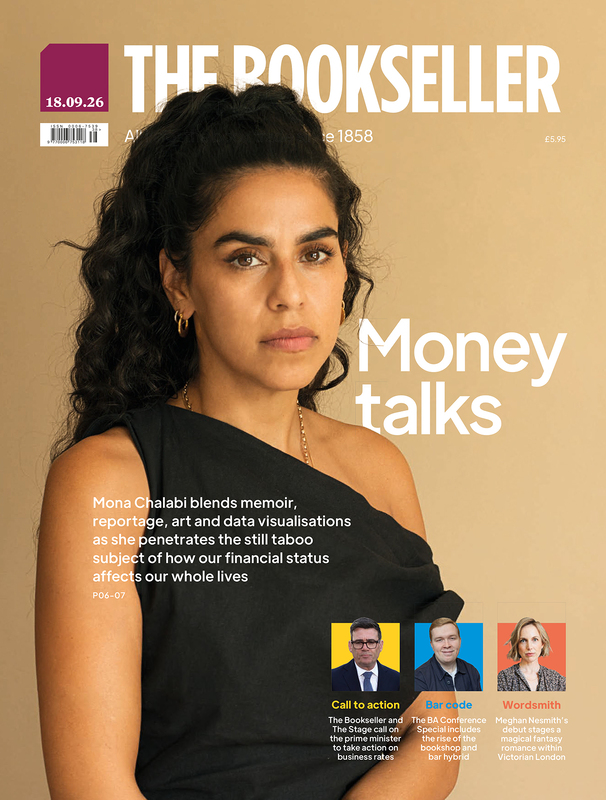





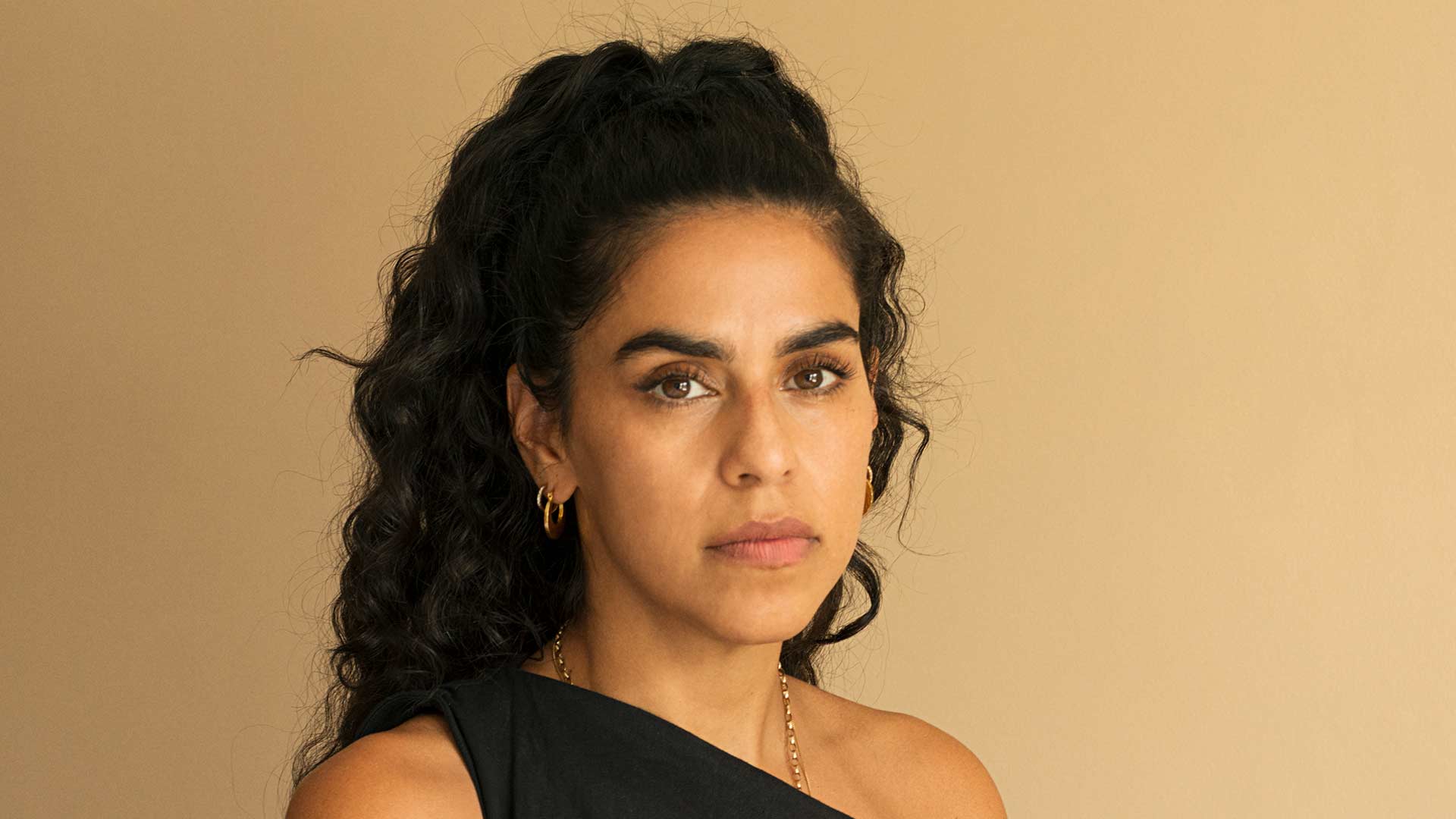
Mona Chalabi examines the still taboo subject of how our financial status affects our whole lives
 Caroline Sanderson
Caroline Sanderson worked as a Waterstones bookseller, and as a book publicist before becoming a freelance writer in 1997. The Bookseller’s
...more
The Pulitzer Prize-winning journalist on her data-led debut non-fiction, which examines the economic realities of 10 people and asks how financial status affects our lives.



Caroline Sanderson worked as a Waterstones bookseller, and as a book publicist before becoming a freelance writer in 1997. The Bookseller’s
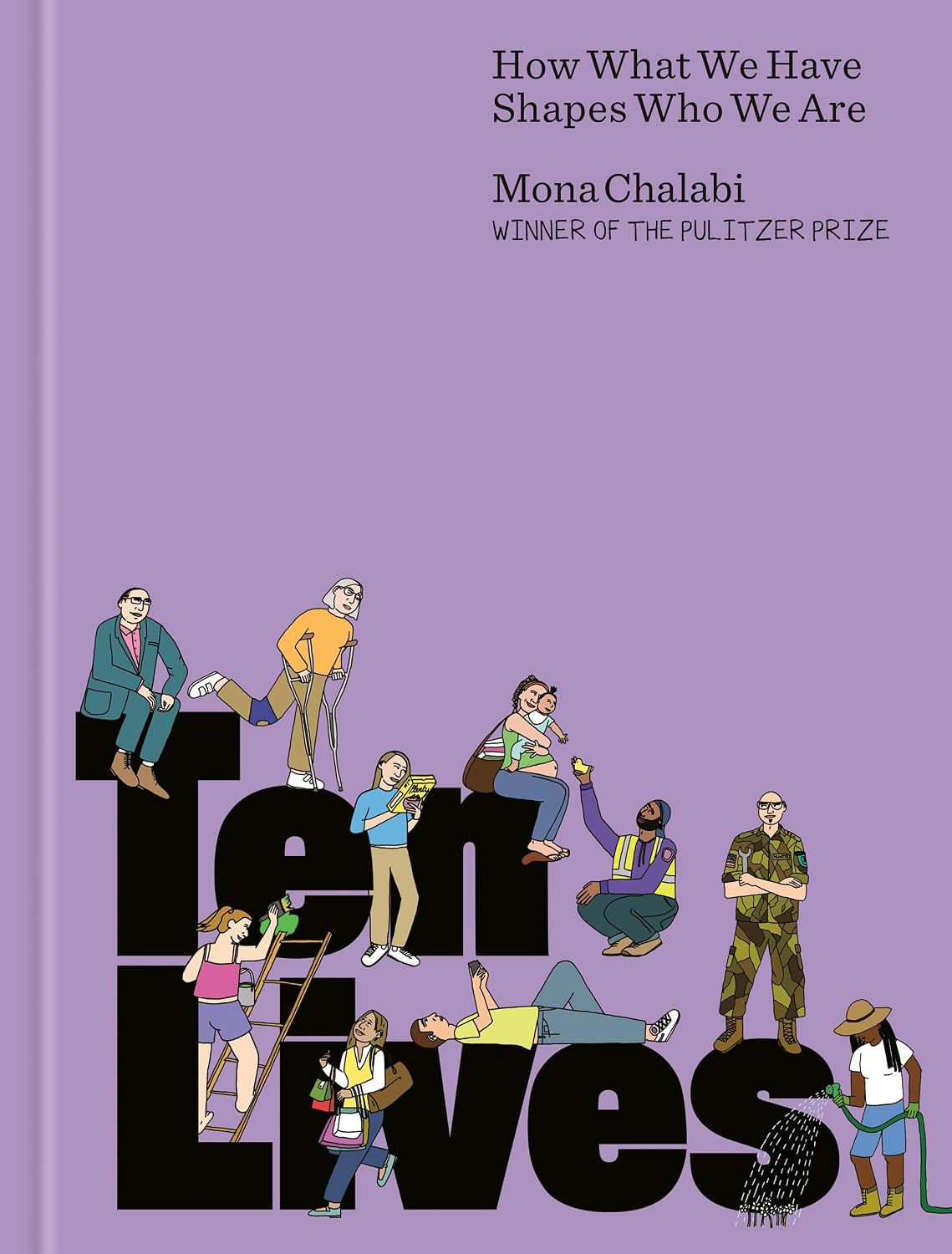
...more‘What would it mean to get more nuanced on class and economic wellbeing as a way to change the world?” That is the essential question at the heart of Ten Lives: How What We Have Shapes Who We Are, the debut book by Pulitzer Prize-winning data journalist and illustrator Mona Chalabi. Blending memoir, reportage and data visualisation, she zooms in on the still – surprisingly – taboo subject of how financial status affects our lives in a brilliantly conceived and executed book, which I guarantee will be like nothing else you have ever read.
East London-born Chalabi, who has more than half a million Instagram followers, has a substantial and fascinating back catalogue of working with data in original and striking ways. Her art has been widely exhibited, and her writing and illustration work has appeared in the Guardian, the New Yorker and the New York Review of Books; she has also held honorary fellowships at the British Science Association and the Royal Society of Arts. When we meet over coffee and cake at the British Library, Chalabi tells me that she began working on the book in 2020 with the aspiration of conveying a spectrum of different lives and incomes.
The result is a group portrait of 10 diverse individuals geographically spread across the US, focusing on how their wealth – or lack of it – has shaped their feelings, choices, identities and insecurities. The 10 anonymised subjects were chosen from a wide field – some found via Instagram and chat forums, others through personal contacts – and all agreed to complete questionnaires in which they shared demographic, financial and other personal information. Showing me the bank of resulting spreadsheets on her laptop, Chalabi says, “I’ve been really lucky. It’s a huge position of trust to say: ‘Tell me how much you earn – and by the way, are you also willing to share your tax returns with me?’”
In her introduction, Chalabi asks us to imagine lining up every person in the US from the poorest to the richest and then dividing that line into 10 equally sized groups. She then introduces us to a person from each of these 10 groups from the first decile (income of less than $23,000) to the 10th decile (income over $272,000). Among those we meet are Anna (ninth decile) who has a comfortable life thanks to her husband… but then they divorce; Kristina (fifth decile) who faces a choice between raising her child or finishing her degree; and Levi (third decile), born into a rich family but whose financial status has been compromised by his gambling addiction. Chalabi followed each person over five years, checking in regularly for updates on their lives.
The forces that have created extreme income inequality in the US are absolutely at play in the UK too and are not being regulated in the way that they should.
While rooted in data, Ten Lives also allows for nuance beyond the numbers. “What’s beautiful and exciting to me about using data and narratives together is that each person doesn’t have to be perfectly representative,” says Chalabi. “While it kind of depresses me that the two Black subjects (Tiffany and Christian) are on the bottom two rungs of the income ladder, their stories are more complicated than you might expect.” She tells me of a salutary lesson learned while working as a data journalist at the Guardian.
“I wrote a summary of an Office for National Statistics release announcing that teen birth rates had dropped to historically low levels. Some of the subsequent comments on my published piece really challenged me by saying things like: ‘Your language phrases this as if it’s a good thing that teen birth rates have fallen. I was a teen mum and it was the best thing that ever happened to me.’ We have such a tendency with data to gravitate towards the average but very often the real story sits outside of that.”
UK readers should not be deterred from reading Ten Lives by the fact that those profiled are American – the narratives will feel all too familiar. “The US feels like an omen for what’s coming here, whether it’s the privatisation of healthcare or rising university tuition fees. The forces that have created extreme income inequality in the US are absolutely at play in the UK too and are not being regulated in the way that they should.”
Continues...
Read More

Chalabi once created a marvellous infographic for the New York Times entitled ‘9 Ways to Imagine Jeff Bezos’ Wealth’. But in her book she urges us to think of income as a spectrum rather than simply bemoaning the burgeoning number of billionaires. She writes: “The focus on the ultrarich… abdicates us from our own complicity in this system. It’s a system where injustice shows up long before a person reaches the top of the mountain.” To tackle this injustice, Chalabi believes we need to become much more open in speaking about our income and finances. “I think people’s discomfort around talking about money is hampering our notions of intersectionality. Also our language around money and class is so unhelpful – what do terms like ‘underprivileged’ or ‘middle class’ actually mean? We now have the language to say, for example, ‘I’m Arab, cis and straight.’ But imagine the honest conversations we could have about the power each of us has in our economic system if we could say: ‘I’m Arab, cis, straight, and seventh decile.’”
Throughout her book, Chalabi puts her mouth firmly where her money is, disclosing her own financial history in episodes of memoir. She grew up in East London, the daughter of doctors who were immigrants from Iraq. She was a curious child who, on trips to the supermarket, would peer into other people’s trolleys until her mother whispered “Rude!” in Arabic. Tellingly, she discloses that although she was initially paid what she calls “a shitload” of money to write her book, she was later plunged into deep financial worry while funding 24-hour care for her late mother after the latter suffered a stroke.
Chalabi’s candour in disclosing both her book advance ($850,000) and how much she actually “took home” is admirable. In a chart at the end of the book she shows her net income of just over $400,000 after subtracting taxes, agent’s commission and a fact-checker fee. Based on the time she had spent researching, writing and illustrating the book over five years, Chalabi calculated an hourly rate of $66, then paid that hourly rate to her interviewees and researchers from her net earnings. “Normally the idea of journalists paying their interviewees would be a complete no-no. But I really wanted to apply a different standard of journalistic ethics for this book.”
Colourfully illustrating everything from average minutes per day spent caring for children to kinship naming practices by culture, Ten Lives is not only a triumph of data-wrangling but also a riveting book about the psychology and emotions that surround our financial worth. Concludes Chalabi: “There are huge differences in our economic situations. And yet we have this shared universe of experiences, whether it be a person who is relying on you for care or the difference a change in relationship status makes. In being more honest I believe we can find opportunities for solidarity, and also use our more nuanced understanding to mobilise for greater economic justice.”
Metadata
Imprint Bodley Head
Publication 12th November 2026
Formats HB (9781847927200, £25); EB (9781529933871, £25)
Rights sold US (Random House)
Editor Will Hammond
Agent Emma Paterson, Aitken Alexander