




You are viewing your 1 free article this month.
Sign in to make the most of your access to expert book trade coverage.
On the power of pseudonyms
Writing under a pseudonym for a decade has given me freedom and breathing space.


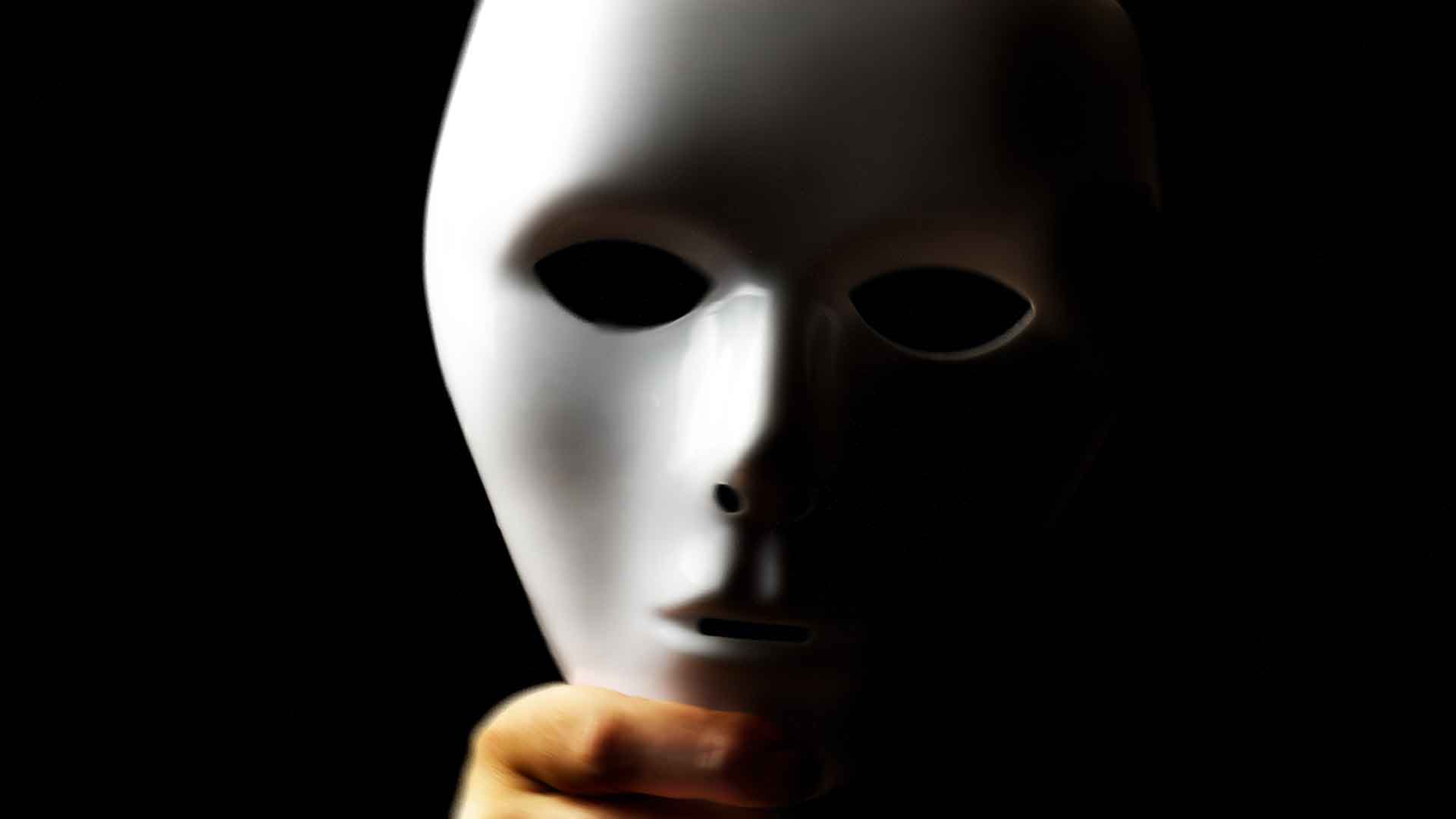
In 2015, I began writing poetry about the PTSD I suffered from my time in the military. These poems followed a niche manifesto I’d put together in which I set myself a series of rules and constraints, namely as an attempt to force myself to focus more on the act of editing my work. After finishing this sequence, I found I was proud of the poems but didn’t want anyone to read them. What I had written was cathartic, it was therapeutic, but, much like the enigmatic rock band Sleep Token, I didn’t want anybody knowing I was the person behind the words.
In the 1980s, facing an industry wary of publishing more than one Stephen King book a year, and concerned that his book sales came from reputation rather than talent, Stephen King began to write under the name Richard Bachman. Thinner, published under the Bachman name, sold 28,000 copies during its initial run: respectable for many authors, but modest for King. After he was outed, sales surged, far too early for King to confirm whether his success was due to reputation or talent. It raises the question: would Richard Osman’s bestselling Thursday Murder Club series have sold as well if he had published them under the name Bill Smith?
My dilemma was not reputation versus talent. Nobody had heard of me, and I actually had never published a single book. Instead, the fear, for me, arose out of the idea that family or friends may read my poetry and I’d be forced into conversations I wasn’t ready to have, conversations I’d only had with the men at my weekly group therapy sessions, hosted by the now-defunct Cornwall RASAC. At one of those sessions I realised I wanted to release the poetry to the world, and a way to do so was to use a pseudonym. Later that day UG Világos was born.
Sometimes pseudonyms, or pen names, are born before an author’s success. Elena Ferrante, author of the excellent Neapolitan Novels, has always been a pseudonym. Expounding on Roland Barthes’s "death of the author", Ferrante claims that finished books have "no need of their authors". Rather than testing her talent, this has allowed her to maintain a level of privacy for her personal life, while ensuring that the novels are allowed to exist without the burden of authorship. Ferrante, it seems, need not worry about sharing things with friends or family that she would prefer not to share.
Would Richard Osman’s bestselling Thursday Murder Club series have sold as well if he had published them under the name Bill Smith?
Under the name of UG Világos, itself a tribute to my Hungarian grandfather, I released a book, purporting to be his collected experiments between the years 1989-1992. It didn’t particularly sell well, but it let me breathe; my trauma had been set free. I kept going with Collected Experimentalisms 1993-1996, 1997-2000, continuing in fictional three-year volumes. By the release of 2023’s Collected Experimentalisms 2005-2008, the Világos mythos had grown: invented awards, literary rivalries, books that have never existed but were claimed to be long sought after, and even claims of university modules being taught about him. As a working-class author without connections or access to the arts, this allowed me to test how my work would be received had I been given the platform and privilege many authors are given. This culminated with a UG Világos poem appearing in the Daily Telegraph as Poem of the Week, with a paragraph or two about the man himself.
George Eliot, the pen name of Mary Ann Evans, allowed Middlemarch to be taken seriously in the face of a patriarchal culture that, while allowing women to publish, refused to accept female authors as anything other than writers of light, domestic reading. There were also issues around the scandal of her private life wherein she lived with the married critic George Henry Lewes, and the breathing space "George Eliot" allowed between the already existing knowledge of Mary Ann Evans as an essayist. Similarly to Doris Lessing, who also wrote as Jane Somers, Eliot allowed Mary Ann Evans to expose biases prevalent within the industry.
I wrote the last book under Világos in 2022, a year and a bit after the haemorrhagic stroke that left me in hospital for six weeks, regaining my ability to walk and talk. Oddly enough, though, I didn’t feel the need to share this PTSD under a pen name, and instead felt that I could influence change by openly sharing my experiences of surviving a stroke. Világos had become, instead, a space for formal experiment rather than concealment. In 2022 I used the name to examine my grief after my Bampy, Jenő Világos, for whom UG Világos was named, passed away. I felt torn between wanting the world to feel my grief, and to grieve with me, while simultaneously wanting nobody to say his name. I confronted this grief by walking into the woods around my house at midnight during the winter months of 2022, standing in the darkness, and mapping a field recording of my grief. I released Collected Experimentalisms 2005-2008 in 2023 as a love letter to Világos, the pseudonym who had guided me through so much, and a eulogy to my Bampy.
Jorge Luis Borges and Adolfo Bioy Casares used pseudonyms when writing together to try out different voices and approaches to their work, and did so without risk to the reputation of their real names. This meant they could work together, create new ground, tread new paths, and do so all without the risks their real names would suffer.
To this day I encourage my students to consider writing under a pseudonym, not just for the freedom it gives but for the breathing space it creates in a sometimes stubborn, gentrified, and often overly critical literary scene. Criticisms of Világos never wounded me because they weren’t aimed at me. Praise didn’t inflate my ego for the same reason. I stood apart from Világos, and my work was not burdened by me. After that final field recording of grief, I outed myself by putting it all into a 380-plus page book titled Collected Világos, released under my real name. In doing so, I was able to say: "This is what it looks like when you write without anybody, not even yourself watching."