




You are viewing your 1 free article this month.
Sign in to make the most of your access to expert book trade coverage.
Could there ever be another Jilly?
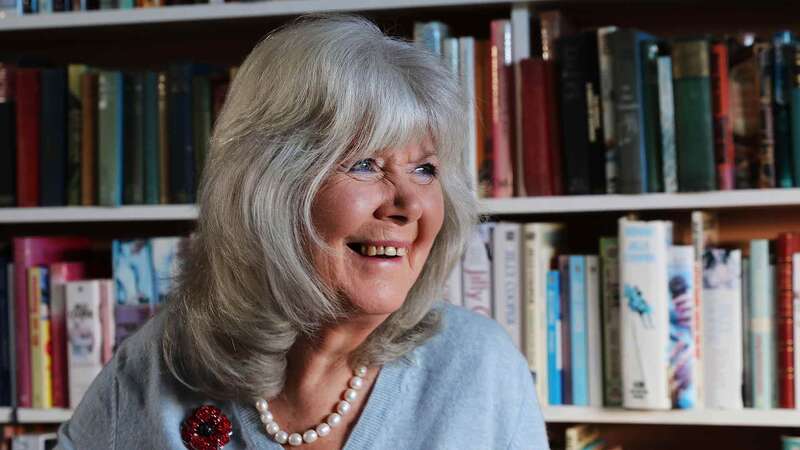
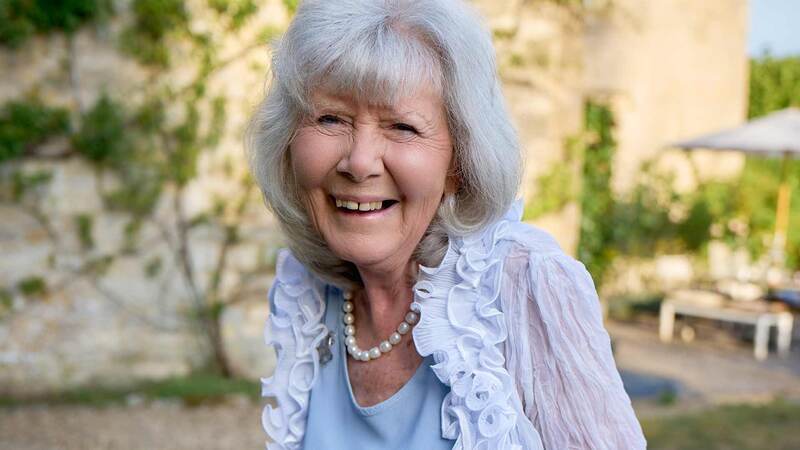
Dame Jilly Cooper persuaded an extraordinary range of readers to fall in love with romance.


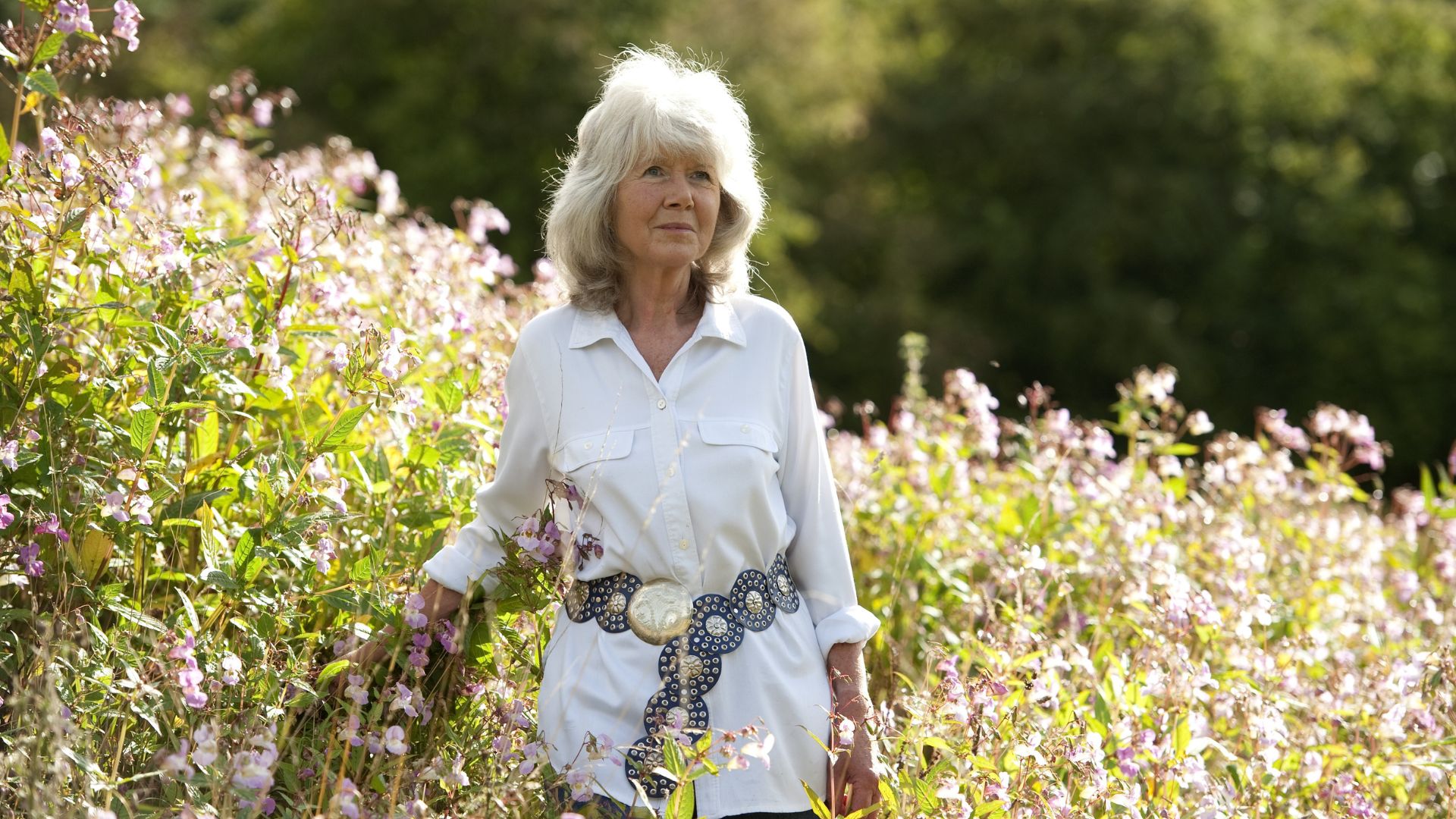
It is a truth universally acknowledged, and not just by readers of romantic fiction, that Dame Jilly Cooper was a singular force. A grande dame of literature widely beloved by everyone from queens to the most romcom-loving commoner, there is – or, I suppose, was – nobody quite like Jilly. Who does it like Jilly does it? And could there ever be another like her?
There could, of course, be nobody quite like Jilly. No one writer can ever take the place of another, but it’s also perhaps fair to say that no one cultural touchstone can ever exactly replace another. And Cooper was a cultural, as well as literary, icon.
Few writers become adjectives: Dame Jilly must surely be one of them. Like Dickensian and Kafkaesque, it’s easy to know when something is Cooperish: there’s the dogs and the horses, obviously, the handsome men, the thin girls, the temper tantrums and the cigarettes and the booze, the eighties-adjacent delight in luxury. But to be truly Cooperish is to conceal a razor blade inside a rose. To be truly Cooperish, you must have a glass of champagne in one hand and a metaphorical dagger in the other. There is a darkness to her glamour, a grime to her charm. There is always something horrible happening somewhere, so cin-cin, and chin up! You know when you’re in a Cooper sort of situation – or, at least, if I’m ever in one I hope to notice at once. I should, by now, be well primed.
“She was a one-off,” founder of the Jilly Book Club, Kat Brown wrote to me. “As if an editor would let a version of the world go through now where opera is the subject of news stories in the tabloids, and everyone, no matter what their upbringing, quotes poetry at the drop of a hat. It would be unbelievable – even though Jillyworld is entirely believable once you’ve gone through the door.”
Jillyworld exists even without Jilly; it even exists outwith the text of Jilly’s books. The sense of the universe she created is larger even than her collected oeuvre. We all understand what her books meant. We understand who she was, as a character – and by we I mean an audience perhaps unparalleled in range by most other writers.
Her death last month prompted tributes from the Queen (“may her hereafter be filled with impossibly handsome men and devoted dogs”), prime ministers (Rishi Sunak was apparently a longstanding fan) and writers as diverse as crime novelist Ian Rankin (her unlikely penpal), literary thinker and novelist Olivia Laing (“I hope Leo and Bluebell came to greet you, I hope you were met with a sea of wagging tails”) and million-copy-selling romantic novelists, like Jill Mansell and Jojo Moyes. Men, women, teenagers: everyone fell beneath Jilly’s spell. I was too young for Jilly the first time round, but I came to her in the end. Don’t we all? It’s difficult to think of many other writers who fall into that category: the kind of writer that most people who read for pleasure will read at some point.
The rise in romance sales, while it has created megastars and millionaires, has, I think, created no Jillies: no household names, widely beloved by all.
Then again, if Jilly was a one off, she was a one off in, perhaps, a one-off time for literature. The art of reading has rarely been in such trouble. More than a third of UK adults have “given up reading for pleasure”, according to a survey last year by the Reading Agency; in the US, the number of adults who read for pleasure has tumbled by more than 40% in the last twenty years. Books are, as one senior editor once told a friend, a niche industry.
And yet romance novels continue to bounce along, ebulliently splitting into this trope and that trope, hockey romances, cowboy romances, frenemies, best friend’s brother or ex-boyfriend’s dad: niches within niches, growing nicher every day. The romance market fragments and splinters into a thousand beloved shards. We survive by becoming many kinds of book for many kinds of reader, but even our biggest sellers are almost invisible compared to the ubiquity of Cooper.
The rise in romance sales, while it has created megastars and millionaires, has, I think, created no Jillies: no household names, widely beloved by all. Does even Sarah J Maas have that kind of name recognition outside the world of romantasists? The bestselling romance novelist (or, I suppose, erotic novelist) of the past 20 years, EL James, is more often the subject of ridicule than affection. (It is difficult – not to say startling – to imagine the Queen reading Fifty Shades of Grey.)
And yet we must remember that romance novels are always sanctified by time. Sex is made safe by distance: what was shocking 30 years ago may well seem commonplace today, and who knows what currently unthinkable acts will look like quaintly an afterschool special in the post-apocalyptic wasteland of 2050? How will we read, in 30 years? How will we tell each other stories, then? Because as long as there are people, there will be stories – and as long as there are stories, there will be stories about love and sex and death and betrayal and money and joy and despair. Jilly stories, in other words.
In some ways, to wonder whether there will ever be another Jilly is to misunderstand that the ways we read are always changing, and always have been. Romantic fiction is, somehow, always at the edge of what’s new. Right from Austen, romance is always somewhere at the forefront, leading the charge of a new kind of publishing, whether it’s pulp presses, cheap eighties paperbacks, or Kindle Unlimited.
There might be never be another Jilly, but there are so many more writers, each uniquely themselves, making work that carries her legacy within it: a sunbeam passes through a prism, and splits into a thousand perfect shafts of light.
In Love with Love: The Persistence and Joy of Romantic Fiction by Ella Risbridger (£16.99) is published 6th November 2025