



Welsh literary magazine Folding Rock's founders on what led them to launch a new periodical
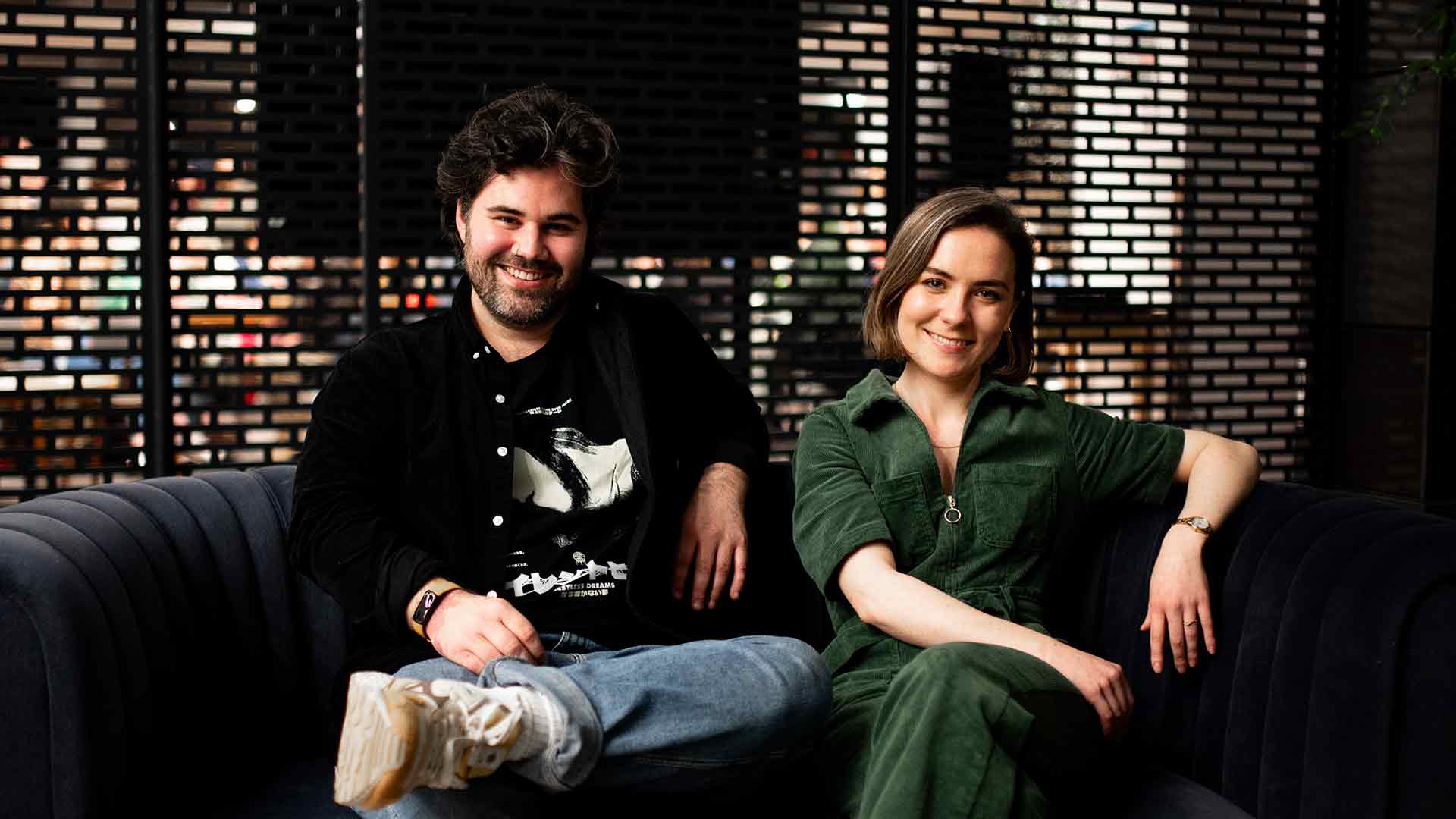
Rob Harries and Kathryn Tann, founders of new Welsh literary magazine Folding Rock, outline their ambitions to develop and celebrate the country’s writers


Why did you decide to launch Folding Rock? Why do you feel a Wales-based literary periodical is needed right now?
An analogue to something like the Stinging Fly, Gutter or Granta – a contemporary literary periodical that is synonymous with, and tirelessly champions, the best emerging and established writing of a nation – is something that we’ve long felt Wales has needed. This, coupled with the belief that Wales is on the cusp of a literary "moment" and the fact that Planet and New Welsh Review, two of our most enduring literary institutions, were severely hampered by funding cuts in 2024, meant that it never felt more pressing to create something that would help catalyse change and attention.
What is the aim of the magazine?
Fundamentally, we set up Folding Rock to provide a clear pipeline of quality talent development, editorial mentorship and, perhaps most crucially, a prominent, country-leading platform for writers to showcase their work. We want more Welsh and Wales-connected writers having their first publications within our pages, then, as writers like Sophie Mackintosh, Anthony Shapland and Joshua Jones have done, going on to get agents, book deals, acclaim and prizes beyond our border.
What can we expect from Folding Rock?
Folding Rock is published three times a year – in March, July and November – and across roughly 150 pages features fresh work from the very best new, emerging and established writers connected to Wales in some way, whether Welsh by birth, now living here or writing about the nation. We predominantly publish short stories and creative non-fiction, but our inaugural issue featured a stunning photo essay by film-maker Liberty Smith, which, alongside a series of outstanding illustrations by Matt Needle, Mari Huws Jones and Breifni Hedd, signifies our commitment to feature visual work too. Literary criticism (and, in turn, Welsh-related books) is also something we want to spotlight, as Eluned Gramich’s fantastic review essay indicates.
Who is the team behind Folding Rock? What are your career backgrounds?
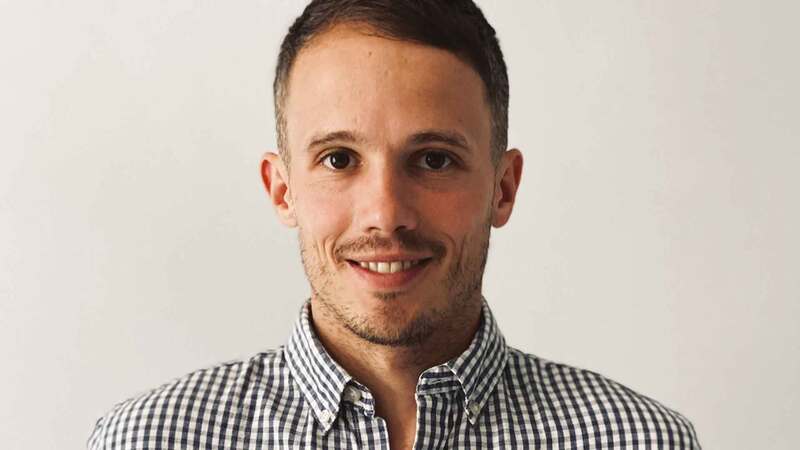
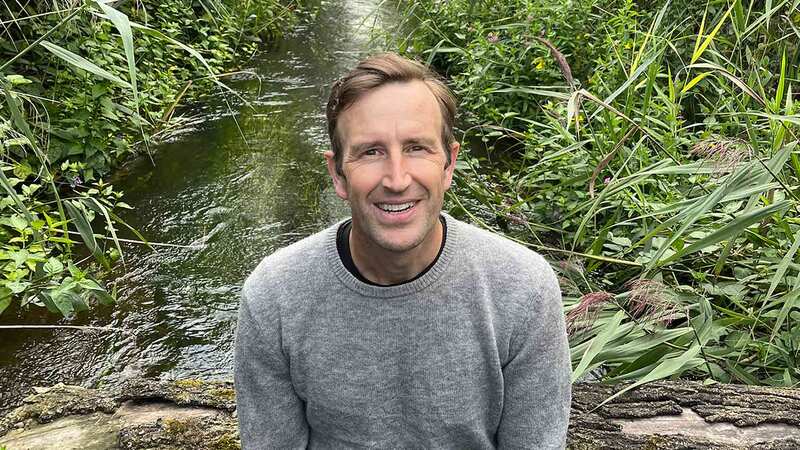
We are writer, editor and creative producer Kathryn Tann (who handles non-fiction and whose essay collection, Seaglass, was published by Calon Books) and editor and designer Rob Harries (who handles fiction). We have a good decade and a half of publishing experience between us, and both started our careers at Cardigan-based indie Parthian Books – though we actually never worked there at the same time. However, we’ve respected each other’s talents and opinions from afar (Rob moved to London to pursue further publishing opportunities, while Kathryn worked for Newcastle-based New Writing North) and have both long shared the ambition to work on some kind of literary venture together.
How are you planning to reach potential contributors?
Our approach to this has two elements. We have a commissioning process whereby, once we have a theme in place for an issue, we earmark a handful of established authors we think might be suitable to approach and ask for a piece. Otherwise, the bulk of our submissions are received anonymously via an always-open window on our website, which is promoted via social media, our newsletter and a number of online writers’ groups.
Going forward, we want to put on outreach events, whether they be in person or online, to further demystify the submission process and empower writers who might otherwise not have the knowledge or confidence to send in their work. Collaboration with emerging writer initiatives, such as the Hay Writers at Work cohort we’re partnering with this year, will also be crucial.
What’s the relevance of the magazine’s name?
While Kathryn coined "Folding Rock" as a reference to Wales’ rich geographical association with rocks and minerals, particularly its layered Ordovician formations, Rob more saw the phrase’s oxymoronic unfeasibility – even futility. Scarcely known for being the most malleable of substances, to attempt to actually fold a rock – or, say, run a literary magazine – would at first appear to be a fool’s errand. However, you only have to glimpse once more at the page-like creases and layers in the epochs-old stone to be reminded that what at first seemed unthinkable perhaps is possible with time – and maybe just a little pressure – after all.
What has the response to Folding Rock been so far?
We’re floored by the support and enthusiasm we’ve received. From readers, writers, agents and fellow publishers, to larger organisations such as the Dylan Thomas Prize and Hay Festival, everyone has been so complimentary of our ambitions and the printed magazine itself, which of course has made the hard work and late nights so worthwhile. The arts can be a divisive, fraught space to work in, and we know difficult days are likely to rear their heads at some point, which is why it’s important for us to remember this current feeling as a reminder of why we’re doing what we’re doing.
Your first issue was published in March 2025. What were some of the highlights included?
It was a huge coup to have writers with the profile of Sophie Mackintosh and Joe Dunthorne involved, for not only did their names add a degree of legitimacy that every new entity struggles to acquire, but their pieces were also phenomenal and very worthy of any established periodical. However, it was also a very proud moment to unearth first-time writers Mari Huws Jones and Maya Jones and publish them side by side with the aforementioned heavyweights.
Can you let us know anything about the next issue?
The next issue, publishing in July and entitled Speak to Me, has the thematic focus of language and communication – always a rich topic, but especially in Wales, given our tense history of bilingualism. Like issue one, it’ll feature a handful of established, critically acclaimed writers that we’ve commissioned, but as our ultimate aim is to uplift and provide opportunities for early-career writers, we anticipate that we’ll be publishing a larger contingent of debut and emerging contributors.
What are your future plans and ambitions for Folding Rock?
We obviously have sales and subscriber targets we want to hit, per the terms of our funding agreement with the Books Council of Wales and for the future financial security of the magazine. But our predominant ambition is to make a significant cultural impact and help usher in a large-scale realisation of the talents of Welsh writers, whether that be unearthing and uplifting the next generation of new literary talent, or seeing that emerging writer have their first commercial, critical or prize breakthrough. We also have ambitions of doing more collaborative work, potentially with another periodical outside of Wales – for after all, we are for "new writing from Wales and beyond".