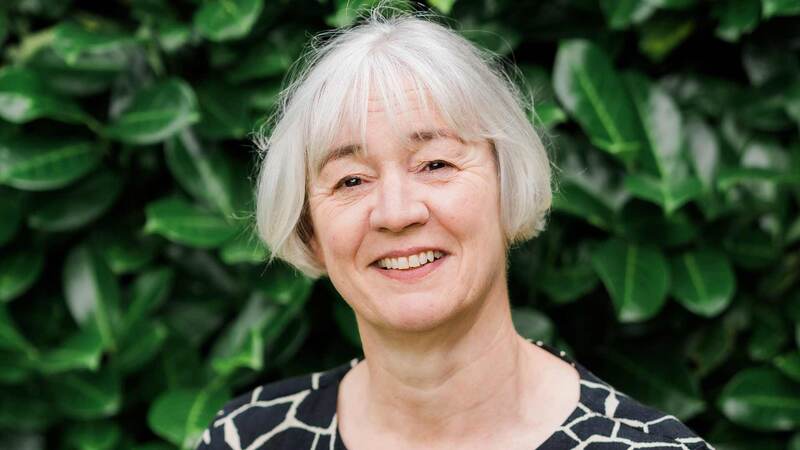





STM chief executive Caroline Sutton: ‘Don’t let a crisis go to waste’
The trade body’s boss discusses the impact of AI and working to make the public trust science again.


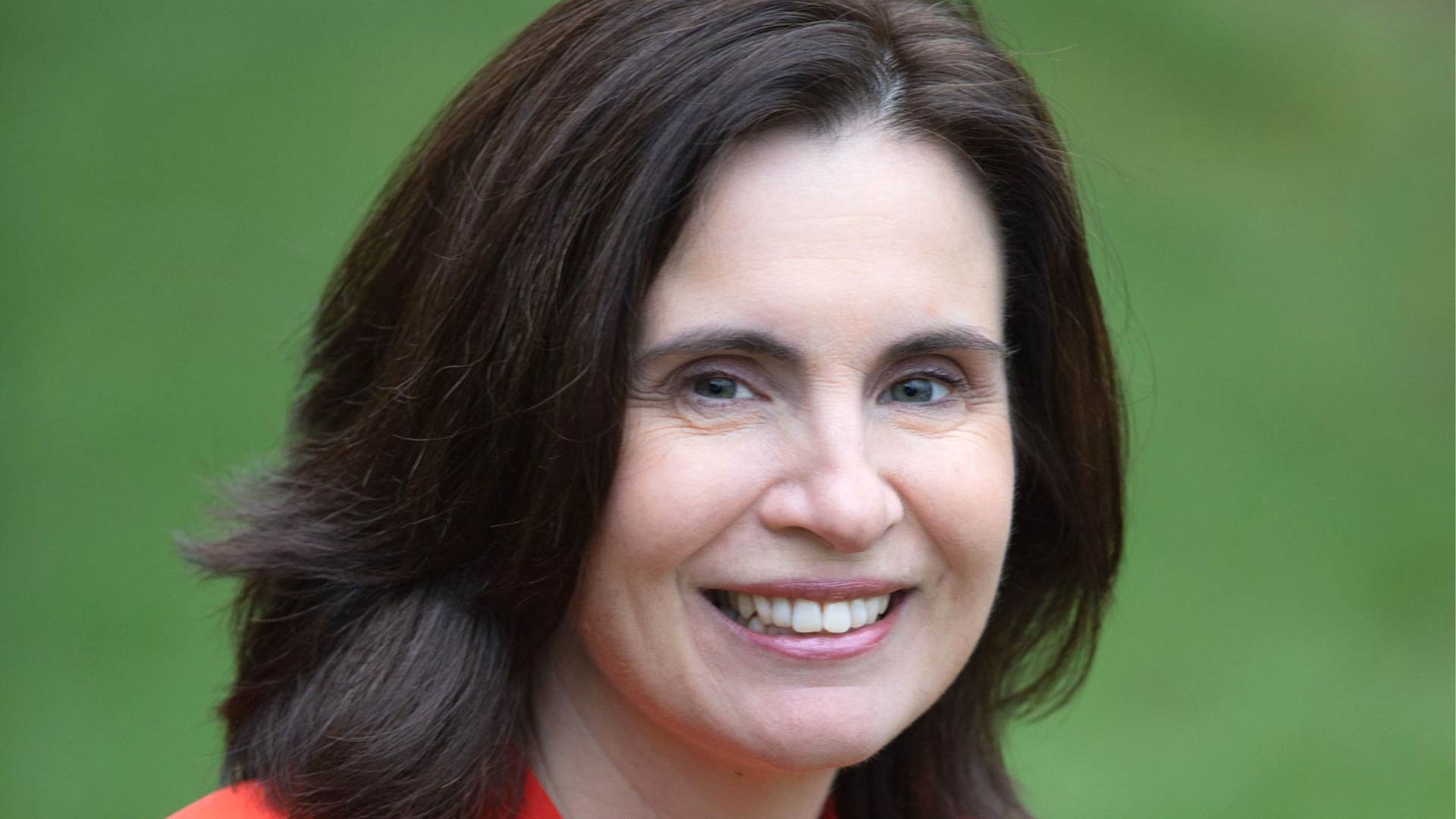
There is a point in my video call with Caroline Sutton in which I say a name – Robert F Kennedy, Jr – that causes her briefly to put her head in her hands.
Sutton – who has been CEO of STM, the international trade body for Science, Technical and Medical publishers, for three and a half years – and I have been using her upcoming trip to the Beijing International Book Fair (BIBF) to talk about the academic market in China, but also to address some of STM’s broader campaigns around AI, research integrity, open science and the “quite frankly chaotic and unstable” research funding and political climate in the US.
Kennedy’s name comes up as the US health secretary has just released his flagship Make America Healthy Again (MAHA) report, a document that has been of much concern for scholars in its mischaracterising of some research and use of citations from studies that do not even exist, all to support a view of public health that you might find alarming coming from your drunk, QAnon-addled uncle over Christmas dinner, but frightening in a Health and Human Services Department’s policy paper.
Sutton says counteracting things like the MAHA report is part of STM’s core: “Our mission is to advance trusted research. What is becoming evident is a distrust of the institutions that folks previously trusted. What does this mean for science in a world in which we have a new generation that’s grown up with social media and AI? And if there is that distrust of science, what does that mean for how we, say, manage the next pandemic?
“The situation in the US is really difficult, as its politics and defunding of research bubbles out into the entire world. But the real question is how do we rebuild those relationships where they’ve been breaking down? How do we ensure that truthful information is getting out at a time when we have so much information? [Sapiens author] Yuval Noah Harari said: ‘We’ve never had more sophisticated information systems, and yet we can’t have a rational discussion’, and I take that to heart; STM needs to be a part of a rational, reasonable discussion.”
Origins and next phases
STM was founded in 1969, having first been conceived at the Frankfurt Book Fair, and today the organisation has just under 150 members from 17 countries. There is a relatively big tent with corporate giants (Elsevier, Wolters Kluwer, Springer Nature) mingling with scholarly societies (American Mathematical Society, Royal Society of Chemistry) and relatively small indies (Banbury-based Scion Publishing).
Its headquarters are in The Hague, with a satellite office in Oxford, though native Californian Sutton is largely based in Oslo. She has mostly lived in Norway since completing her PhD in sociology at Sweden’s University of Uppsala and embarking on a 25-year career in the industry, kicking off with a journals post at Taylor & Francis – “someone showed me the job advert and I thought: ‘Ah, this is me.’ ”
In many ways she has been at the cutting edge of, and part of the big shifts in, scholarly publishing ever since, including co-founding the pioneering Open Access (OA) house Co-Action Publishing, and being one of the founders of the Open Access Scholarly Publishers Association.
‘We are doing a lot of work in our standards on the ethos of AI. Because science isn’t just about the answers, it’s about the genealogy behind the answers’
One shift the academic market is experiencing is an accelerated Chinese research climate and a consequent ramping up of its academic publishers’ programmes, primarily in the “hard” (not social) sciences. This is one reason why STM has a big presence at BIBF 2025, including launching its first ever Asia-Pacific conference the day before the fair officially opens.
Continues...
Sutton says this is the second phase of China’s huge, government-backed project to increase the quality of the country’s research (the quantity has long been there). The first phase was in many ways a boon for Western publishers, as a number of Chinese houses partnered with European and North American firms to “build up skills and competencies”. Some of these ties with Western publishers, Sutton says, are being cut in this second phase, with Chinese firms going alone. “This is potentially a huge shift in the overall landscape of academic publishing. The centre has always been the US along with Europe – what will the market look like if there is a third player?”
AI action plan
While China’s growth will be a talking point at BIBF, the main topic will certainly be AI, an issue that bleeds over those other STM focuses of research integrity and open science. STM is heavily involved with lobbying the European Union on its AI act, legislation that Sutton was broadly happy with (“It was something that balanced the interests of rights holders and creators with developing a strong AI industry”) – until February’s AI Action Summit in Paris. Sutton says: “The last version we saw was highly in favour of big tech and this was post-Paris, when the tone completely shifted, as we had the US, Europe and China essentially battling to become the next AI superpower.”
The fight goes on – in late May, Sutton was part of a delegation of creatives who met with MEPs, a group that included ABBA’s Björn Ulvaeus (who was not there solely for Mamma Mia! star power – he is also president of the International Confederation of Societies of Authors and Composers). Sutton points out that while STM stands with others in the creative industries on protecting copyright, there is the added complication in her sector with Creative Commons licences, which were established at the beginning of the Open Access era to help disseminate research more widely: “There is now not full clarity what a Creative Commons licence means, and there is the question [of whether] it is really fit for purpose in this new world.”
Continues...
BIBF’s Essential Events
STM APAC Conference: Open Driven by Innovation, Beijing International Convention Center, 17th June, 9.00
STM will run its first-ever conference centred around publishing in the APAC (Asia-Pacific) region, in partnership with China National Publications Import and Export Company – which is BIBF’s organiser – and the Society of China University Journals. The overall themes will focus on the development strategies for publishers within APAC, with a particular look at the challenges and opportunities in open science. The keynote is from the mechanical engineering scholar and former president of Zhejiang University Yang Wei, with other speakers including Springer Nature’s vice-president of government and academic affairs Xiaohong Helena Yang, Tsinghua University Library director Jin Jianbin and Sarah Tegen, senior vice-president and chief publishing officer of the American Chemical Society.
AI is another reason STM is putting a huge amount of effort into its industry standards: “We’re concerned about advancing trusted research in this world with AI – a world where we know that our content has been scraped without consent, but content has also been scraped where it has previously been stolen and put on places like Sci-Hub and LibGen. Sometimes scientific articles can be corrected or retracted. This should be of huge concern for anyone who is thinking about what type of safe AI we want for the future.
“So we are doing a lot of work in our standards on the ethos of AI. Because science isn’t just about the answers, it’s about the genealogy behind the answers. This is why we have citations. Are we overturning what we knew, or building on it? This is what I try to impress on legislators: copyright is important in our sector, not only [for] remuneration but as the tool by which we can license AI to abide by ethical rules.”
This leads Sutton back to RFK Jr. She says: “I always say: ‘Don’t let a crisis go to waste.’ That MAHA paper just shows why the integrity of the scholarly record matters more than ever, and why thinking thoughtfully about AI is so critical. This is not going to be a short mission. We have a long haul in front of us, of working together and trying to reset those frameworks of trust.”