


You are viewing your 1 free article this month.
Sign in to make the most of your access to expert book trade coverage.
At this year’s FutureBook Conference, the industry has discussed the latest on sustainability and the recent “rug pulling” around EU Deforestation Regulations (EUDR).
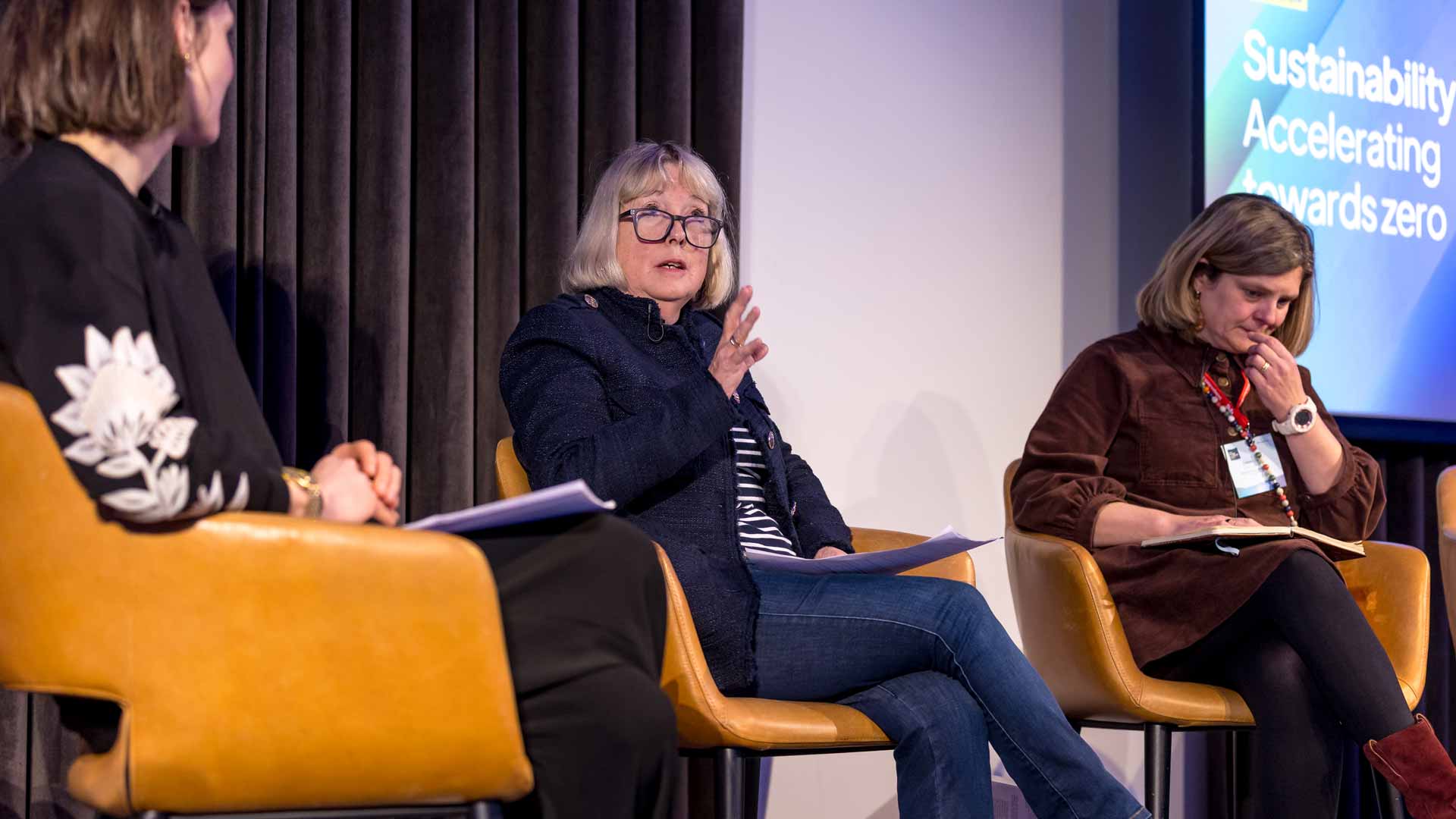
Amanda Ridout, founder and chief executive officer of Boldwood Books, and Debbie James, owner of Leicester’s Kibworth Books and vice-president of the Booksellers Association, appeared on The Bookseller’s FutureBook Conference panel Sustainability: Accelerating Towards Zero on Monday 1st December at London’s County Hall.
On last week’s vote from the European Parliament to approve an amendment to the EUDR to remove all printed products from the scope of the regulations, Ridout said: “In IPG, there’s been lots and lots of worried publishers about it and it has obsessed everyone. And then, of course, there’s the kind of extraordinary rug pulling that happened last week, which is positive in many ways, although it might still change and everything’s got to go through commissions and councils and stuff like that.”
She believes sustainability needs to be better prioritised in book design. “We’re still at the stage of seven varnishes... We’re still at this stage of sprayed edges, although again, the printers – CPI – have been really, really good at being at the forefront using technology to really try and be as sustainable as possible.
“So [the impact of] sprayed edges – we are getting better understanding around this – [the need to use] water-based ink and all that sort of thing. But we need to work harder... I think there should be more focus back on the actual wonderfulness of the design and maybe we should award more for the design of covers and sustainable design, which can compensate for gizmos.
“We do need to lead the way for publishers on this, and we need to challenge and encourage our designers and maybe there should be more awards on it... To celebrate how you really get sustainable design, which looks really satisfying but that doesn’t destroy the planet. So, one other thing on that: please could all publishers stop, I think they’ll be able to stop sending things like proofs to booksellers, all these sorts of things, which I’ve sat on panels for five years saying ‘please don’t do this’.”
Continues...
Ridout also encouraged writers to challenge their publishers on sustainability. “I think authors are really important in this... They sometimes say, ‘I want lots of glitter and I want some branches [illustrated on the cover] and I want to be better than that person’. I think the more we can educate authors, who are also a constituency that are really concerned about the planet, that you don’t have to demand this kind of crazy stuff. And actually, perhaps they could be demanding, because we listen to them a lot. They could be demanding sustainable design.”
On Artificial Intelligence (AI), Ridout advised cautious opportunism. “We must not be remotely frightened of it, and we must make sure, as publishers, that we harness it to make ourselves more efficient and that we make things quicker,” she said. “I do think one of the issues across the industry is that we’re too slow... Writers should be given all the time they need to write, but then, as an industry, we should bring their book to market as quickly as we can. And I think AI, that can genuinely hope the process. I don’t mean by cheating, I mean by literally taking out lots of processes but with human oversight. And I do think that’s going to be really helpful. So those two things are really important.”
She added: “But I do also think we can continue an authentic, sustainable voice as publishers and booksellers, as curators in this kind of maelstrom of nightmare [AI] content as a consumer.”
James discussed how several organisations across the trade have become B-Corp certified – verified as meeting high standards of social and environmental performance, transparency and accountability.
“I’ve loved seeing the B-Corp logo on Canongate’s books,” James said. “So Canongate is as yet, I think, the only B-Corp publisher in the country. And Bookshop.org is also certified. And that’s very inspiring and motivating for us publishers and booksellers.
“HarperCollins have set up a train line in Italy to help with their carbon footprint on deliveries. I know Boldwood Books, for example, move only with the print on demand model to mitigate their carbon footprint.”