

You are viewing your 1 free article this month.
Sign in to make the most of your access to expert book trade coverage.
The co-creators of the book of the Earthshot Prize talk about striking the right tone in order to encourage individual action on climate change.
Launched in October 2020 by Prince William and the Royal Foundation, the Earthshot Prize, inspired by President John F Kennedy’s Moonshot programme in the 1960s, is designed to discover and scale the best solutions to repair our planet over the next 10 years. The five Earthshots—Protect and Restore Nature, Clean our Air, Revive our Oceans, Build a Waste-Free World and Fix our Climate—are unifying, ambitious goals for our planet which, if achieved by 2030, will improve life for us all. The five winners of the Earthshot Prize will be announced at a live event at north London’s Alexandra Palace on Sunday (17th October), with each awarded £1m in prize funding to help support and scale the innovations. The event will be broadcast on BBC One and iPlayer at 8 p.m. BST.
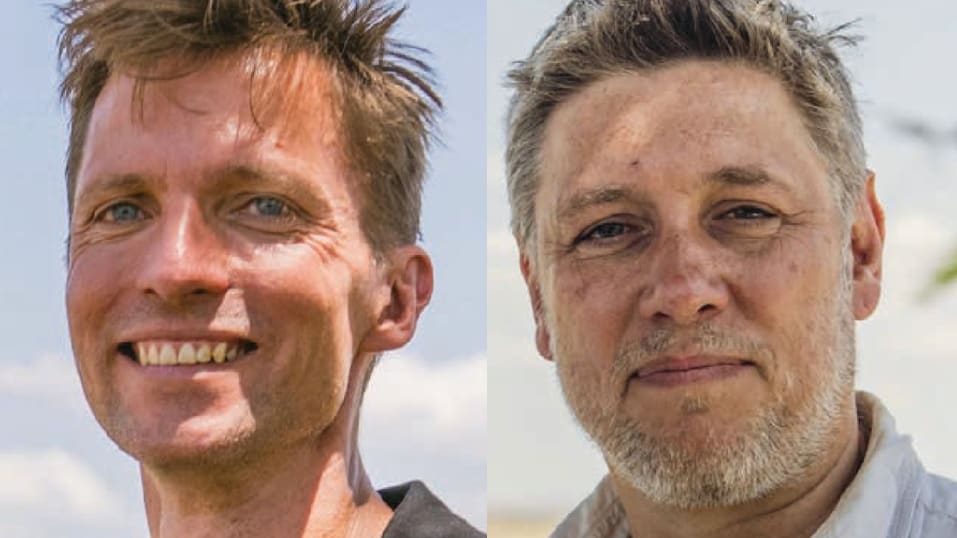
Earthshot: How to Save Our Planet by Colin Butfield and Jonnie Hughes, with an introduction by Prince William, is the definitive book of the prize and a handbook for decision-makers, leaders and citizens around the world. Butfield and Hughes are co-founders of Studio Silverback; furthermore, Butfield is executive producer of WWF’s Our Planet project and an adviser for the Earthshot Prize, and Hughes is an award-winning natural history TV producer and the co-writer of Sir David Attenborough’s A Life on Our Planet. The pair spoke to The Bookseller about Earthshot.
How did you become involved with the Earthshot Prize?
We met Prince William and his team at a World Economic Forum conference in Switzerland a few years back, when we were promoting the “Our Planet” series with Sir David Attenborough. We found that, when talking about sustainability, we had much in common—we both realised that enabling people to understand how positive and beneficial a sustainable future could be was key to driving the change we need. Subsequently we kept in touch and were lucky enough to be on the early journey of the Earthshot Prize as it developed.
We then helped create videos for its launch in October 2020, and were asked to produce the series that would accompany the first Earthshot Prize awards, this year. “The Earthshot Prize: Repairing Our Planet” (available now on BBC iPlayer and Discovery+) is the result.
What tone did you seek to strike in your book? You state that you didn’t want to pull any punches, but that you also wanted to tell human stories from which we can all take heart —“what we need above all is belief”.
The story of our relationship with the environment has moved on from where it was when we were young. Back then, the news was too grim for many to engage with. There were significant barriers to becoming “green”. But now, we can envisage the path to sustainability, and it is a path full of amazing opportunities and gains. In the book, we reflect the tone of the whole prize: urgency plus optimism equals action. We have to come to terms with the genuine scale of the crisis, but we can also allow ourselves to imagine overcoming it. That is a powerful and exciting concoction that everyone can engage with.
Your book provides an excellent overview of what is happening across the world, but sometimes people struggle to accept that anything they do in a small way locally can truly have an impact on what is a global crisis. What is the key to changing minds here?
Revealing the truth! Just as democracy works upon the collective decisions of millions, so sustainability becomes possible in the same way. When you make a move towards more sustainable choices, that move is important and impactful, in two respects: firstly, you reduce your footprint on the planet, and if everyone did the same, then our combined footprint would be less. Second, the politicians and business leaders register this move and, if enough people do it, change their decisions as a result.
This secondary impact is extremely important, because it is when politicians create sustainable policies and business leaders create sustainable products and services that the move to sustainable choices becomes easier for everyone. This all comes down to making “green” normal, which is what is happening. Once it is normal to be green, there will be a sustainability revolution.
You have both worked in television, which has proved a very powerful medium in bringing the climate crisis to the attention of a mass audience, and indeed you have founded Studio Silverback to extend that filmmaking work. What role can books play?
A television series is ideal for reaching a big audience over a limited period, and telling them a powerful story that can spark debate and discussion. A book has a much more intimate relationship with its owner. Our book can be read as a whole, or dipped into again and again and used like a handbook. We have purposefully added much more information in the book on how individuals can challenge themselves with their own Earthshots, to set themselves achievable targets for this year, and over the next 10 years.
Who do you hope will read this book?
Well, everyone! As has been said, we are the first humans to truly understand the damage we are doing to the planet, and the last to be able to do anything about it. The story of how humanity impacts the planet and how we can change this is important to everyone alive. We would be particularly delighted to see this book in schools and libraries so it becomes accessible to all.