



Four ways becoming an author changed me as an editor
Switching perspectives has brought valuable insights.



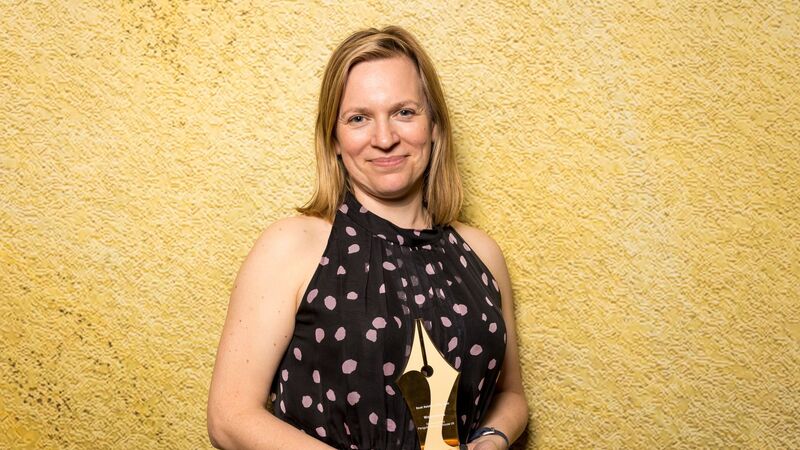
I’m over the moon that my debut novel, Storm Bringer, is publishing on 7th May. I carried a lot of being an editor into my author life, but one of unexpected side effects of my new, two-hat-wearing existence is that becoming an author has also changed me as an editor. These are the four things that have changed the most.
1. I’m more compassionate in how I edit
I was as prepared as I could be to get my first edit as an author. I had a good sense of what Chicken House wanted from my revisions from the point of acquisition. I had a great call with my editor Shalu before she sent her letter (a thorough but gentle exposure of all the flaws I hoped I’d got away with). The letter was the perfect follow-up to this. But beginning the edit was like staring up at a mountain – I think purely because it was swapping out the rosy glow of having sold the book for the reality of more hard work ahead.
As an editor, I’ve always taken great pleasure in sitting down with a manuscript and landing on the things that are going to make it better. That is, after all, my duty to both the author and my publisher. But though some authors say they love the process of editing, the drafting and redrafting, I now suspect they are masochists. For the majority, my big-picture suggestions are more likely to be met with nervousness than with glee.
Author care is at the front of my mind as an editor, but I began to question if I’ve always got the balance right in the edits themselves. I came across an acknowledgement from many years ago, which read: "Your insightful suggestions improved the novel immensely, and your humour and positivity made cutting entire chapters and beloved characters a joy. (Still not over it.)" Hmm. By looking back and considering my own reaction to the practicalities of edits as an author, I’m thinking even more carefully about how I deliver a view that big changes are needed, because now I understand first-hand how much work that can be for the author.
2. I feel differently about who the client is in the publisher-author relationship
If I need a new shirt, or I’m buying lunch, it’s clear that I’m the customer. It’s less clear-cut in publishing. As a publisher, we are providing a service. When there is a set back, it’s horrible as an editor to have to share it, and it often feels we are sharing bad news with a client. But as an author, my mindset is completely different. I’ve been paid to deliver something – a manuscript – and my focus is on doing that, well and on time. The publisher is the client, no question.
So, which is it? The truth is probably somewhere in the middle, as is usually the case. It is truly a partnership; each needs the other. Having the editor perspective makes me sure of what I expect from what the publisher will provide me with as an author, but having the author perspective has made me firmer and clearer as an editor in setting out what I expect as part of our investment in the author.
I’m thinking even more carefully about how I deliver a view that big changes are needed, because now I understand first-hand how much work that can be for the author
3. It’s recalibrated my balance between the commercial and the creative
As publishing director at Sphere non-fiction, a lot of my time is spent thinking about schedules and budgets, meetings and strategy. I love the business side of the job, but becoming an author has given me an important reminder of how much I love the creative side of what we do, too. As publishers, we set our strategy backed by data and by experience: from how many copies of a book we’re going to print to what the timeline looks like. It’s crucial, of course, but it can be easy to forget that the thing we’re making is art and that art can sometimes be hard to pin down.
When an author tells me they need longer to deliver, I might (virtually) wring my hands – Schedule! Budget! – and I think I’m justified in doing so. But though the author’s request doesn’t usually make my life easier, are they wrong to make it? No. Will it mean a better book in the end? Yes. Is that important? Yes. The editor role has many faces; the author role less so. Getting the chance to write, and to immerse myself in creativity, shines an interesting light back on myself as an editor. I’ll always be juggling plates as an editor – to mix in another metaphor – and I want to make sure I’m spending enough time on the one that represents the joy of creativity.
4. I’m more excited to keep learning
One of the pleasures of becoming an author has been joining a debut writers WhatsApp group. It’s a place to share the excitement – and occasional terror – that comes with being an author, and somewhere everyone can celebrate wins. Our conversations have also illustrated how every book is different, how varied each editor and publisher’s approach can be, and the many questions authors have about publishing. It has made me realise that I still have questions, too, and that both editors and authors are spending a lot of time worrying about what the other is thinking.
My encouragement to authors would be to ask the question: your editor probably just hasn’t anticipated it, or is juggling another plate for your book at the moment (see mixed metaphors in point three). To myself as an editor, I’m going to try to be more expansive at the beginning about encouraging questions before we set off. But overall, the members of the group, with their varied, brilliant debuts, remind me what a privilege it is to be an editor. I’ll bring many more books into the world as an editor than I will as an author and I want to make sure I’m continuing to evolve what I do.
There are so many other little things that could make up another volume of this, but I’ll leave it there for now. After all, I’ve got a deadline for book two to hit!
Storm Bringer by Tig Wallace is out 7 May 2026 in paperback published by Chicken House.