The acclaimed children’s author launches a new diary series inspired by her daughter.
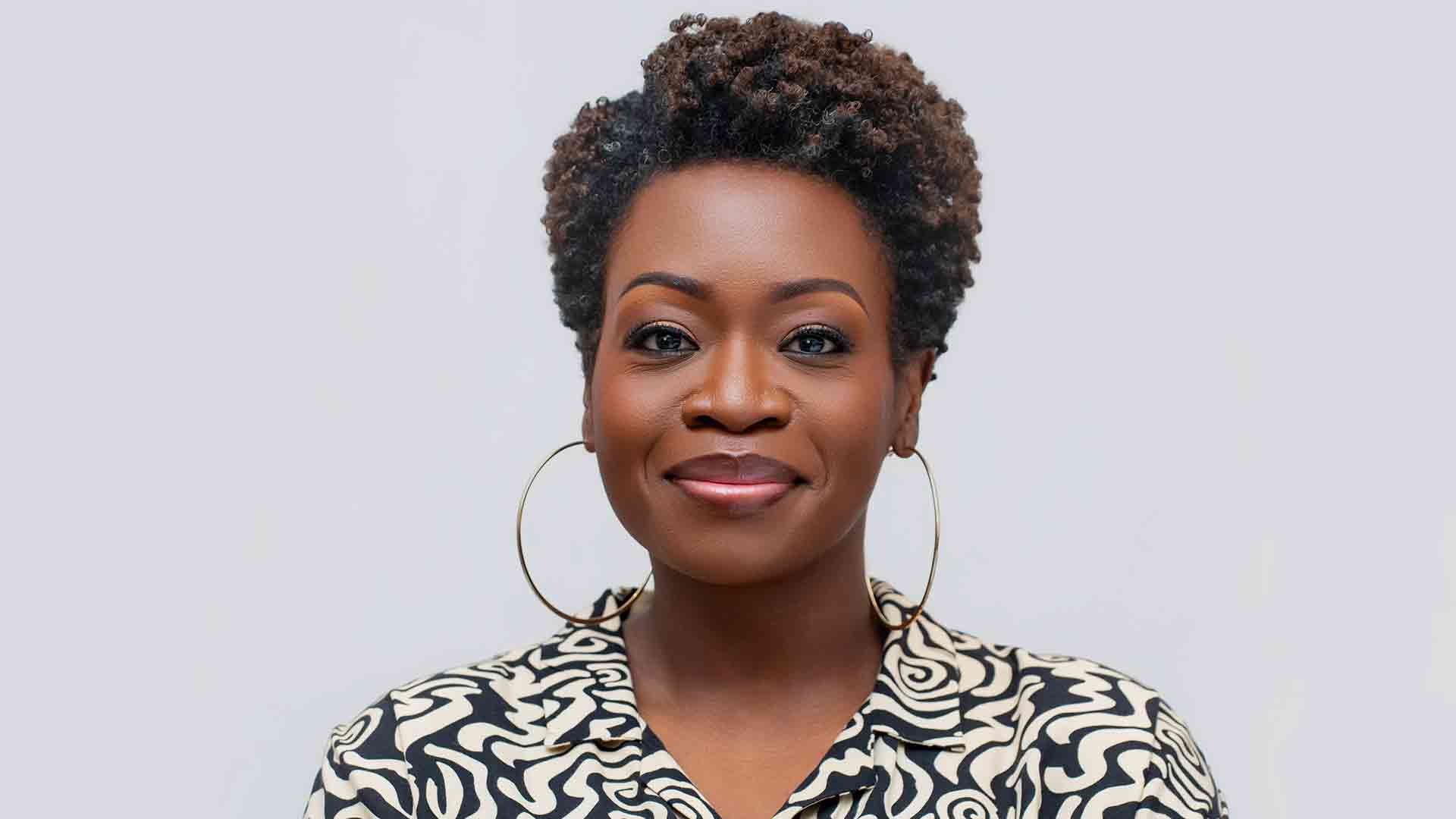
Children’s author Tọlá Okogwu, the writer behind the critically acclaimed fantasy series Onyeka and the Academy of the Sun, is moving into the world of contemporary middle-grade with a new diary series inspired by her daughter. Bim Blake’s Hot Takes: My Pencil Case Doesn’t Define Me came about because her oldest daughter Elizabeth said she wanted to read “romance with a side of mystery” at the age of 8, and Okogwu realised that was not a huge amount out of middle-grade books out there with age-appropriate love interests.
“It expanded for me how I saw representation in children’s books, because up until that point I was thinking about it in quite a narrow sort of way – gender, race, ethnicity, that kind of stuff – and that experience with her taught me that kids want to see what they’re going through represented,” she says. “Elizabeth wanted to see a first crush on a page… to know that she wasn’t the only one who was going through it and having these feelings.”
Elizabeth was already a fan of Rachel Renée Russell’s Dork Diaries and the Lottie Brooks series by Katie Kirby, but once she had burned through her favourites “at a ridiculous pace” she was starting to run out of books to read, so Okogwu thought she could give the genre a go. She put pen to paper and started to create Bim Blake, a young girl who has just moved into Year 7 and has many of the worries girls of that age do, including whether their skirt is the right length, how they should act around the boy they think is cute and the size of her growing boobs.
All of Bim’s experiences are told with humour and heart, and she has a hurdle to manage not many of her contemporaries understand: her mother has passed away, and even though she is not always aware of how hard processing this death is, it is something that is part of her everyday life.
“When I was writing Bim, I realised I hadn’t seen any books where you had a teen who was approaching these very delicate, tumultuous years, but without a mum, and having to do it with mainly male role models around her,” says the author. “I was intrigued by the idea of how does that change the experience? How would the people around her also navigate it?”
Bim also has two brilliantly bolshy aunties who are there in times of crisis, inspired by the Nigerian women in Okogwu’s life. As well as providing plenty of humour, they are a pivotal support to Bim, as aunties were to the author when she was growing up. For Okogwu, this relationship between young people and trusted adults who are not their parents is vital.
“Parents and aunties have different objectives,” she laughs. “I love that my kids have aunts and uncles that they could go to and talk about things that they might not talk to me about. They can be there for them in a different way. I think that’s beautiful.”
Bim is not 100% based on Okogwu’s daughter, but the author was inspired by her, as well as things that happened to her when she was younger, and the bra fitting section, for example, was drawn from real life. It is important to not shy away from these moments, says the author. In book two, Bim starts her period, and once again the story has a new and fresh take on the situation and how the family handles it. “That’s important for me, with these moments that are universal: can I bring something new to them?”
And how does Elizabeth feel about her stories being used in the book? She loves it, says Okogwu. As well as being the inspiration for the stories, Elizabeth was a vital beta reader, giving feedback on what is realistic and what is not.
“I give it to her to read and give me her feedback, what’s feeling realistic, what’s not. Would she say that? Would her friends say that? Are they using that language? Does this make sense? And she loves that she can have a little bit of ownership about the series and the book.”
Continues…
Okogwu is now in her 10th year of being a children’s author and has seen many changes in that time, from her time first as a self-published writer to now being published by some of the biggest publishers in the UK: Simon & Schuster for the Onyeka series and PRH for Bim Blake, which acquired the series when Okogwu made a direct pitch to editor Amina Parchment-Youssef, now at PRH, who had edited the Onyeka series when she worked for Simon & Schuster.
What is life like 10 years down the line? Okogwu is still busy, something she knows does not happen for every writer. She recently took on a part-time job because working solely on creative projects was leading to burn-out and she wanted a more sustainable pace, and the balance in her working life is now better.
When coming up with new projects, the idea comes first, and Okogwu says her background in self-publishing means she has a different approach to some writers.
“Once I have an idea and I’ve played with it, explored it from a creative aspect, the next step for me is a measure of market research. And that can be as simple as canvassing my kids or the other kids around me going to the local bookshop, checking The Bookseller to see what the latest deals are.”
She is also not wedded to being only traditionally published going forward, something that she finds very freeing. There will be more Bim books in the future (PRH has acquired three so far) and she would love to see Onyeka on the big screen, so is working with a Nigerian writer to get a script together. She can also imagine Onyeka as a graphic novel, so that is another pet project she has in mind.
This year is the National Year of Reading and too often children do not think reading is fun or relevant, she says. “It’s our job as publishers and as children’s authors to make sure that they know that it is, whatever that looks like, however we can.”