







The latest from Costa Award winner Claire Fuller is a chilling literary horror
 Alice O'Keeffe
Alice O’Keeffe is head of books at The Bookseller and so is lucky enough to read books for a living. She oversees all the books coverage in
...moreMoving between the summer of 1987 and the present day, a reclusive sculptor finds her past catching up with her.


Alice O’Keeffe is head of books at The Bookseller and so is lucky enough to read books for a living. She oversees all the books coverage in
...morePicture a haunted house. What do you see in your mind’s eye? Perhaps a Gothic pile, a ruined tower, some bats? Probably not a suburban
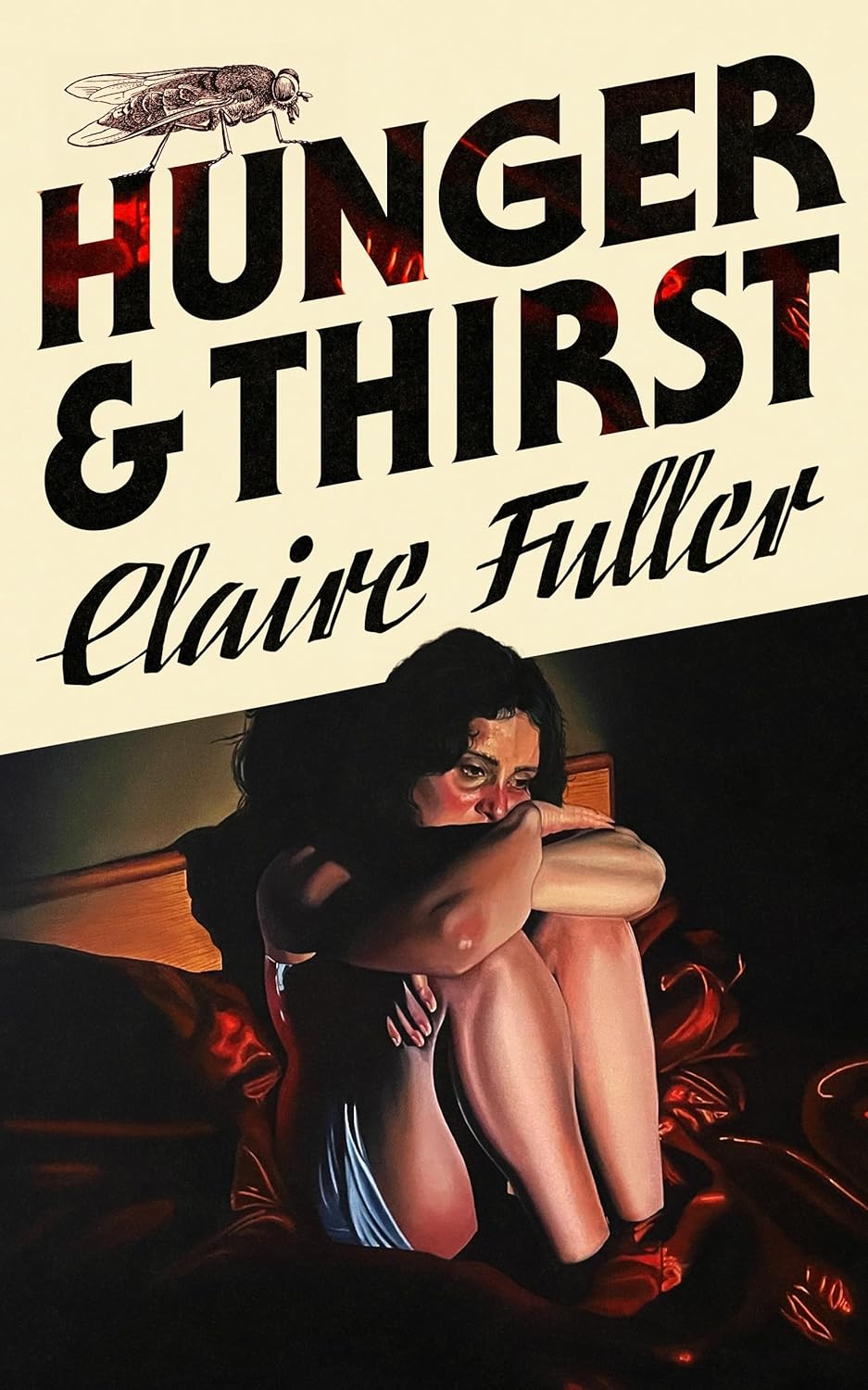
bungalow in Hampshire, but that may change once you read Claire Fuller’s genuinely disturbing literary horror, Hunger & Thirst.
The novel opens with the line: “All everyone wants to know about is the murder and what we did with the body: armchair detectives, tabloid journalists, the curious and the ghoulish, speculating on what happened.” Our narrator is Ursula, now a renowned yet reclusive sculptor living under a pseudonym in London. But a true-crime documentary-maker is closing in on her whereabouts, determined to uncover the truth about the summer of 1987.
So, Ursula looks back at that distant summer, 36 years earlier, when she was a 16-year-old care-leaver living in a halfway house with a job in the post room of the local art school wrangled by her social worker. It is at work that Ursula encounters Sue, a girl her own age who is wild and reckless and obsessed with horror films. Ursula is quietly thrilled to make her first real friend and equally thrilled to move into a squat with Sue’s on-off boyfriend, Vince.
The Underwood is the aforementioned suburban bungalow, now a squat, still eerily crammed to the rafters with stuff – from tins of food in the kitchen cupboards to a hairbrush on the dressing table – belonging to the previous owners, a couple with a baby who met a terrible end. An already creepy situation becomes markedly worse when the three of them, along with Sue’s brother Raymond, decide to hold a séance. At this point, the novel shifts from creepy to downright terrifying…
“I can’t tell you how delighted I am that you were scared,” says Fuller, over video call from her home in Winchester, when I tell her I could not read Hunger & Thirst while it was dark outside. As a young teenager, her “first love” was “proper horror”, she tells me, name-checking Stephen King, James Herbert and the ghost stories of MR James. All of her five previous literary fiction novels, which include the Costa Novel Award-winning Unsettled Ground, have “some kind of darkness”, she says, “but writing a book with some element of horror or a ghost story is something that I’ve always wanted to do”.
The Ursula of 1987 is a young woman desperate for friendship and belonging after a traumatic childhood. Fuller was thinking about “the kind of extremes you would go to be attached to someone, to have that connection with someone. If they asked you to do something extreme, would you do it?”. Sue is fond of a dare, and these escalate in intensity until she eventually dares Ursula to kill someone… Ursula’s decision will haunt her for the rest of her life.
The Underwood is a character in itself, reeking of damp and stale cigarette smoke, but does the séance awaken something malevolent within the house, or does Ursula experience a psychotic break? In other words, does the darkness that comes to consume Ursula come from within or without? “It’s kind of a cocktail, isn’t it, of those three that create the conditions in the Underwood where bad things either really start to happen, or Ursula imagines them starting to happen. But I wanted to write them as if they are absolutely happening.”
I hate writing because it’s like creating the piece of stone, but I love editing, which is the polishing, making sure that everything does absolutely fit together
Interestingly, when Fuller first sent the manuscript to her editors, she received completely different feedback. Her UK editor was happy with the horror story, but the US editor was “team sceptic” and wanted rational explanations for the events in the novel. So edits took a year, “much longer that any of my other novels because I was trying stuff out and then feeling I’ve gone too far with explaining things and then having to unpick it all and then re-put something else in its place. It was like writing the book four times over a year. It was a lot of work. But I feel like I’m really happy with this version now, because it does give some possible psychological explanation, but also you can just read it as if this is really happening.”
The key to writing a convincingly scary scene is the same as writing a sex scene, says Fuller. “It has to be done in the same tone as the rest of the novel. You know, you suddenly can’t be all flowery or use lots of euphemisms or metaphors if you haven’t done that before. I think it works if it’s the same tone, but then this terrible thing is happening. I think that’s how things become scary because nothing has changed except the stuff that’s happening.” Fuller watched a lot of classic horror films to get in the mindset, as does Sue, a horror fan with dreams of directing a film of her own. The influences of classic horror can been found in the novel, with its references to The Shining, Rosemary’s Baby and The Stepford Wives.
The adult Ursula is a sculptor and Fuller herself studied sculpture at Winchester School of Art for her first degree. The act of sculpting and writing a novel are not dissimilar, she says, except with sculpture you are chipping away at a big lump of stone that already exists, whereas with the novel you have to create the lump of stone first before you can chip away at the story inside. “You have to move around in order to see everything with a sculpture. [It’s] the same with a novel, you know, you get to different bits after you’ve read an earlier bit… I hate writing because it’s like creating the piece of stone, but I love editing, which is the polishing, making sure that everything does absolutely fit together. It work[s] in the round, I suppose. So it is very much like sculpting for me.”
The Underwood is based on the actual squat that Fuller lived in while at art school in the late 1980s. It was, she says “quite horrible” and comes with its own alarming story. As Fuller recalls it, the man who had been living in the house went on holiday to Australia to see his daughter – and never came back. “So we lived there with all his stuff, it was really weird. But before I arrived, the girls who were living there told me a story about how one night somebody knocked on one of the windows and then they knocked on the next window and the next window and ran around the house banging on the windows and they never found out who it was. It was clearly just some mad drunk person, not a ghost, but it was such a frightening story when I lived there and it has stayed in my head for however long it is, 40 years.”
Which is possibly as long as Hunger & Thirst will stay with me. Just don’t read it late at night. Or in a bungalow.
Metadata
Imprint Fig Tree
Publication 7th May 2026
Formats HB (9780241757383, £18.99); EB (9781405977746, £18.99)
Editor Helen Garnons-Williams
Agent Jane Finigan, Lutyens & Rubinstein