






You are viewing your 1 free article this month.
Sign in to make the most of your access to expert book trade coverage.
Raymond Antrobus' first prose work for adults is a revelatory exploration of deafness

 Caroline Sanderson
Caroline Sanderson worked as a Waterstones bookseller, and as a book publicist before becoming a freelance writer in 1997. The Bookseller’s
...more
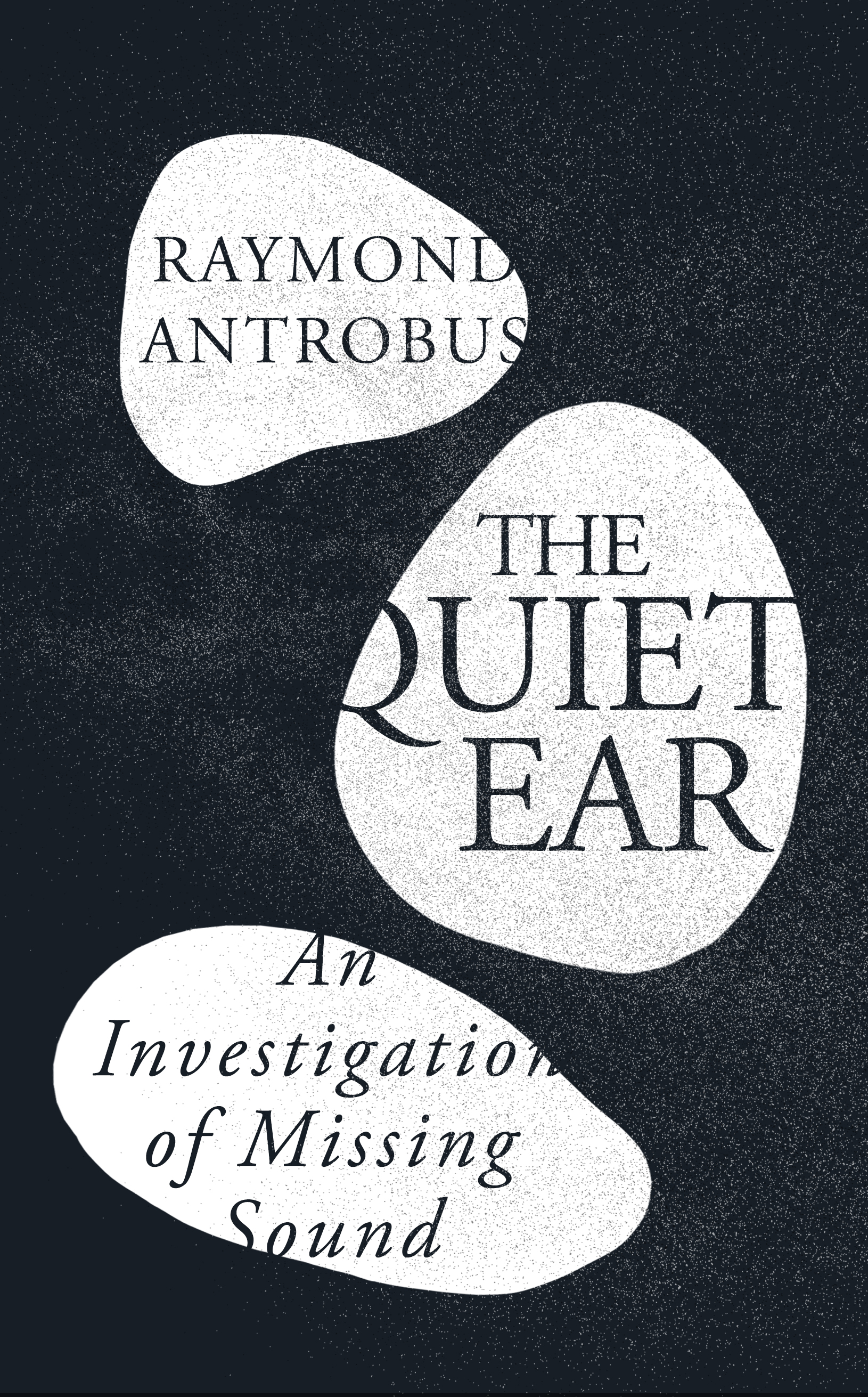
The Quiet Ear by poet Antrobus considers the interplay between written, spoken and signed forms of language.


Caroline Sanderson worked as a Waterstones bookseller, and as a book publicist before becoming a freelance writer in 1997. The Bookseller’s
...more“The subtitle of this book – An Investigation of Missing Sound – could also be the subtitle of my life’s work.” Multi award-winning poet and children’s author Raymond Antrobus is telling me about the genesis of The Quiet Ear: An Investigation of Missing Sound: his first prose work for adults. It is a revelatory exploration of deafness, told through his own experience of missing sound: his inability to hear high-pitched sounds, including bird song, whistles, kettles and alarms, led to a diagnosis of deafness at the age of six. Conveying both the shame of miscommunication and the joy of finding community, The Quiet Ear is also a lament for the decline of specialist deaf education in Britain. “There are more deaf people in the UK now than when I was growing up, but less provision exists,” he tells me. “I wouldn’t get the same support at all now.”
When we chat via video call, Antrobus, who was educated in both mainstream and deaf schooling systems and has used hearing aids since he was a child, tells me that the book began life as a series of essays threaded together by the interplay between the languages of the written, the spoken and the signed word. “I knew I needed to write something in which these three forms of language are presented not in a hierarchical way, with the written word at the top, the spoken word in the middle and the signed word at the bottom, but with equal reverence.”
Contemplating his own experience of acquiring three forms of language, it became clear to Antrobus how unique his own education had been. “Teaching is now a massive part of my life – I teach both in schools and in prisons. So I’ve spent a lot of time thinking about the importance of education and I realised I also wanted to write in homage to the teachers of the deaf who gave me these three forms of language.”
Reflecting on his upbringing in east London, the son of an English mother and Jamaican father, Antrobus charts both his acquisition of these languages and his development as a poet. He also writes beautifully about becoming a father to a hearing child, meditating on how he and his son might “understand or misunderstand each other”. His book builds a bridge of communication between those who have some degree of hearing loss and those who do not, dissecting common assumptions and prevailing stereotypes about deafness along the way. It also serves as a cultural history of deafness in which Antrobus sets his own story alongside those of other deaf cultural figures; from painters such as Francisco Goya and early 20th-century artist Granville Redmond to fellow poets David Wright and Dorothy Miles and singer Johnnie Ray. In the process, he demonstrates that deaf identity, like so much else, exists on a broad spectrum.
Continues...
Read More


Antrobus tells me that one of the most common and most annoying questions asked of deaf people is: why isn’t sign language universal? “Asking this question shows a misunderstanding of what language is. Language comes from the context of a culture and place, so how can any language, including sign language, be universal? I’m an English-language poet but I also exist in the deaf world, which has its own space and its own rules. I’m also of Caribbean heritage and I lived in America for a long time. So I see how different audiences, different readers, different listeners have their own takes on my work.” When he does readings, Antrobus loves working with British Sign Language (BSL) interpreters who “understand the fluidity of poetry” and recognise that their signing is not merely a direct translation of his words but a visual, artistic interpretation of them.
In the case of Antrobus’ own poetic sensibility, being hard of hearing certainly led to his “hyper-fixation on words”. But his deafness has never been the sole formative influence on his poetry. There is his lineage as the grandson of a Congregational church minister JK Antrobus, for example. “My grandad was a preacher and a poet who died just before I was born. My grandma gave me all his sermons and it’s such an affirmation having that written heritage – I think it’s as significant to me as my deafness.” Antrobus’ parents both loved poetry, too. The work of William Blake and Adrian Mitchell, in particular, resonated with his mother, while his DJ father would interweave poetry between his sets. “Then there were all the poets who were incorporated into my speech-therapy sessions, when I had to try and recite lines from rhymes and tongue twisters. It all tuned me in.”
Music also had a significant part to play in Antrobus’ growing agility with words and tone and meter. In a memorable section of The Quiet Ear, he describes recording DIY radio shows onto cassette tapes as a teenager, in the voices of two alter egos, DJ Check and DJ Check Mate, with Busta Rhymes as his main imaginary guest. And then one day he heard Leonard Cohen’s One of Us Cannot Be Wrong on the cassette player in his mother’s bedroom and Cohen’s “soft, sincere sound” resonated deeply. “Hearing Leonard Cohen changed my life – it was like he was speaking to me first,” he recalls.
The Quiet Ear is beautifully balanced between Antrobus’s experience of deafness – with all the challenges it entails in a world largely geared to those who hear well – and the idea of ‘deaf gain’: the notion that deafness is, in itself, a particular sensibility rather than an impairment. It is a book that therefore asks the reader to accord the languages of deafness “the reverence they deserve”.
And, as an assertion of the deaf part of his identity, The Quiet Ear’s publication also marks a personal watershed for a gifted writer who, as a ‘differently-abled’ Black boy, was desperate not to stand out and who later became concerned that his deafness would lead to being pigeon-holed as a “deaf poet”. When Antrobus returned to visit the north-London deaf school he attended, he met his former English teacher Miss Willis. “I hadn’t seen her for years, but she remembered me straight away. ‘Ah Raymond,’ she said. ‘Have you accepted that you’re deaf yet?’ And I started crying because she knew about the masking I used to do. She really understood what embracing my deaf identity would mean.”
Metadata
Imprint Weidenfeld & Nicolson
Publication 28th August 2025
Formats HB (9781399619660, £16.99), EB (9781399619691, £16.99)
Rights sold US (Hogarth)
Editor Alexa von Hirschberg
Agent David Evans, David Higham Associates