




Librarian Lucas Maxwell draws on his own childhood growing up in Nova Scotia for his YA debut


This heartfelt coming-of-age story won the 2024 Times/Chicken House Children’s Fiction Competition.


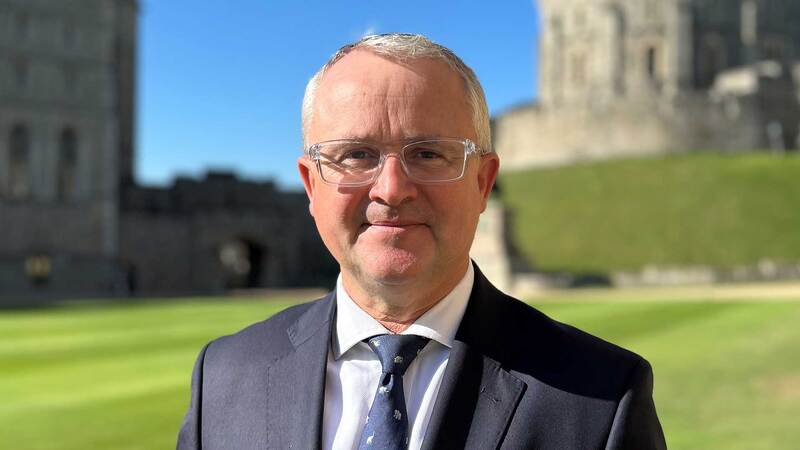
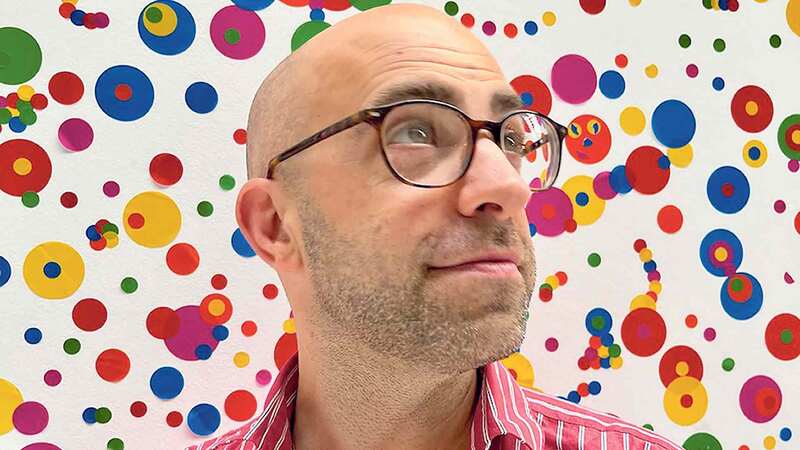
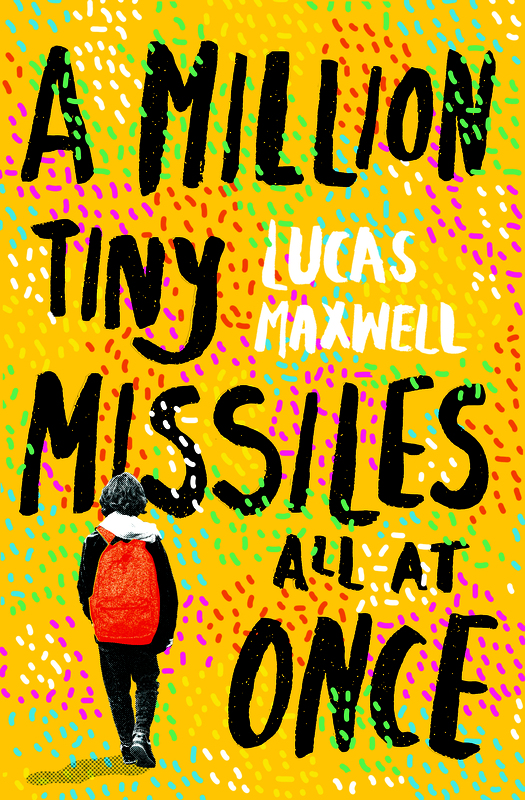
For 12 years, Lucas Maxwell has been championing children’s books and helping young people at a South London secondary school, where his work as librarian won him the British Empire Medal in 2024. Now, he is stepping into a slightly different role as an author with the release of A Million Tiny Missiles All at Once, his heartfelt coming-of-age story about addiction, family and neurodivergence.
Maxwell’s debut, which won the 2024 Times/Chicken House Children’s Fiction Competition (securing a publishing contract and the offer of agent representation), is about an autistic 14-year-old boy growing up in Nova Scotia. Elias is very close to his older brother, Bo, but when Bo starts to get involved in drugs (which is hinted at, not made fully explicit) Elias realises there is a growing gap between them that is tearing the family apart. Meanwhile, Elias’ school is organising a talent competition. He decides that if he can be the best at telling jokes he will win the prize – a meal at a pizza restaurant – and bring the family together again. Of course, life is not that easy, which he learns as the novel progresses.
Maxwell drew heavily on his own upbringing in Nova Scotia, where his dad (like Elias’) was a policeman, lending the novel real emotional authenticity. “This was in rural Canada, so people would drive by and see the police car in the yard and think, ‘I will go there instead of the police station,’” he says. “We had a revolving door of characters [coming to the house], sometimes people at their absolute worst, and I witnessed a lot of it, as did my brother.”
I knew this character, and I knew him really well because it was me at that time
Something Elias does not understand at first is Bo’s addiction to drugs, which is again drawn from real life, because Maxwell’s own brother struggled with addiction. Rather than centring addiction directly, the novel explores it through the eyes of a younger sibling who does not fully comprehend what is happening. “We first meet Bo when he’s 17 and he’s had his vehicle taken away from his parents [and] he’s left his job at the lumber mill. He hides that from his parents and he’s getting involved in things he shouldn’t be. He is going down the path of destruction and can’t seem to get out of it, and then ultimately he gets tied up with people who are kind of scary.”
Elias initially struggles to understand, both because of his young age and because he is neurodivergent. Maxwell was diagnosed with autism at a later age (39) and Elias’ way of looking at the world reflects his own. “I struggled with communication and figuring things out. I struggle with nuance and stuff like that. I knew this character, and I knew him really well because it was me at that time.
“I don’t think I could write a novel that didn’t reflect my own experiences, and I wouldn’t personally feel comfortable creating a neurodivergent character if I wasn’t neurodivergent,” he explains. “I don’t think I even mentioned it initially. I wanted the character to be like this because I don’t know any other way.”
Continues…
Read More

Maxwell started writing the first lines of A Million Tiny Missiles All at Once when he was a student in a creative writing class. The teacher held up his work and declared: “This will be in a book one day, I know it.” But the novel as it stands today took decades to come to fruition, after years of “writing, writing, writing” and submitting to agents. The first agent he ever sent A Million Tiny Missiles All at Once to was Lydia Silver, who now – after several turns of events – represents him, but she rejected the manuscript when she first read it, years ago (rightly so, it was not ready, says Maxwell). Since then, he has received more than a hundred rejections.
Did he ever feel like giving up? When he saw an advert for the Chicken House competition he told himself that if this did not work out he would take a break, but then he got the call from Barry Cunningham to say he had been shortlisted. “This sounds too poetic, too on the nose, but I was walking my dog and it was on the day that was the anniversary of my brother’s passing. I had to literally sit down on the grass, I was so blown away,” says Maxwell. “Just being shortlisted gave me so much more confidence.”
At the ceremony, Frank Cottrell-Boyce first announced the winner of The Lime Pictures New Storyteller Award, given to the novel that shows the greatest TV development potential. When Cottrell-Boyce said he could see action figures being made from this book, Maxwell said he knew he had not won that prize. “Nobody wants a sad Canadian teen action figure,” he jokes. But when Lucy Bannerman from the Times said she felt cold reading the book by the second winner, Maxwell knew he might be in with a shot. “Then I saw my big head on the screen. I just couldn’t believe it.”
Maxwell wants the book to ultimately be one that brings hope to readers. Elias’ story is one of grit and determination, which reflects the author’s life experience, working hard to have success as a librarian then finally achieving his childhood dream of having a book published. It is also a beautiful tribute to his family and the brother that supported him throughout his childhood. Maxwell’s brother sadly passed away in 2018, but he knew his sibling always wanted to be a writer.
“I would not have survived high school without him because I felt overwhelmed and anxious all the time, and we were targeted by people. He really protected me. This book wouldn’t have existed without him.”
Metadata
Imprint Chicken House
Publication 9th April 2026
Formats PB (9781917171397, £8.99); EB (9781917171403, £8.99)
Rights sold US (Scholastic), Spain
Editor Shalu Vallepur
Agent Lydia Silver, The Soho Agency