





Eleanor Crewes moves from memoirist to the supernatural in her new queer-coded book
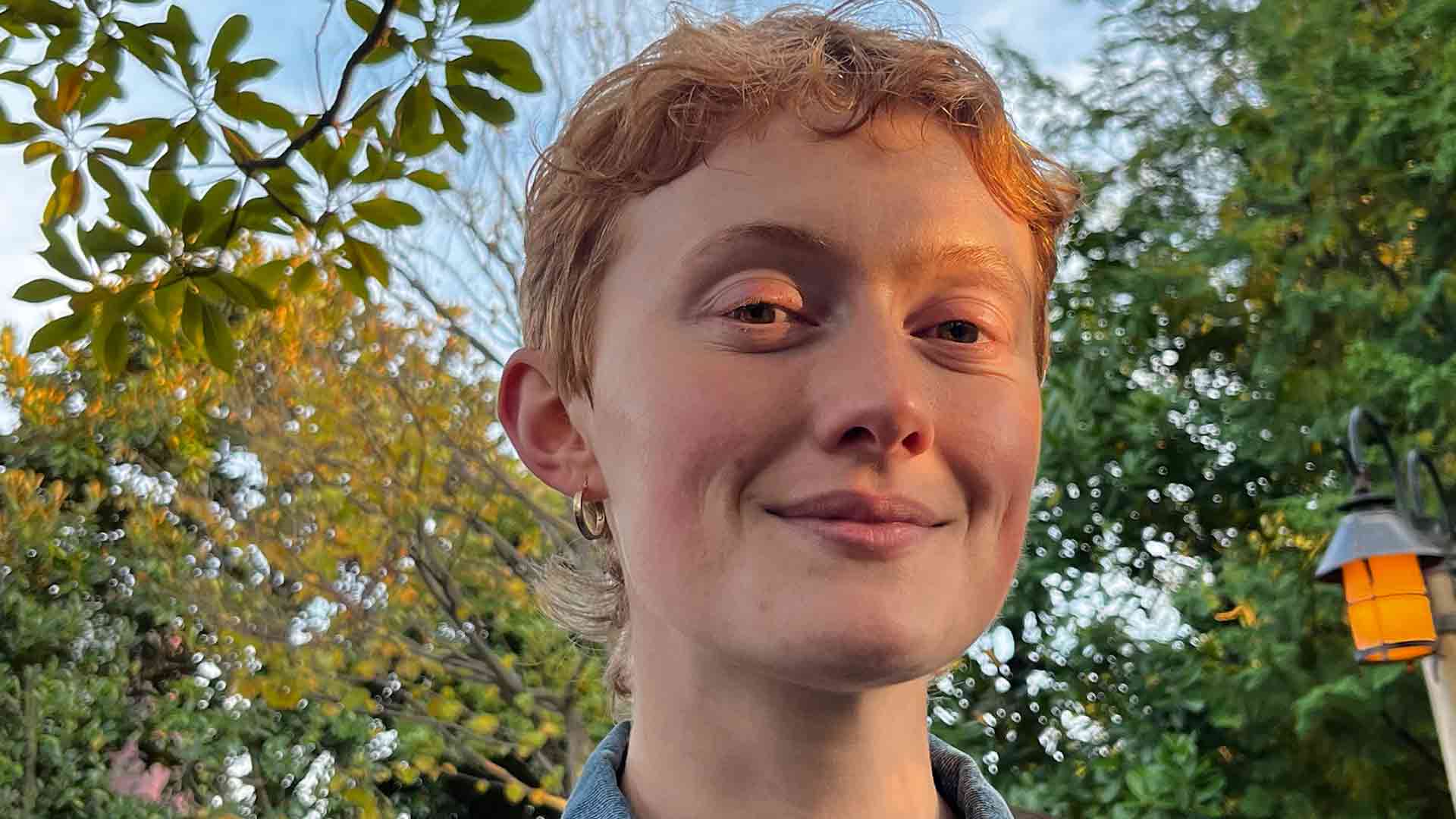

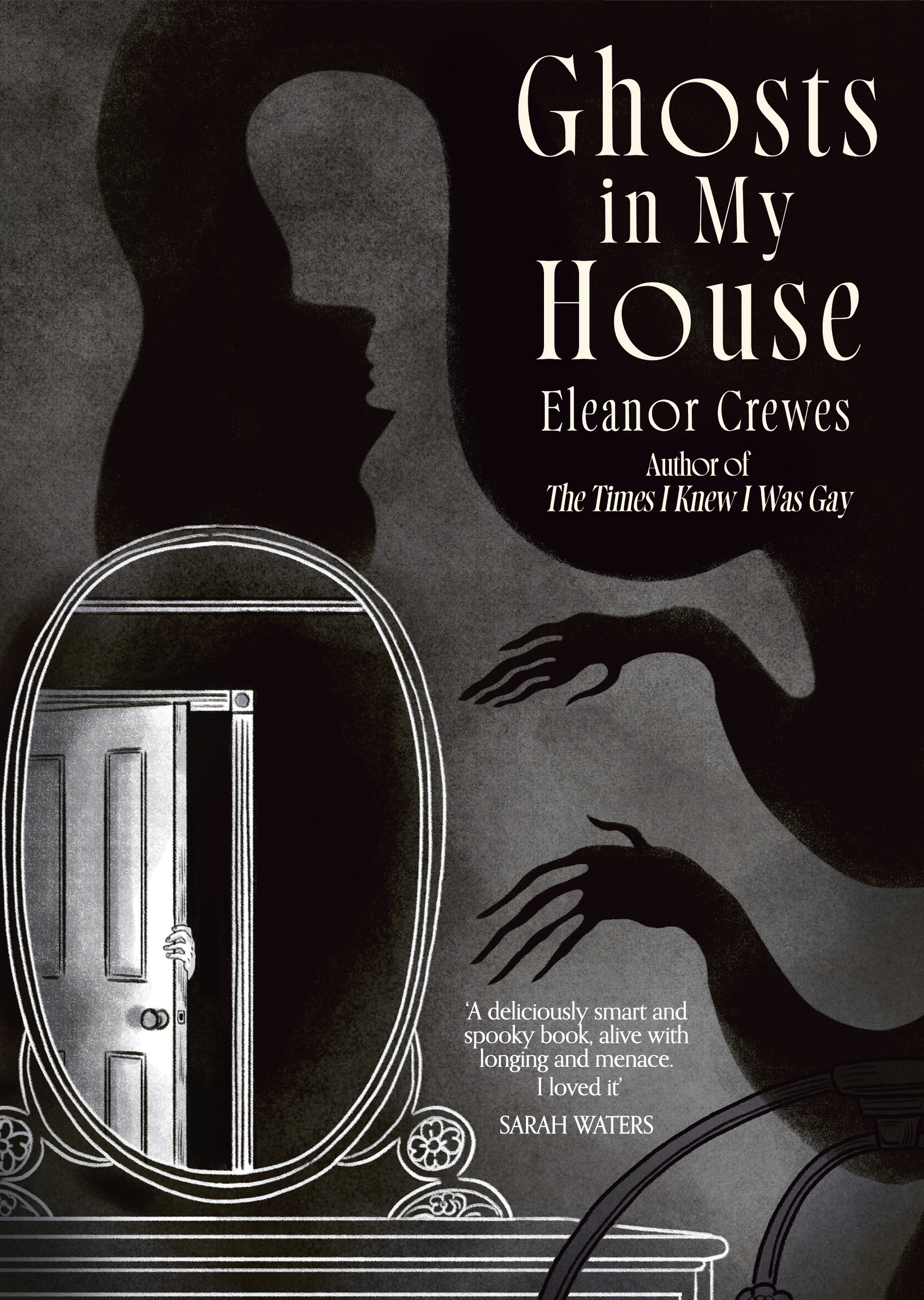
Ghosts in My House, Crewes’ first adult graphic novel, is proof that publishers have realised there is breadth to the queer audience.


The best ghost tales are often deeply rooted in place, the scares coming not just from apparitions but the menace of a creepy building: think Shirley Jackson’s Hill House, the Overlook Hotel in Stephen King’s The Shining or Eel Marsh House, where Susan Hill sends poor Arthur Kipps in The Woman In Black.
These stories raise goosebumps because of the universality; we have all been home late at night when an unexplained creak lets our imaginations run wild, or walked down a street and clocked a house that seems creepy and just… off.
The latter experience was part of Eleanor Crewes’ creating Ghosts in My House, her upcoming first adult graphic novel that follows her debut graphic memoir, The Times I Knew I Was Gay, and her middle-grade comic, Lilla the Accidental Witch. She had been thinking about interlinked queer-themed ghost stories back when she was in art college, but was searching for a unifying element.
Crewes studied at the London College of Communication which sits “right next to that ugly Elephant and Castle roundabout – you know, the groin of London. I would be looking out the window, thinking ‘How can I find inspiration here, watching the lorries go by?’ But around campus there are some interesting old parts and by the Imperial War Museum there is a square. Walking into it I was drawn to a particular corner, to a particular house that was just different from its neighbours with this slightly odd architecture. It felt right: I had my setting and could say to my characters, ‘I have a home for you now where you can flourish and be horribly haunted.’”
Ghosts in My House’s vignettes revolve around various residents of No. 20, “a house that sat within a square” over a period beginning from the Second World War to the modern day. The characters are all harbouring queer secrets, including Connie, wrestling with their identity as bombs fall in the Blitz; Orlaith, who when No. 20 is a lodging house in the 1980s yearns for the beautiful seamstress who lives on the top floor, though she has only caught the merest glimpses of her; and early 2000s teen Teddy, who longs for his classmate Sebastian though he has to hide it from his friends.
All are visited by a version of a paranormal entity called The Man, the house’s one constant dweller, who at first appears to help the residents but, we soon learn, that is because it is a sinister creature that needs to ravenously consume desires. The book’s overall tone is deliciously unsettling but Ghosts in My House is also heart-tuggingly affecting as all the main characters are hoping to discover something deep within themselves. The eeriness is helped by Crewes’ expressive monochrome artwork, with a deceptive simplicity that reveals more at each re-read.
Ghosts in My House is also wonderfully ambiguous. I have read it four times and I have come away with just as many interpretations of The Man’s motivations. And Crewes plays it so one of the characters’ denouements can be seen as one of the most horrific endings one could experience, or the fulfilment of a long-held desire.
This is intentional, Crewes says: “One of the things I have always loved about other people’s ghost stories was the sense of the unknown – that not every question was answered and I would have to work out how to interpret it. And that can be powerful; I’m paraphrasing, but it’s like Stephen King writes in Danse Macabre [his non-fiction book on the horror genre] that what you imagine lies behind the closed door is never as frightening as the door itself.”
Crewes has been interested in horror and ghost stories from when she was very young growing up in north London, which was indulged by her parents and an aunt whom she used to visit in Italy during the summers (that real-life aunt is not dissimilar to Zia Peria who the titular Lilla in Crewes’ second book goes to stay with). Crewes says: “My parents essentially decided that if I was desperate to watch The Sixth Sense they’d let me, then deal with the fallout for the next two years.” She has also loved graphic novels since she was a kid and was brought to comic shops by her dad who would buy her stories “with a strong female lead, and if possible red hair, so there was a lot of Spider-Man Loves Mary Jane”.
Continues…
Read More
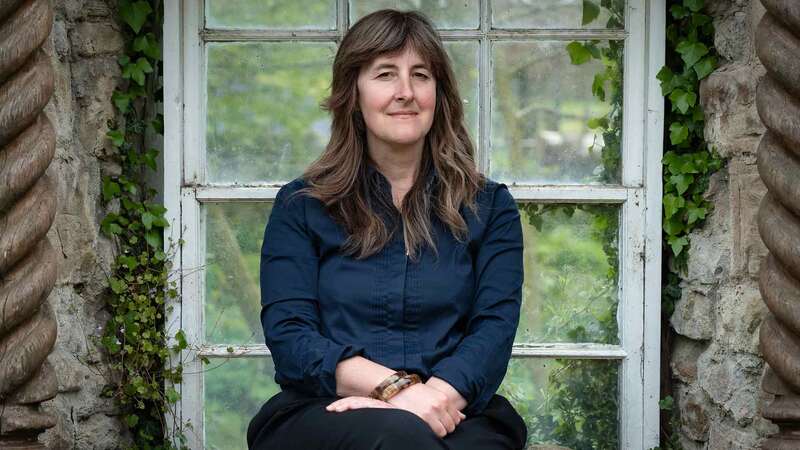
A few graphic novels that came out while Crewes was nearing the end of her degree, including Emily Carroll’s seminal Through the Woods, were inspirational and got her thinking about what would become The Times I Knew I Was Gay. During that period she was noodling around Gosh! Comics’ on Berwick Street “probably looking for something spooky”, when she got talking to Tom Oldham, manager at the indie shop stalwart. Crewes says: “This was when Gosh! were really developing their small-press section, and he asked me if I had a ’zine. I said ‘Of course’, even though I didn’t, but I had an idea for one.”
Shortly after graduation she delivered five copies of the first instalment of The Times I Knew I Was Gay to Gosh!. Crewes says: “So, I can say that I have been working in publishing since graduation. I might not have been paying the rent with those ’zines, but I was developing my story.” The Times I Knew I Was Gay ’zines were later published in a collected edition by not-for-profit indie Good Comics before being snapped up by Sarah Savitt at Virago and later Scribner US for the final expanded version.
We are in a golden age, at least sales-wise, for comics in Britain. Crewes has perhaps a wider perspective than most on the sector as she works part-time at Stoke Newington Bookshop – though she is currently on maternity leave as she and her partner had their first child earlier this year. She has seen a shift in perspective from publishers outside comics specialists as “they used to say: ‘This is great, but we don’t know what to do with it.’” But now, as comics expand, she believes editors are not only enthusiastic but able to cannily position titles in the market.
She notes that even at a relatively small indie like the Stokey bookshop, there are adult and children’s comics sections with a wide breadth of sub-genres “which cater to most readers. So, it’s been really exciting to see the change happening in comics while I’m still developing them. There’s nothing quite like being an artist able to say that my craft will still be interesting in five years’ time. And I think graphic novels only have more life and growth in them”.
Crewes is also optimistic at the state of LGBTQ+ writing in general: “I love that my gay ghost stories are coming out with such a plethora of queer horror writers – or queer writers turning their hands to horror – because horror seems very queer as it is can be entwined with thoughts on secrecy and the desire in the shadowy back of your mind.
“Before I went on maternity leave at the shop, it got to a point where, if I’d be unboxing a delivery from any major publisher, there would be at least two queer books. That would have never been the case even five years ago. And we are at a point where you don’t even realise you are picking up something queer. It’s not the gay book of the summer, it’s the book of the summer: it’s The Safekeep or In Memoriam or Still Life. It’s exciting that as a queer person you can go into a bookshop and find yourself in every part of it, not just the raunchy section. There’s depth and breadth of queer writing available because publishers have realised that there’s a breadth to the queer audience.”
Metadata
Imprint Virago
Publication 15th October 2026
Formats TPB (9780349017266, £18.99); EB (9780349017259, £18.99)
Rights sold UK & Commonwealth (Virago), North America (HarperCollins)
Editor Sarah Savitt
Agent Anna Power, Johnson & Alcock