

You are viewing your 1 free article this month.
Sign in to make the most of your access to expert book trade coverage.
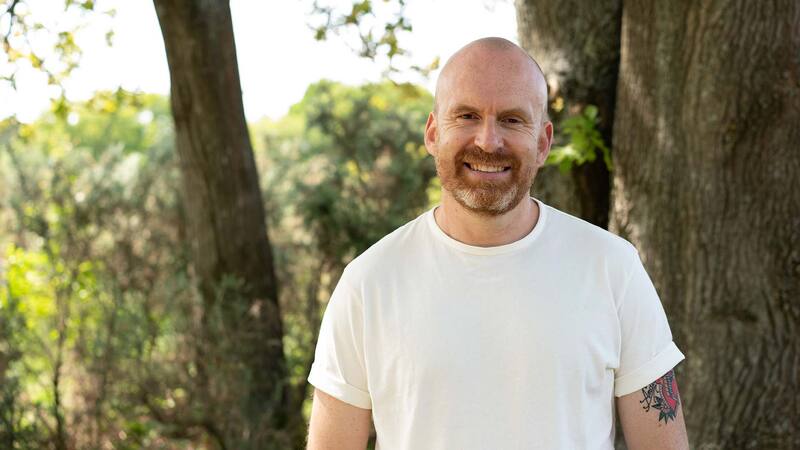
With the National Year of Reading kicking off in just a month, campaign director David Hayman and the six core Year of Reading team members, based in the National Literacy Trust offices in Vauxhall, London, are preparing for launch while continuing to fundraise towards their £10m goal.
“We’ve got big ambitions for the campaign,” Hayman tells The Bookseller, “so that’s looking like a multi-million pound campaign budget, which spreads across the three different buckets of work that we do.”
The campaign received government funding to “help set us off” and is also receiving funding from “trusts and foundations who are aligned around literacy, education and reading”, as well as from the private sector and publishers.
“We’re really trying to get a range of support, reflective of the range of partners and stakeholders involved in the campaign,” Hayman explains. “We’re a decent chunk of the way there,” – over halfway, he adds – “but we’re certainly not fully funded, so we are actively fundraising. We’ve got a great calendar of activity for 2026 and hopefully some new partners will be announced in the next couple of weeks as well.”
Of the three strands of work the money is being channelled into, the first is the “national comms element of the campaign; the public-facing, media storytelling, public mobilisation side of things”. This will be supported by ambassadors, brand partners and authors who will be “getting the message out there”. The branding includes the campaign slogan, “Go All In”.
Continues...
On why those three words, Hayman says: “The principle is that we want to make reading accessible, social and meaningful for people. It’s [about] bringing reading back to culture and building a joy, love and positive association with reading, the way that we feel is increasingly falling away. And to do that, the great creative work and thinking that’s taken place has really been focused around not trying to ‘other’ reading, with reading something you do, separately, distinct, as a standalone hobby associated with a chore or homework, but as a mechanism to really go deeper on the things you already really love. So, for example. if you’re into football, this isn’t about stopping getting into football and then going to reading. It’s how reading can really deepen your joy and passion for football.”
The second strand is the work going on on the ground. “I’d say the majority [of the money] will be focused on the community activations across the UK, in schools, in libraries, with volunteers in the criminal justice space. That’s where the bulk will be directed towards. We want to be getting the work out there in communities, boots on the ground, delivering. That is not all going to be through NLT but through partners as well.”
Part of this, Hayman explains, is striking a balance between what is centralised and what is devolved. “I hope we’ll do a good job of giving enough direction, support, resources, common themes, common dates, creative content, messaging, an umbrella narrative for the campaign that helps give that direction and bring people together and act as that unified force,” he says.
“But absolutely, we don’t expect to be involved in every organisation’s activation. We really want people to adapt it, to run with it. The goal in brand is really flexible, we really are trying to decentralise and empower people to run with it in the way that works best for them, their audiences and their communities [...] It’s trying to figure out how we can bring everyone together. You know, have a shared direction, shared narrative, shared messaging, but also accept and embrace the fact that this is going to be a campaign that pops up in weird and wonderful ways all across the UK, throughout 2026 and beyond.”
Continues...

The third strand, Hayman goes on, is “shared services”: the content being developed to support the campaign, “things like research and analysis into reading behaviours”. Recently, the campaign commissioned research with market research company Savanta exploring some of the barriers to reading among different audiences in the UK and potential ways to overcome them.
Furthermore, in terms of how the success of the Year of Reading will be measured, the campaign is in the process of commissioning an evaluation provider “who can come onboard and do a really robust look at the year: what’s worked, what hasn’t worked, what can be scaled. [...] We’re looking for potential partners who can come in and do that work throughout 2026. We want that embedded right from the start.”
And while evaluation is “really key to us”, so is legacy: “As much as I’m very much focused on 1st January, we’re also focused on 1st January 2027 and what happens afterwards; taking the lessons and learnings from this campaign and using them and applying them across the sector, with government, policy position, financial asks, how we can really say this is what we’ve learned from the campaign. This is what’s been brilliant. These are what the challenges are, this is what we think is missing and what can we do to scale that going forward? There’s definitely a kind of ongoing piece around legacy throughout the year, which is: how do we build off the foundations?”
Hayman continues that though there are “clearly real benefits to a focused, time-bound period where you really get into a campaign”, which makes the Year of Reading “such a powerful and important focus area”, the National Year of Reading team is taking a longer-term view. “We really don’t see this as just a year-long initiative. It’s all about the next 10 years beyond that,” he continues.
“We’re less working towards another [Year of Reading] in five years, another one five years after, et cetera. It’s how we lay the foundation. So, what we’re talking about, what we’re encouraging now, is embedded for the next 10 years without there having to be another moment. We’re not thinking about another year, we’re thinking about the next decade. What can really good practice look like to encourage reading for pleasure across the UK and how do we embed that long term?”