





Review of the Year: Authors – The Gruffalo soldier marches on as ‘Freida readahs’ take McFadden to new heights
Julia Donaldson continues her record-breaking run while Fiction is maid to order.


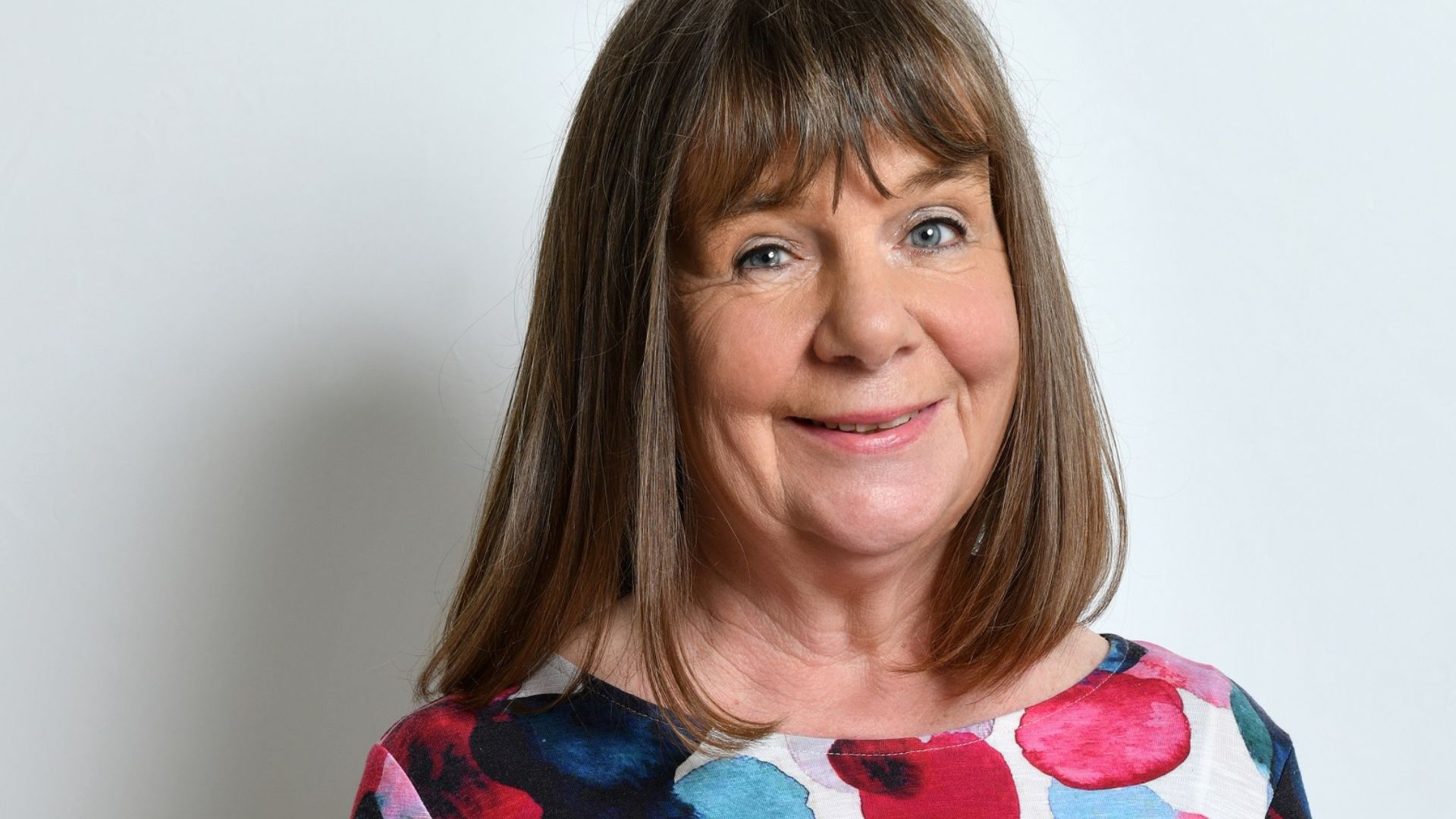
As Trina and Missy Elliott once memorably rapped, let’s rewind that back. In fact, we are rewinding it back as we have since 2020, for Julia Donaldson has notched a record sixth consecutive year as the UK’s bestselling author through NielsenIQ BookScan’s Total Consumer Market (TCM).
The picture-book empress secured the crown with a personal best of £17.9m on 3.3 million copies sold. This continues another record: 2025 was the 16th year on the trot that Donaldson smashed the £10m TCM mark. While it would be unwise to say a record will never be broken, Donaldson’s annual eight-figure run seems nigh-uncatchable. David Walliams had been second on the consecutive yearly £10m+ streak with eight, but that ended in 2022; the author with a current next-longest active run is Richard Osman with five straight years. Plus, unless something drastic happens, Donaldson’s sales will undoubtedly continue to roll on in similar fashion for years.
(A quick aside, which I have been asked to stress by an Authors Top 50 frequent flyer as “people think I’m far richer than I am”: TCM value data corresponds to money sold through the tills, certainly not what writers earn.)
While Donaldson showed a clean pair of heels to the rest of the league table, second-placed Freida McFadden’s year was transformational. The psychological crime writer’s £12m nearly doubled the total of her huge breakout a year earlier when sales shot up 757% to £6.5m. There was a boost from The Housemaid (Little, Brown) film adaptation at the end of last year but the bulk of the sales had been rung up before then, helped by a hefty schedule of six new releases over the course of 2025.
While a brace of The Housemaid series is published digitally by Bookouture (which launched the author in Britain) and in print via its sister Hachette division Little, Brown, the majority (£8.7m) of McFadden’s sales derived from Sourcebooks’ Poisoned Pen Press, distributed in the UK by DK. With £100,000 chipped in from a handful of other authors, that means the US-based outfit was the UK’s second-biggest imprint in 2025 through BookScan’s Crime, Thriller & Adventure category, trailing only Penguin. There are a few T&Cs here, including how Penguin Random House (PRH) splits its imprints’ paperbacks and hardbacks metadata-wise. But still, this is quite an achievement for the American mystery specialist.
It could be an even bigger 2026 for McFadden, as she kicked off the year with two straight overall UK number ones and there are a brace of confirmed titles on tap for 2026, plus in her latest newsletter to fans – or her “Freida readahs” (Boston-based McFadden’s phrase works best if said with a thick Massachusetts accent) – the author teased there was “much more to come” in the next 12 months.
Actually romantic
It is apposite that Donaldson and McFadden are at the business end of the 2025 league table as it is dominated by Children’s and Fiction. Twenty-seven slots are taken up by adult novelists, 17 by kids’ authors, though there are a number who write across both camps, including JK Rowling, Holly Jackson, Philip Pullman and Sarah J Maas. Kids’ and Fiction authors combined to account for 90.5% of the £247.4m generated by the Top 50. That £247.4m was worth 13.6% of the entire TCM, a significant £20m and 1.2 percentage-point rise on the 2024 list’s share of the market.
Love was in the air for 2025’s Top 50 with 11 authors largely writing about romantic themes, though that is a big tent which can encompass cowboys (Elsie Silver), dragons (Rebecca Yarros) and more traditional fare (Danielle Steel). I am including Jane Austen in this romance 11, who debuts on the league table as publishers piled into her 250th anniversary celebrations. The indefatigable Steel has an interesting volume game model: she produced her typical seven new hardbacks and seven paperbacks over the 12 months. None of them set the world on fire – she is the only author on this list to not have an entry in the TCM’s top 500 titles for the year – but the 14 releases combined to move £2m.
Two newcomers to the list in the broad love-story space hail from this side of the Atlantic, a relative rarity in romance/romantasy’s TikTok era. Thirty-sixth-placed Chloe Walsh originally began self-publishing her Boys of Tommen tranche in 2018, with the series picked up for traditional release in 2023 by Sourcebooks’ Bloom imprint in the US and Piatkus in Britain. Piatkus repositioning the titles as New Adult rather than the YA of the series’ indie-authored incarnation has helped expand the audience; the Piatkus sextet of Walsh’s titles hit the stratosphere in 2025, with sales jumping by 88%, which included an overall UK number one in May. Fun fact: Walsh is the only person from County Cork to ever appear on one of our Author Top 50s.
Callie Hart may be claimed for this side of the pond as she is British, but she began her writing career after moving to California in 2014. Like Walsh, she was not an overnight smash, there were years of the self-publishing grind before she was taken to BookTok’s bosom in 2024 with Quicksilver. Snapped up by Hodderscape, Quicksilver was a hit at its UK launch while November’s follow-up, Brimstone, debuted at number one on just over 43,000 copies.
Winn some, lose a lot
For the 2024 list, I bemoaned the difficult state of Non-Fiction and that there were only 10 authors from the sector in the Top 50. I did not know how good we had it: there are just six entries this time out and one of those, Ruth Jones, derived 40% of her sales from Fiction (though the bulk of her haul came from her and James Corden’s When Gavin Met Stacey and Everything in Between, 2025’s biggest celeb memoir).
For the second year in a row there is no Non-Fiction author in the Top 10 – Jamie Oliver leads the pack in 12th place while Charlie Mackesy returns one rung, and £16,000, behind him – and the only fresh breakout was 18th-placed Mel and Sawyer Robbins.
However, there were some Non-Fiction authors hovering outside the Top 50. Celeb fare was pretty light, though hits in this space are about exceeding expectations and Simon & Schuster had to be delighted with the £1.2m earned by Kathy Burke’s A Mind of My Own, as Sphere probably was with Ozzy Osbourne’s posthumous Last Rites (£1.2m).
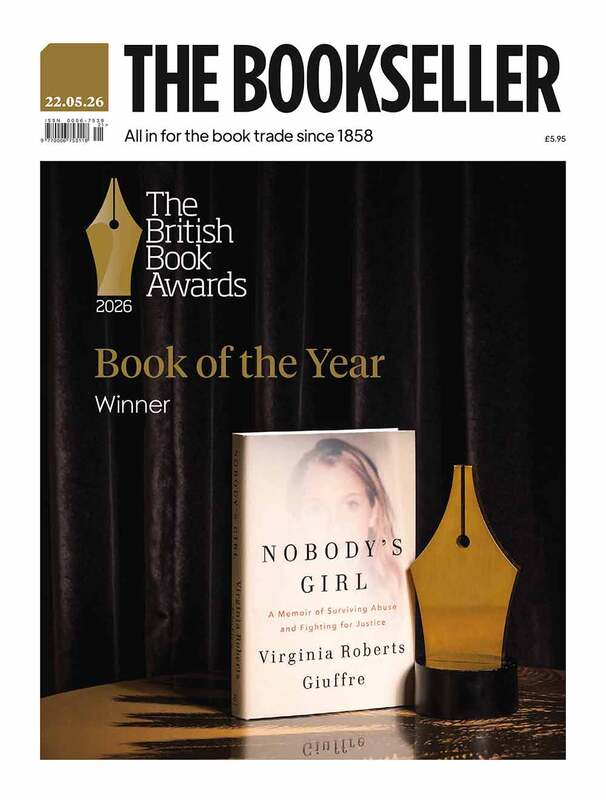
The bestselling memoir of 2025 overall, though, was tinged with tragedy. The late Virginia Roberts Giuffre’s Nobody’s Girl (Doubleday) was her chronicle of surviving abuse at the hands of Jeffrey Epstein and, she alleged, the former Prince Andrew. The book was released under intense media scrutiny, hit number one and its launch nine days before the prince was stripped of his titles was not coincidental timing. A measure of justice for the author, then, though she sadly died by suicide following a car crash a few months before publication. The £2.1m the book shifted through the TCM means Roberts Giuffre missed out on this list by a whisker.
Gary Stevenson (£1.2m) seems like a brand in the making as his The Trading Game (Penguin) was a first half of 2025 hit, scoring 11 consecutive Paperback Non-Fiction number ones. Chloe Dalton shifted £1.7m, thanks to Raising Hare (Canongate) doing even better in second format, helped by prize wins and shortlistings.
Raynor Winn (£1.3m) had a heck of a 2025, a film adaptation-boosted hike of 75% year-on-year, but for some reason tailed off in the latter half of the year. What happened? Seriously, it is interesting that the decline was not so precipitous: Winn sold just over 37,000 units after the Observer published allegations that she fabricated parts of her first book, including husband Moth’s degenerative illness, until the end of the year, which was only 2,000 copies off her pace in a similar period for 2024. Maybe this was partially due to retailers having tonnes of stock and wanting to shift the books rather than return.
This is wholly anecdotal, but about a month after the Observer broke the news, amid fresh allegations, PRH soul-searching about its fact-checking and the furore at full height, I was at WH Smith Heathrow T5 and an entire Books We’re Recommending Now bay was devoted to Winn. WHS, we all know, is not the most pulse-taking, responsive bookseller. But it does know its customers and maybe the bulk of the reading public just does not care about veracity in memoir.
In the end, there just were not the hits: only 20 Non-Fiction titles shifted more than £1m through the TCM in 2025, an all-time low, barring the pandemic years, and five fewer than 2024’s previous nadir. This affected old Author Top 50 reliables (Jeremy Clarkson was down 17.6% to £1.9m) and newer brands – Nathan Anthony’s sales contracted 62% to £1.9m, GT Karber’s Murdle stable slid 41% to £2.1m – alike.
Continues…
Read More


 Review of the Year: Publishers – Fortunes remained mixed in 2025 with publishers stuck in the middle
Old friends
With re-entries for the creators of Robert Langdon, Lyra Belacqua and Panem’s version of The Traitors to this Top 50, you could be forgiven for thinking you time travelled back to the mid-2000s.
Dan Brown’s long-awaited new Langdon, The Secret of Secrets (Bantam), had the author boomeranging back into the list for the first time since 2018, as the title became the third bestselling adult novel of the year by value (£3.7m). And yet… didn’t it seem rather muted, at least compared to his previous lofty standards? The Secret of Secrets claimed the overall number one at launch with an impressive-for-lesser-mortals nearly 78,000 units, but that was 22% down on the initial period for 2017’s Origin, a 66% first-week contraction versus 2013’s Inferno, and 2009’s The Lost Symbol chalked up nearly twice as many units in its first seven days (just under 551,000) than The Secret of Secrets did in three and a half months on the shelves (289,000 copies).
Brown’s huge value percentage rise (3,677%) is due to, at least for the past decade, his backlist in years without a new title not really motoring; his catalogue shifted a relatively slim 11,610 units in 2024. In amelioration, Brown is not a book-a-year guy – he and John Grisham have sold nearly the same amount of units all-time through the TCM (17.1 million), yet in comparison, the more prolific Grisham’s backlist moved 83,000 copies in 2024 – but perhaps the contraction of Brown’s book-on-book performance reflects older fans responding to the event of a fresh Langdon and not a growing of a new audience.
Those other Noughties stars, Pullman and Suzanne Collins, return after gaps of five and four years, respectively. Collins’ second prequel to The Hunger Games, Sunrise on the Reaping (which reads more like reportage than dystopia every day Trump is in office), had a £4.5m haul through the TCM, the biggest Children’s book of 2025 by some £2.6m. Perhaps the most interesting aspect of Sunrise’s release was publisher Scholastic leaning into the exclusive-edition era’s trend of a fanbase’s willingness to pay top dollar. The £19.99 recommended retail price is the highest for the top-selling Children’s title via the TCM in a calendar year since records began. An additional £1.1m in Collins’ sales came from a Sunrise on the Reaping “collector’s edition” (which earned £300,000 with its £24.13 average selling price), plus various illustrated volumes and box sets of Collins’ backlist, all of which had RRPs of at least £30.
The very large gap between Collins and the second-bestselling kids’ book is in part due to The Rose Field, the sixth and last of Pullman’s titles featuring Belacqua, being coded for Science Fiction & Fantasy (SFF) by co-publishers David Fickling and PRH, not in Young Adult as the previous five have been. Yes, The Rose Field is arguably more complex and ‘adult’ than its predecessors, but maybe there was a thought of more adult pricing, too – the book’s £25 RRP would have been a reach for the YA market but sits comfortably within SFF hardbacks’ going rates.
Middle-grade moves
Comics on both the kids’ and adult side had a monster 2025, combining to shift £78.7m, with a TCM record for Children’s Comic Strip Fiction and a second-best return for adult Graphic Novels. Two comics creators feature in this list, Dav Pilkey and Jamie Smart. In a combined adult and kids’ comics chart arranged by value, the duo take the top 19 spaces (12 for Pilkey, seven for Smart) with Neill Cameron’s Donut Squad: Take Over the World! (DFB Phoenix) in 20th.
But it is not just Pilkey and Smart: a record 10 graphic novelists earned more than £1m through the TCM last year with InvestiGators author/illustrator John Patrick Green (£1.6m) joining Pilkey and Smart on the kids’ side along with a host of primarily Manga writers and artists such as Eiichiro Oda (£1.9m), Kentaro Miura (£1.8m) and Abigail Blackman (£1.2m), the latter an editor and designer who collaborates with a host of New York-based Yen Press’ stars including Chugong and the late Dubu, the Korean co-creators of the hit Solo Leveling series.
Middle-grade has been in something of a slump these past few years as the former biggest cog in kids’ has been overtaken by picture books, while a lot of energy in the market is being generated by a surging YA sector. Sales in Children’s Fiction, BookScan’s middle-grade home, dropped 4% to £94.4m in 2025, the category’s lowest ebb in 11 years. However, there is a decent argument that some of that middle-grade momentum has transferred to comics and to the younger end of YA.
That said, this list still has seven middle-grade practitioners, some of whom did very well indeed. Jeff Kinney was one of only seven authors last year to move more than one million units through the TCM, and his 2.5% rise to £6.8m is impressive given the high base and that he is deep into the series: Partypooper (Puffin) was his 20th Wimpy Kid title yet was still 2025’s Children’s Fiction bestseller in both volume (222,040 units) and value (£1.8m).
But it was arguably Katie Kirby’s year in the middle-grade space. The Lottie Brooks creator built on her breakout 2024 with sales jumping 52% to £4.7m as she vaulted 18 spaces up the Author Top 50, tying her with Laurie Gilmore as the list’s biggest mover. Her 2025 outing, Lottie Brooks vs the Ultra Mean Girls (Puffin), debuted as the UK number one and it went on to shift £1.2m, one of only three middle-grade titles to exceed seven figures via the TCM.
Some big brands did not quite do the business. Rowling’s Harry Potter publishing had £6.8m in Children’s Fiction sales, which represents a 4% drop on 2024 (her overall 8.6% rise is down to a new crime novel under the Robert Galbraith pseudonym). A bit unexpected given all the hoo-hah around the audio relaunch and upcoming TV series, but as the new full-cast titles absolutely dominated Audible’s bestsellers in 2025, maybe customers gravitated more to digital.
And then there is the elephant in the HarperCollins break room, Walliams. His 14% drop in sales has little to do with HC saying it would not publish further titles with him due to allegations of “inappropriate behaviour”, as the decision was revealed with only one full week left in 2025. As we have reported in the past four years, Walliams’ sales have been in decline with 2024 his most precipitous drop, plummeting 45%; 2025 was just the continuation of a trend. The cynical among you might suggest HC finally pulled the trigger on Walliams as the level of sales had reached a point where it was not worth the baggage. But it should be pointed out that Walliams is still HC’s biggest author through the TCM. Given his large backlist – which HC has said thus far it will still publish – it is not inconceivable that he will be HC’s biggest author by the end of 2026, too.
Review of the Year: The Official UK Top 50 Authors by value – Weeks 1-52, 2025
-
-
-
-
-
-
-
-
-
-
-
-
-
-
-
-
-
-
-
-
-
-
-
-
-
-
-
-
-
-
-
-
-
-
-
-
-
-
-
-
-
-
-
-
-
-
-
-
-
-
Source: NielsenIQ BookScan's Total Consumer Market, Weeks 1-52, 2025. *Includes co-authors and/or pseudonyms
New faces
-
-
-
-
-
-
Authors with no previous TCM sales