





Oven ready: Taiwanese authors are riding global momentum
The recent success of Taiwan’s authors has given rise to a new wave of authors poised for success.


When the trade gathers in international book fairs, a little “Who’s Hot?” parlour game often gets played on exhibition stands in which industry professionals try to parse out what the big trends are and which markets are on the up. Over the last few cycles, one of the territories on many fairgoers’ lips – and more importantly, one talked about in publishers’ acquisition meetings – has been Taiwan.
The most obvious example of this is Lee Chia-Ying’s A Perfect Day to Put Your Head in the Oven, the global star of this and last year’s rights circuit with superagent Emily Chuang, founder of Taipei-based Emily Books Agency, spearheading deals for the novel in more than 20 territories; it is the fastest-selling title (in translation-deal terms) in Taiwanese publishing history. As if to emphasise Taiwan literature’s rising profile to attendees of this London Book Fair, a fortnight ago Yáng Shuāng-zĭ and translator Lin King’s Taiwan Travelogue (And Other Stories) was longlisted for the International Booker Prize. (This is not Taiwan Travelogue’s first rodeo in big international prizes, either, as the Graywolf Press-published version, also in King’s translation, won the US National Book Awards translated literature gong in 2024.)
But as one swallow does not make a summer, two titles do not mean a territory’s rights game is cooking. But A Perfect Day… and Taiwan Travelogue are just the start. There is a swell of interest for Taiwanese voices and a new – or new to international editors – generation is answering the call. Some of the hotly-tipped titles at LBF 2026 (and beyond) include Nakao Eki Pacidal’s Vow Between Banana Leaf and Tree, Kiki Liu’s Girl in an Odd City, the Astrid Lindgren-shortlisted author/illustrator Hsu-King Liu’s Little Monk Writes Rain and Gigi L Leung’s Everyday Movement.
These authors are supported by an equally talented new cohort of thrusting, proactive Taiwanese translators such as King, Jenna Tang and Kevin Wang, whose pitching to foreign publishers is often key to the publication process.
Most countries’ literatures are complex and nuanced; it can be slightly reductive, deducing whether they are trendy in rights-trading terms. Which is a point Taipei-born, now Brooklyn-based Kiki Liu makes when I ask her whether Taiwan is having a moment. “Any time is a good time for Taiwanese writing,” she says. “But I do feel that the effort is more visible now than it has been before. The Taiwanese government has come to recognise the importance of cultural exports and now provides more support to writers telling Taiwanese stories to the world. But I also think writers in Taiwan have simply become more ambitious. The reality is that Taiwan’s domestic book market is [relatively] small, so there is a genuine hunger to reach readers elsewhere.”
This is a point echoed by translator Tang, who notes that Taiwanese literature has “rich, internal diversity: queer literature, feminist literature, Indigenous literature and literature in traditionally-unwritten languages, which include Hakka and Taiwanese Hokkien”. Tang herself hails from a Hakka background, and a lot of her work has been with boundary-pushing feminist writers, including Lin Yi-Han (whose Tang-translated Fang Si-Chi’s First Love Paradise was published by HarperVia in 2024), Lâu Tsí-û and Leah Yang.
But, Tang argues, that diversity and the “layers and nuances” of Taiwanese writing have actually been a selling point. Plus, there has been a real desire by the Taiwanese books industry and cultural bodies to push outward. Tang explains: “The momentum has already been gaining strength as many of the literary communities in Taiwan have gradually been connecting with publishers and creatives overseas. I’ve seen a lot of international collaboration – be it literary events, book fairs or educational collaborations. The momentum is being built brick-by-brick, and I hope that we’re able to expect not just cultural visibility, but also a stronger, more sensitive and deepened representation in the world, sharing the part of our cultures that we deeply cherish.”
Continues…

Helping hand
Both Kiki Liu and Tang allude to a central point, that a country’s literature does not magically propel itself into the world. It needs help from agents, publishers and institutions. And good timing. This spike for Taiwanese books on the world scene has no doubt been aided somewhat as it comes when Western publishers are hoovering up Japanese and Korean novels – particularly around the “healing fiction” trend – and may be looking in the broader East and South East Asian sphere for the next big thing.
It further helps that in Chuang, in particular, Taiwan has someone who can tap into that climate. The agent not only reps homegrown authors such as Lee Chia-Ying, Kiki Liu and Nakao Eki Pacidal, but a host of some of Japan’s biggest stars (Satoshi Yagisawa, Sosuke Natsukawa and Uketsu). And in many ways it was Chuang’s East to West deal-brokering that, it can be said without hyperbole, centres her as the publishing professional most responsible for the healing fiction spike across the world.
Another helping hand of late has been the Taiwan Creative Content Agency (TAICCA) Publishing Fellowship, a scheme in which publishers, agents, scouts and even influencers from across the world are brought out to the Taipei International Book Exhibition (TIBE) to connect with their Taiwanese counterparts and authors.
Eccles Fisher scout Francesca Di Berardino was part of the 2026 cohort and called the experience “just phenomenal”. She appreciated the professional programme – which included an overview of some of her other fellows’ home markets and Chuang moderating a panel with international publishers of A Perfect Day… – but Taiwanese culture deep dives were crucial, too.
Di Berardino explains: “It was incredibly useful and I learned a lot: not only in terms of new connections (25-plus official meetings not to mention the general networking), but also to put Taiwanese literature into context. Learning about the country’s history – on the Indigenous front, the different waves of migrations from mainland China and the Japanese colonisation – was vital for me to get a different, broader perspective. Also having an overview on the different genres/literary currents and what makes Taiwanese literature truly unique.”
Another 2026 fellow, head of Bloomsbury General Katy Follain, agreed that the cultural contexts have helped her appreciate the Taiwan market more. The period from the 1990s on – following the end of the government’s nearly 40 years of martial law in 1987 – resulted in “an explosion in freedom of expression that is proving to be fertile ground for innovative writers. As those restrictions melt away, there is a surge in experimental literary thinking, gender studies and non-fiction reportage that means that the shelves of the beautiful independent bookshops of Taipei groan under the weight of books that explore Taiwanese identity.
“While this may sound quite niche, themes such as queer and women’s rights, self-expression and individuality remain universal, and the freshness of this exploration of humanity has led to multiple rights deals for books. This understanding of how and why Taiwan publishing is having a moment as a generation of authors emerge from historical silence was at the heart of everything we learned during the TAICCA fellowship.”
Continues…
Home and away
An interesting aspect of many of these Taiwanese authors gaining traction on the international stage is that a good portion are based abroad, though most write of home. Lee Chia-Ying lives in Boston, Massachusetts. Kevin Chen – whose books include the multi-award-winning, border-crossing Ghost Town – is based in Berlin. Nakao Eki Pacidal resides in the Netherlands. These experiences can shape stories that are distinctly Taiwanese, yet internationally resonant. And it also makes authors more active and accessible in the global literary scene.
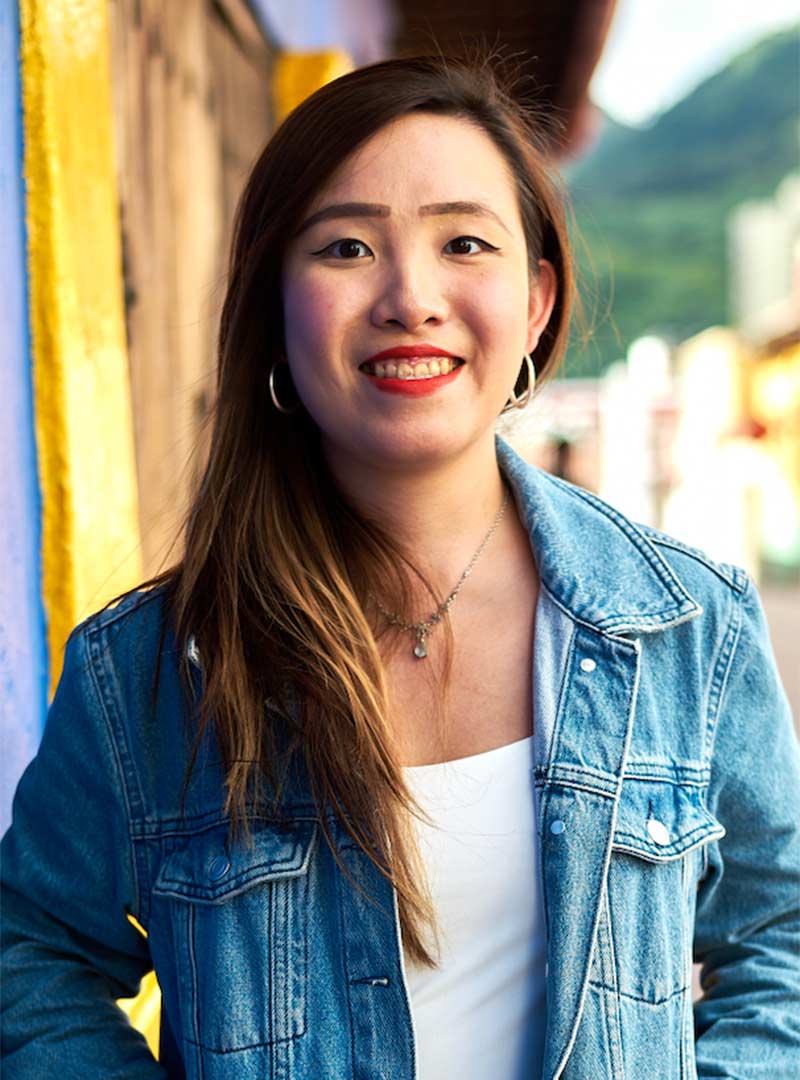
Kiki Liu arrived in New York City after going down the “well-trodden” path of good Taiwanese students getting advanced degrees in American universities. She completed her PhD in East Asian Literature at the University of California, Irvine and was set for a solely academic career when her “rebellious phase” kicked in and she shifted to mainly focusing on her long-held dream of novel writing (though she does still teach at university).
Though written in America, her debut, Girl in an Odd City, begins in the mid-1990s Taiwan, amid the first direct presidential election. But it crosses continents, as we follow protagonist Koko’s family – unnerved by the instability of the new freedoms – leaving and trying their luck in Central America. But they fail and must return to rapidly-changing Taipei where ghost tales and folk memory contrast with the ultra-modern. Deep down the book is universal, taking in class structures, loneliness and the power of storytelling. Its relatability is perhaps why it was recently selected as one of the 10 Books at the Berlinale, the annual showcase at the film festival of titles that are deemed to have potential for screen adaptations.
Kiki Liu says her novel could not have been written if she still lived in Taiwan: “Being away has been essential to my writing about home. I can’t write about home when I’m at home. I feel suffocated by it, too close to see it clearly. I also think my imagination would have remained far more limited had I never left. Distance gives me permission to look and to imagine. Living abroad has also opened me up to very different ways of writing, different forms and traditions I wouldn’t have encountered otherwise.”
Q&A: Nakao Eki Pacidal
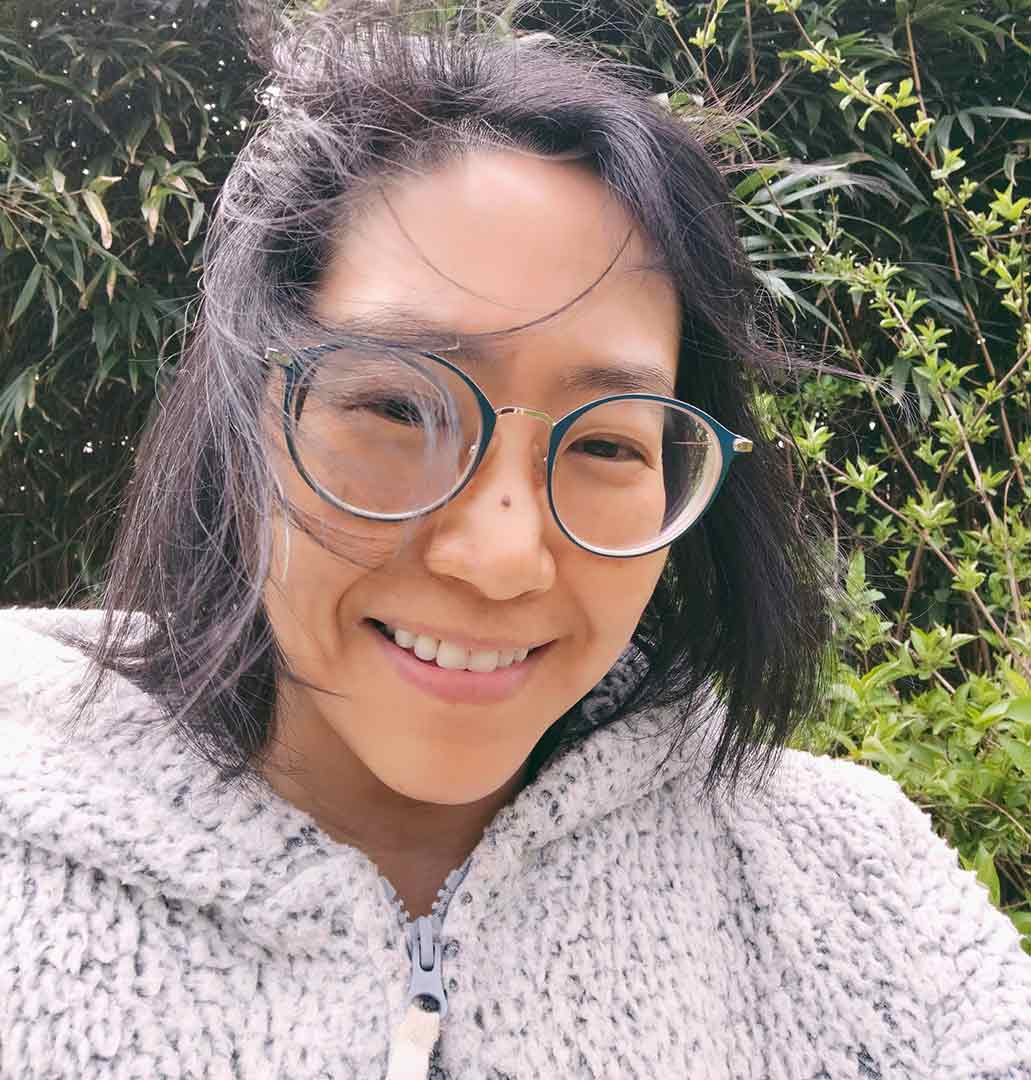
The Taiwanese author of Indigenous Amis heritage on her new dual timeline novel set in the 1920s and today.
What drew you to write Vow between Banana Leaf and Tree?
The story is rooted in the [relationships between three friends, Banana Leaf (Lo’oh), Tree (Kilang) and Sasa] and the historical Noko baseball team, yet presented as a work of fiction. I was driven to write it primarily by a desire to revisit our past from an Indigenous standpoint. I have long grown weary of seeing Taiwanese Han narratives supplant Indigenous perspectives with their own imaginings. I have drawn upon a distinctive element of Indigenous storytelling: rather than recounting events in a documentary manner, we tend to construct fictions through which thoughts and meanings may be conveyed.
Why the two timelines: what do you think the 1920s can tell us about the present day?
It’s an interesting question. In our oral tradition, everything concerning the past concerns the present, thus telling a story about the past also tells a story about the present. In this sense, I could have written a single storyline (the one set in the 1920s), but the double reference may not have been so clear to readers outside our oral tradition. A storyline set in the future was thus added to it.
Can you contextualise the Amis experience in Taiwan at the moment and how that differs from when you were young?
I would love to say that a lot has changed and that Indigenous people of younger generations encounter fewer difficulties nowadays, but this is true only to a limited extent. It is true that we are no longer called “mountain people” (implying “uncivilised”). It is true that certain rights have been constitutionalised. It’s also true that writing in our own languages has become more common than ever (the base for comparison is rather low, though). But cultural ignorance persists. Malice and misunderstanding travel at the speed of light, gaining power each time they are “shared”.
My father attended high school with a hawan [traditional Amis belt knife] to physically fight against discrimination. Later he advised me to deal with discrimination with indifference. I do not really know how young Indigenous people today deal with all the misunderstandings and challenges from mainstream society; my impression is that they seem to be too polite and soft.
You wrote the book in Mandarin Chinese…
Yes, but writing in Amis has always been my aspiration. I would have loved to have written this book in Amis. The reason I did not do so was clearly due to market considerations [there are around 200,000 Amis speakers in Taiwan]. However, the language in which a story is written defines the content of the story itself. Were I to tell the story of Noko in Amis, I believe both its plot and style would be significantly different.
Yet, I don’t often write explicitly about my own people or culture. I believe that whatever I write reflects my culture; unfortunately this is not a widely shared understanding. People tend to think that Indigenous writers should (only) write about Indigenous people; writing on non-Indigenous topics reveals a moving away from Indigenous cultures. In thinking so, we actually hold Indigenous writers in captivity.
You have lived in the Netherlands for many years. Does being far away from home help your writing?
My life in the Netherlands definitely helps. I live in the typical Dutch countryside with canals, open fields, orchards, cows, sheep and horses. My nearest neighbours are three kilometres away (I walk to greet their dogs every morning). Isolation really helps me to focus on my work. For me, the pace of life in Taiwan is too fast; people are too tightly connected to one another. Living in my home village is nice, but our traditional lifestyle doesn’t allow me the privacy I, as a writer, definitely need.