







LitUp’s Battle of Hastings: reading on the up in one of England’s most deprived areas
A Bloomsbury and National Literacy Trust classroom initiative on the Sussex coast is gaining significant ground in the reading-for-pleasure fight.



One of the children in Nicki Duckett’s class has lived in Hastings their whole life and never been to the seafront. The sea is, as she puts it, on their doorstep, and yet they have never been. We saw it ourselves from the taxi window on the way over, before ducking into a windowless, cupboard-like room at Silverdale Primary Academy in St Leonards-on-Sea. I am here to speak to Duckett, Silverdale’s Year 4 teacher and reading lead, and Amy Hudson, assistant principal and literacy lead at The Baird Primary Academy across town. The teachers are spearheading Bloomsbury and the National Literacy Trust’s (NLT) LitUp Hastings programme at their schools, two of the six primaries enrolled in the scheme. I am here to understand why some of their pupils are moving against the national slide in reading for pleasure.
The widely accepted reason that many children have stopped reading is the pace of everything else. Both teachers have seen this play out in their classrooms; the type of attention shaped by the short-form video clips is antithetical to the slow, rhythmic pace reading requires. “In 30 seconds, they have the beginning, the middle and the end,” says Duckett. “Whereas, you pick up a book, and you might have to invest two, three weeks in that book before you get that same level.” Here, she pauses: “Well, not even the same, but you get a level of gratification.” But after spending a morning with Hudson and Duckett, screens start to feel like only part of the story.
As reading enjoyment hit a 20-year low nationally for kids, LitUp has been moving reluctant readers in the other direction
Both schools are located in one of the most disadvantaged areas in the country, with Hastings ranked among the top 15 most deprived local authorities in England. It is often cited as a town facing severe socio‑economic challenges, including high unemployment, low incomes and poor housing.
In this context, LitUp’s results are worth sitting with. As reading enjoyment hit a 20-year low nationally for kids (according to the NLT’s most recent statistics), LitUp has been moving reluctant readers in the other direction. The Bloomsbury and NLT schools outreach partnership began in 2022 with the publisher supplying books, other materials and author visits.
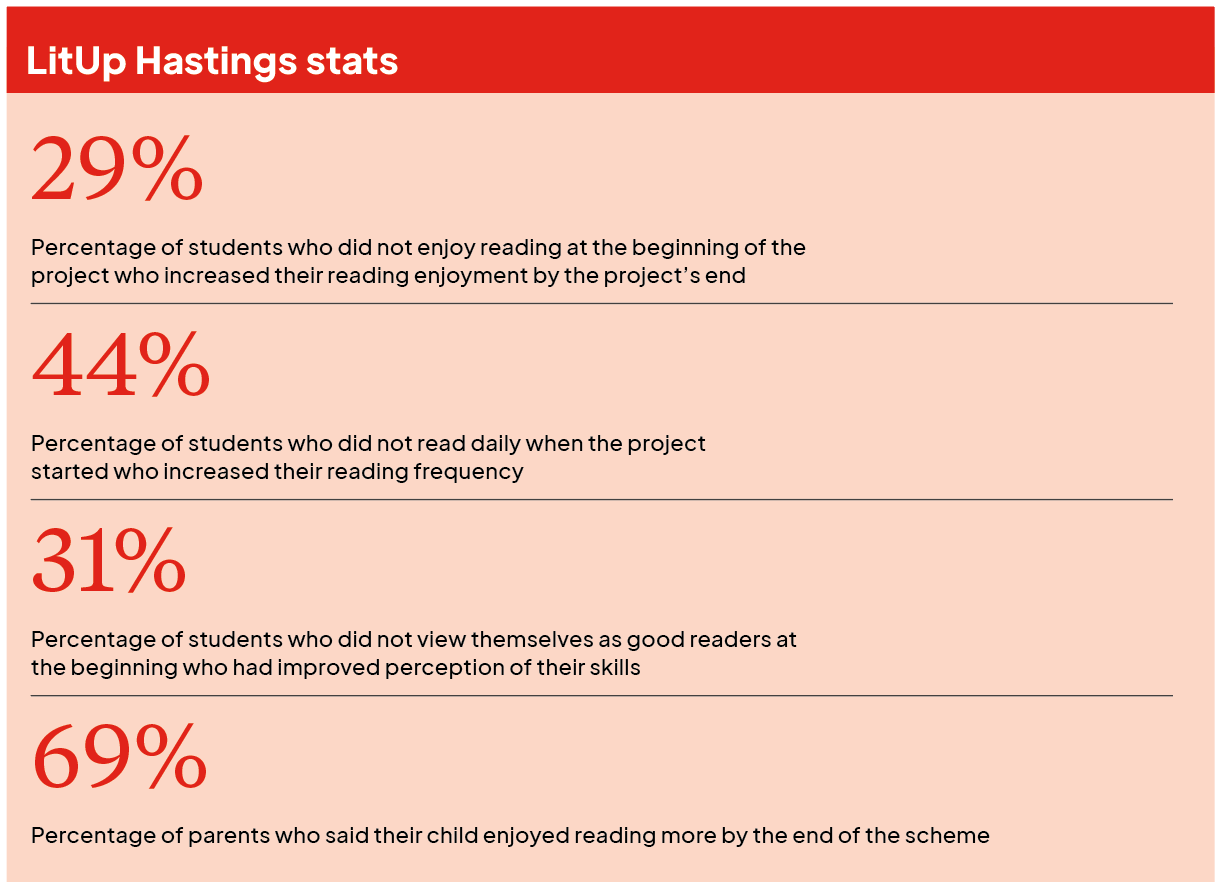
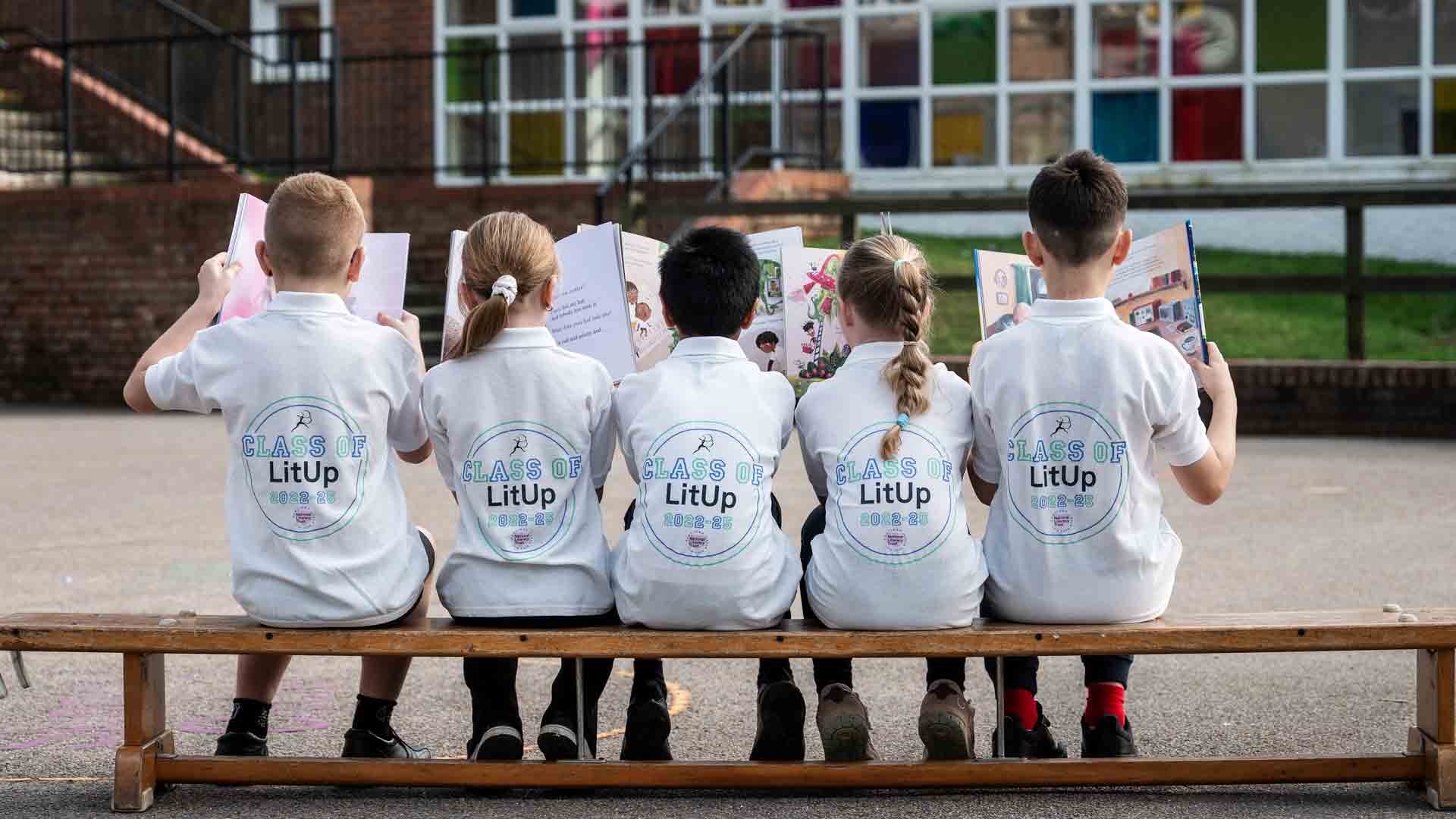
Since launch, more than 16,000 books were donated in Hastings to the participating schools, 2,122 children took part in author visits, and 436 children and parents attended Teatime Tales, the in-school family reading sessions. Among the pupils the NLT followed from Year 3 to Year 6, 29% of those who said they had not enjoyed reading at the start did so by the end, while 44% of those who had not been reading daily were doing so more often.
Safe landing
What it takes day-to-day to achieve these outcomes is harder than the numbers make it sound. Attention is shaped by what a child has to bring to a book as much as by what is competing for it. “Children from slightly more deprived homes don’t have as much to draw on when you give them new reading,” Hudson tells me. “They only really have their school experience and chats with their pals.” Duckett’s Year 4s are reading Anthony Horowitz’s The Devil and His Boy, set in Elizabethan London. The book asks them to “imagine Elizabethan London” when some of them have “never been to 2026 London”. Duckett does the work herself, describing the smell of the streets, the noise and the filth.
The author visits have helped, too, as when the children listen to creators speak about their books, the stories jump out of the page and into their worlds: it is an “immersive reading experience”, says Hudson. Meanwhile, the physical copies, which for some children are the only books they will have at home, give those stories a safe place to land. Duckett says: “I can say, hand on heart, that every child from Year 3 to Year 6 now has books at home because of the project.”
Continues...
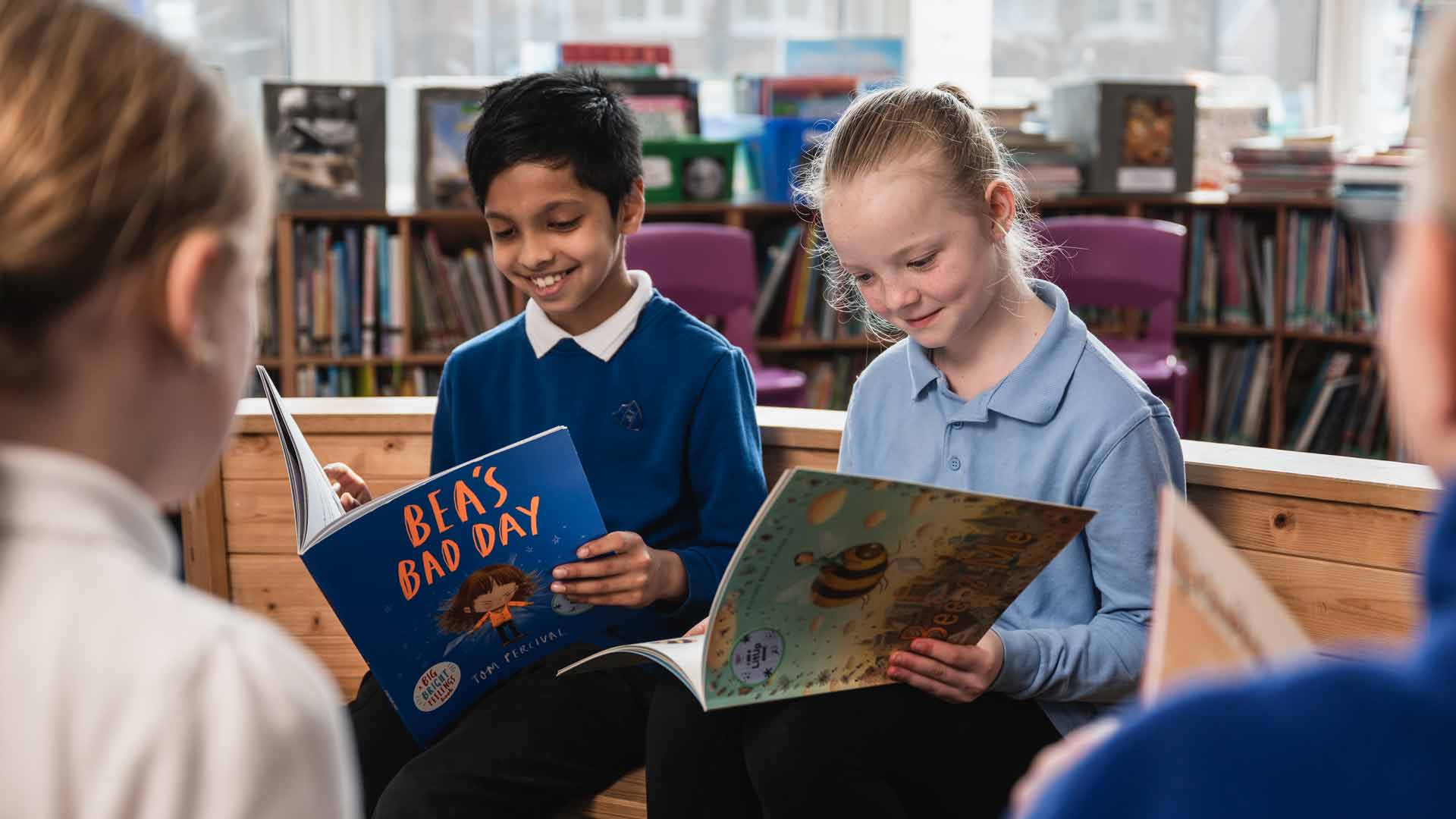
When Sheena Dempsey came to the schools earlier this year with Pablo and Splash, the graphic novel series she writes and illustrates, Duckett told the children to open the front cover and write their name inside. Suddenly that book was theirs, and weeks later they were “still going in and out of school every day with their Pablo and Splash, because it’s their book”. At the end of the session, Dempsey mentioned, almost in passing, that the next instalment would be set in the Viking era, which Duckett’s class had been studying that term. “My year group got very excited,” she says, “because we had just taught the Vikings. So, it was a link that had been made, but not on purpose.” The children, she says, went home that evening and nagged their parents, asking: “Can you pre-order me this book?”
A route in
The same instinct, to make the door to reading as wide as possible, runs through Duckett’s enthusiasm for graphic novels. A few weeks before our interview she introduced her class to The Red Pyramid, the first of Rick Riordan’s Egyptian-myth adventures, on what she has christened First Chapter Friday. She happened to have Riordan’s original and Orpheus Collar’s graphic novel adaptation on her shelf. “All my children, no matter their reading ability, could enjoy that book thanks to having a graphic novel as well as the actual text,” she says. The children who could not “chunk their way through a book” that size, she adds, likening it to a tissue box, could still follow the story, “because they have the images there to help support them”.
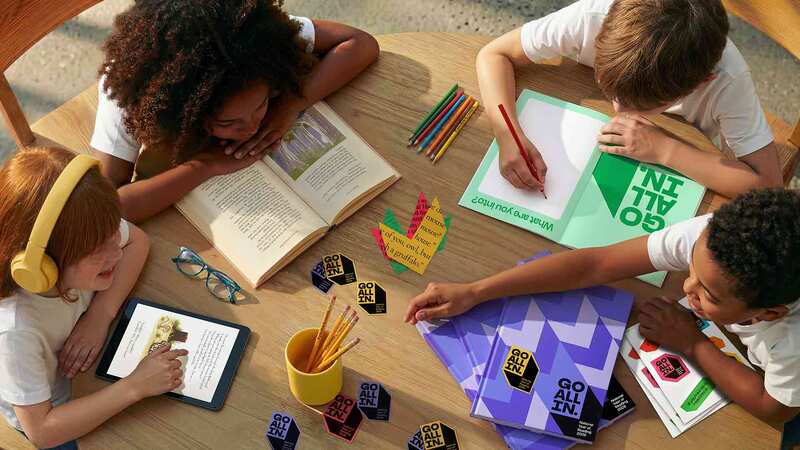
The graphic novel here is not an alternative to the text but a route into it – and, as Hudson puts it, everything else. “If you enjoyed this,” she tells her reluctant readers, “look at what else you could enjoy, too.” It is the core logic behind the National Year of Reading’s Go All In campaign, which both are on board with. Reading need not be “a book with lots of pages”, Duckett adds, but also a graphic novel, an audiobook or a comic.
The widely accepted reason that many children have stopped reading is the pace of everything else. The type of attention shaped by the short-form video clips is antithetical to the slow, rhythmic pace reading requires
However, Teatime Tales, the parent-and-child reading sessions held inside school, is the strand of LitUp both have found most challenging. “We just cannot get the buy-in,” Duckett says. Some of it is parents working, or having younger children to manage at home, but a much thornier issue is also at play. The stigma around adults who struggle with reading means many will not admit to it, and thus are the least likely to come to a Teatime Tales session, meaning the project is struggling to reach some of the families who could benefit the most.
When I ask Duckett what is missing from the way the sector talks about reading for pleasure, she pauses. “I don’t know whether there’s a missing puzzle piece. I just think it’s sustaining what we’re doing.”
Hastings’ LitUp project, at least, has been extended into a fifth year. The original cohort have moved on to secondary school, while the six schools are beginning again. In the final-year report, a Year 6 girl wrote about one of the authors visiting her class: “She made me feel that I like reading, because I used to hate it but now I like it.” This is the feeling that Duckett hopes children will have “embedded in them” when they leave the school. Thinking a little further ahead, Hudson points out that the children coming through the programme now could become “those parents that might make time” for reading, the very kind of long-term goal LitUp is trying to achieve.