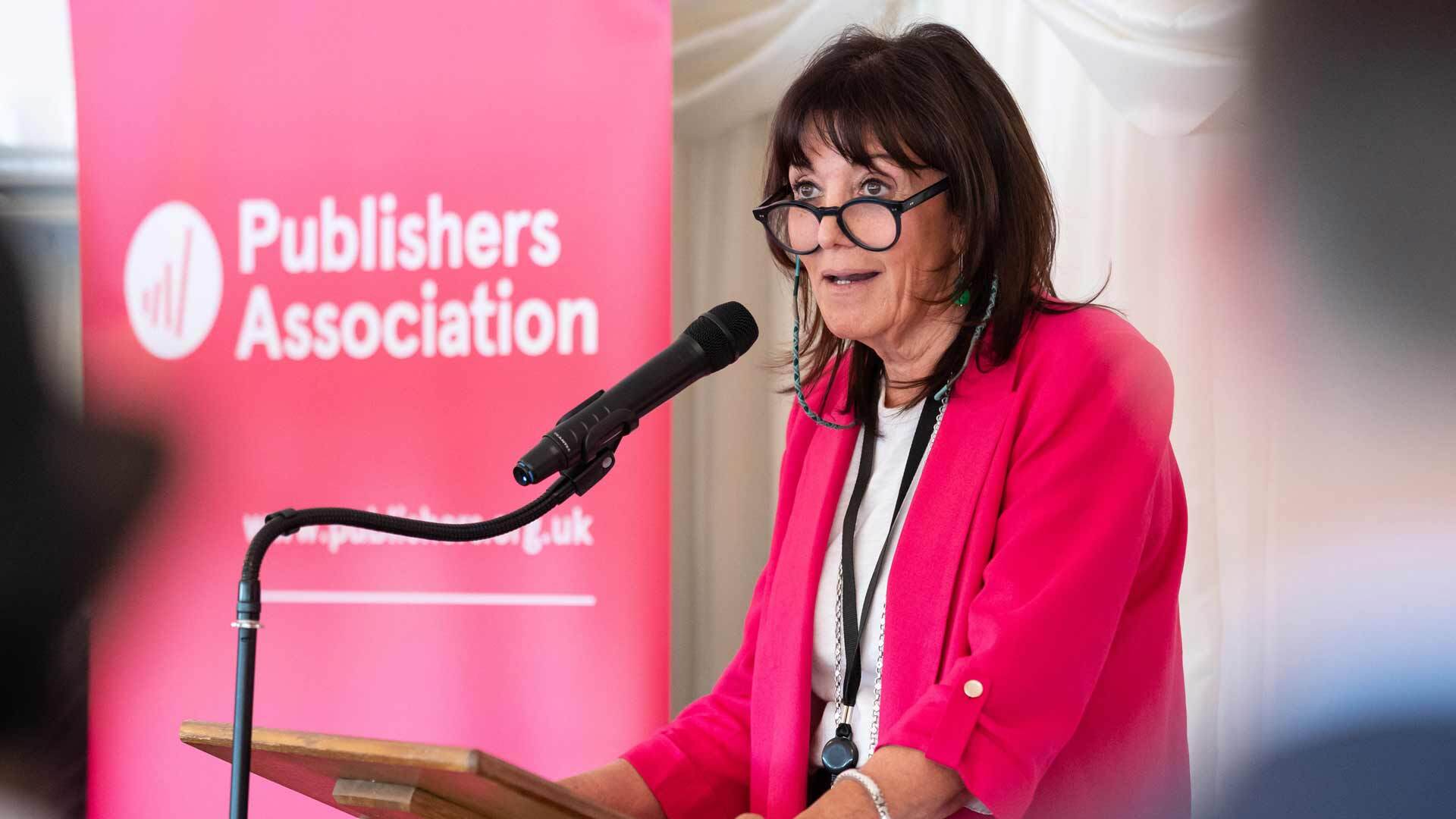

For Gail Rebuck, former Random House chief executive officer and a key driving force for the 2026 National Year of Reading, what differentiates it from those that have gone before, in 1998 and 2008, is that we are “in such a complicated environment”. On the one hand, “we’re merely stepping into a tradition”, she says. On the other, “things were so much easier... Then, if you wanted to recruit people to join libraries – and they got over two million people in 2008– you put a voucher in a newspaper”.
Now, as the campaign’s recently released “reading census” shows, there are many more alternatives to reading. According to the findings, almost a fifth (18%) of respondents would rather spend time on their phone. John Burn-Murdoch’s 2025 Financial Times article Have Humans Passed Peak Brain Power? reported a decline in problem-solving abilities and a “marked rise” of people struggling to concentrate. Reading this was an “existential moment” for Rebuck, the findings coinciding with, in her words, “machines’ cognitive powers going the other way”. This was one of the reasons Rebuck “felt we needed” the 2026 National Year of Reading: “There was an urgency.”
For a lot of our audience, particularly boys, it’s as much about listening to stories as it is about actually reading them
From the beginning, Rebuck “felt we had to embrace the tech companies... I’ve said to them ‘You’re the problem – but you could be part of the solution’”. She continues: “If you look at TikTok, with whom we have become serious partners, is it not interesting that the platform with the shortest attention span should be the one that spawned BookTok and is advocating long-form reading, physical books? There’s a paradox here. If [we look at] our eight to 18-year-olds, only 32% of whom say they enjoy reading for pleasure, where is their focus at the moment? It’s on YouTube, Instagram, TikTok. You can’t do a campaign without embracing [those platforms].”
Practically, how the collaboration has “panned out with the majority of [tech companies] is gifts in kind”, Rebuck says. “We’ve been given quite substantial advertising credits, which is great because it’s another way of getting the message out.”
She mentions them primarily, she says, because in prior National Years of Reading, “we weren’t in that world – but we are in that world now. It’s an area of complexity but an opportunity”. Part of the campaign’s acknowledgement of this “complicated environment” is its attempt to “redefine what reading is in the digital age”. “For a lot of our audience, particularly boys, it’s as much about listening to stories as it is about actually reading them,” Rebuck explains.
Continues...
“Children see it as reading. I’m kind of old fashioned and, for me, the penny dropped. It is an important moment where we have to be brave. The science seems to show that listening to books can be absorbing, as long as you’re not doing too many other things at the same time. You maybe don’t get quite as much recall as you might if you’re reading it on the page and have some kind of spatial awareness. But for our new, digital generation, I suspect a lot of those differences fall away. And I’m delighted if they’re listening to books, because they’re quiet and they’re listening and they’re engaged.”
She is urging publishers to embrace this expanded understanding of what reading can be and use the census as a way of meeting the “digital generation” where they are. “I’d like to ask all publishers to read all 100 pages and really try and understand it and use it to augment your audience,” Rebuck says.
“We sell books to people who read a lot and like consuming books. But what we have to say to ourselves is: if we do nothing, how safe is that? Even the status quo, let alone any growth in it. Just merely looking at the ‘distracted’ percentage, you can see that’s 29% of the population. That’s a kind of low-hanging fruit, if you like. Obviously, we do a lot of work with those who are ‘unconfident’ readers, right at the other end. But there’s always been that kind of mind-frame in publishing. When I launched Quick Reads, I was having a conversation with one of the big CEOs of the day and he said: ‘Gail, this is all very laudable, that you care about people who struggle with literacy, but, quite frankly, I’m concentrating on people who do read often.”
It is hoped the census, and its identification of six “segments” based on primary reading barriers, will expand the number of readers publishers can, and therefore will, target.
Rebuck has spent her career championing literacy. During her tenure as CEO of Random House UK, she founded World Book Day UK, before going on to set up the adult literacy charity Quick Reads; now, she is a champion of the 2026 National Year of Reading. A big part of the latter’s activities is to “turbo-charge” the work done by organisations such as the National Literacy Trust. “Where would we be if we didn’t have those?”, Rebuck asks.
“We don’t know, because luckily we have them. But it seems to me that, every now and again, we need to remind people of the joy and the advantages of reading. And to me, that’s the point of this campaign. It’s to change the narrative around reading, to make it relevant. Because I think young people, a lot of them, have got to the point where they see it as a chore – that reading takes place in the classroom, not in the playground. I want it to be in the playground. I want it to be joyous.”