
While transgender publishing seems to have taken a step backwards in recent years, the indie sector is keeping the flame alive
In the late 2010s, it seemed we had turned a corner on transgender publishing. Amid an industry-wide push for diversity and own-voice writing, books by authors such as Andrea Lawlor, Akwaeke Emezi and Jordy Rosenberg – published by established houses – found literary success in both the UK and US, prompting the New York Times to usher in a “coming age of transgender literature”.
In 2021, Serpent’s Tail published Torrey Peters’ Detransition, Baby, which was widely celebrated and longlisted for that year’s Women’s Prize for Fiction. That same year, Shola von Reinhold’s Lote (Jacaranda), won the James Tait Black Prize and the Republic of Consciousness Prize (now the Queen Mary Small Press Fiction Prize). Things felt hopeful for trans literature.
A lot has changed since, both within the publishing industry and in the wider world. Gender-critical voices have grown louder. The Polari Prize, the UK’s only LGBTQ+ book prize, fell into controversy for longlisting a gender-critical author. The 2024 Cass Review – the independent report commissioned by NHS England to look into gender identity services for children and young people – prompted significant restrictions on access to trans healthcare. And in April 2025, the UK Supreme Court ruled that “sex” refers to biological sex in the Equality Act 2010, and not the legal sex registered on a person’s Gender Recognition Certificate.
In the past few years, it seems big publishing has turned its back on trans books
Recent times have seen a huge and demoralising step backwards for trans people, and when things become challenging, books feel more necessary than ever. They act as a refuge, a way to connect with community, a source of both information and escape. But in the past few years, it seems big publishing has turned its back on trans books. Although there have been some incredible titles released by major publishers in recent years – I am thinking especially of those by Nicola Dinan, Lauren John Joseph and Shon Faye – it is hardly a Golden Age. So what happened to the “coming age of transgender literature”?
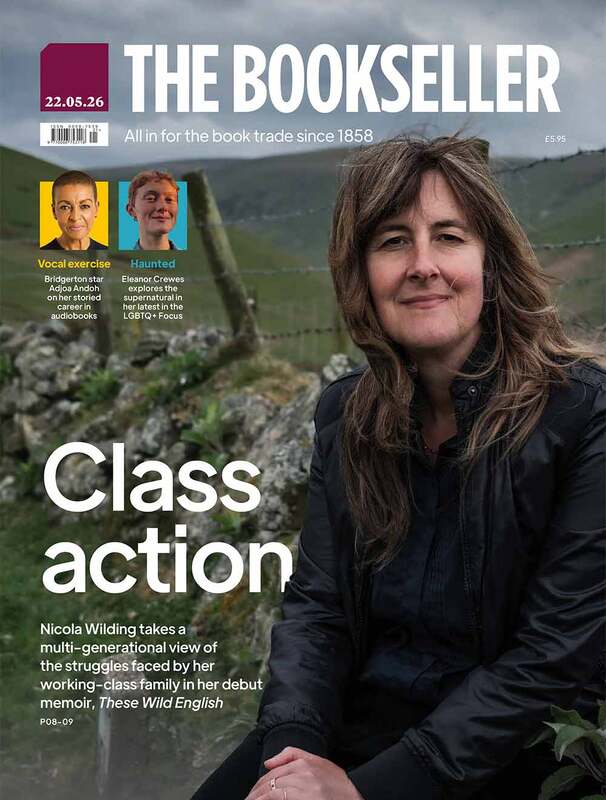
In last year’s LGBTQ+ Focus in The Bookseller, two separate features noted a lack of books by transgender authors. It does perhaps seem that trans books are missing from the shelves, and it is certainly true that there is scant, if any, media coverage. Still, when I read this as a trans publisher, I admit to feeling frustrated. Partly because, in the pocket of the industry where I work, trans publishing is alive and well. And partly because trying to get trans books seen in a hugely oversaturated and busy space has become increasingly challenging since I started publishing six years ago. I would argue that the problem is not that trans books do not exist (although I would like to see many more of them), the problem is that not everyone is looking in the right place. Turn your head towards small press publishing, and the story is very different.
Continues…
Historically, small presses have always been known for taking the big risks, for publishing the authors who are overlooked by the mainstream. Publishing
minoritised voices should not be seen as a risk, but as with any industry, commissioning decisions are most often made based on majority interest. Looking back to the 1980s and ’90s, it was small presses who championed LGBTQ+ writers, houses such as Gay Men’s Press, Firebrand Books and Cleis. Though these publishers have since closed doors, the authors they put out, like Dorothy Allison, have become required queer reading.
The story has not changed when it comes to trans books. It was small indie Rescue Press that first published Andrea Lawlor’s Paul Takes the Form of a Mortal Girl in 2017, before it was picked up by Vintage in the US and Picador in the UK. Likewise, Isabel Waidner was initially published by Manchester micropress Dostoyevsky Wannabe, then Peninsula Press – winning the Goldsmiths Prize for Sterling Karat Gold while at Peninsula – before moving on to Hamish Hamilton. It is not that books by trans authors are necessarily missing, more that the presses who first publish them are often left out of the conversation.
In the UK right now, the small press world may be facing numerous challenges (as outlined in a recent open letter from Small Press Futures), but it remains a lively, enthusiastic and innovative sector, publishing some truly important and groundbreaking trans literature. From Dead Ink Books, which over the past few years has brought the work of trans writer and editor Jeanne Thornton to the UK, and Prototype, which this July will publish Lamento, a trans novel by Danish writer Madame Nielsen in Gaye Kynoch’s translation, to Montez Press, which recently published Jaw Filler, an inventive trans detective novel by Maz Murray and Charlie Markbreiter.
For non-fiction, Tilted Axis Press gave us Revathi: A Life in Trans Activism, the work of one of the most pathbreaking and respected Indian trans activists. Silver Press, known for publishing landmark books from feminist perspectives, brought us a seminal essay on transness and language as part of its Portals series, Trans Central Station by Rachel Pollack. The Scottish indie 404 Ink – which last year announced its closure – was a steadfast champion of queer and trans writing over 10 years in business, bringing us Liam Konemann’s The Appendix to name but one. Head into bookshop Gay’s the Word, which has a dedicated shelf for transgender literature, and you will see some of the exciting trans titles being published, many of them by small presses.
I have been excited by the appetite for trans literature in the six years I have been publishing. When the press I co-run, Cipher, was launched in 2020, we were instantly overwhelmed by support from readers. We have published many trans authors from the UK and elsewhere; our bestselling title, Tell Me I’m Worthless by Alison Rumfitt, was later published by Macmillan US’ Tor Nightfire imprint.
And we are not alone in being a dedicated trans-focused small publisher; over in North America and Canada, we count LittlePuss Press and Metonymy Press as our peers, both of which have published groundbreaking work; Metonymy’s Fierce Femmes and Notorious Liars by Kai Cheng Thom was selected for Emma Watson’s Book Club back in 2019, and LittlePuss is consistently releasing much-anticipated transfeminine books, including the recent Persona by Aoife Josie Clements. Both presses have distribution into Britain, and the books they publish are available in the UK book trade.
Perhaps the question is less “where are the trans books?” and more “what can the industry do to better support their visibility?” Rather than discussing a lack of transgender literature, perhaps focusing on what is being published is a place to start.
Small presses have neither the marketing budgets nor the resources to get our books seen over the noise made by much bigger publishers, so as we enter the summer months, and both retailers and the books media start making more space for LGBTQ+ books, it would be great to see some of that space given to trans authors and their books. And when I say this, I mean outside of independent bookshops, who have always been fierce champions of small press titles.
Going beyond that, I would like to see trans literature more widely embraced by the book trade on its own terms, for its playfulness, innovation and smart storytelling. Because the age of transgender literature is still here if you look for it, it is just happening quietly in small press pockets, and in my view, it is an exciting place to be.