Reading for pleasure? This month’s non-fiction selection gives us books with which to do that but also much more besides.
“The National Year of Reading celebrates the ‘joy’ of books. But let’s not forget they can also be deeply troubling, too.” A few weeks ago, the Guardian ran a piece under this headline by its chief culture writer, Charlotte Higgins. I have been thinking about her central point – that reading is not just for pleasure – ever since. And while I am the last person to argue that non-fiction cannot be pleasurable, I heartily agree with her when she concludes that “We can ask and expect more of reading than mere enjoyment”.
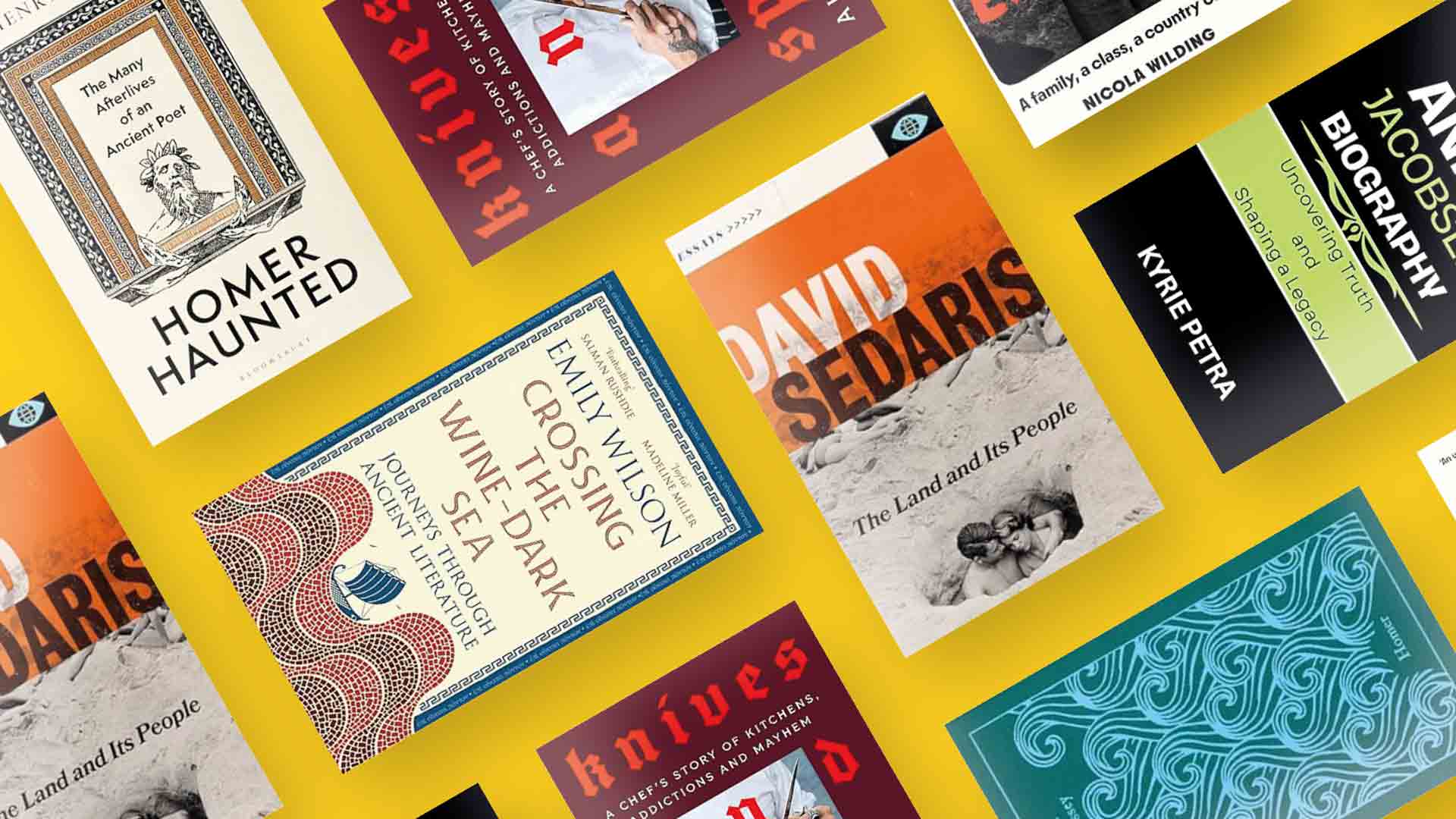
The best of July’s non-fiction – which includes some truly horrible and truly terrifying books – is a case in point. I did not particularly enjoy reading about how the aftermath of biological attack could play out in Annie Jacobsen’s Biological War (Torva), but I certainly could not look away. Ditto when Alasdair Gill was cooking with a heroin spoon in Knives and Spoons (Macmillan), his gobsmacking memoir of drug and alcohol addiction. Similarly, I took no pleasure in discovering – thanks to Hidden Creatures by Dino J Martins (William Collins) – how parasitic Guinea worms, having grown to three-foot long or more inside the (often human) body of their host, burst forth from festering sores on the outside, extruding themselves over time. And yet, I do feel a better person for knowing this because I do ask and expect more of my reading than mere enjoyment.
Winnie-the-Pooh is so inextricably linked with my early childhood that even writing these words makes me want to rush out and play Poohsticks
While a joy, even The Land and Its People (Abacus), the latest essay collection from the peerless David Sedaris, has a great deal more to offer than comedy, for he also never shies from life’s pains, its terrors and its annoyances.
And my Book of the Month, These Wild English by Nicola Wilding (Profile), is a fierce, microcosmic reckoning with working-class alienation. It is both heartbreaking and depressing but also full of feistiness, tenderness and love, opening up the world of her family with all its pleasures and pains.
What does feel appropriate in the National Year of Reading is that the tales-as-old-as-time works of Homer – whoever he, or she or they might have been – are firmly in the spotlight, particularly with the release of Christopher Nolan’s film adaptation of The Odyssey in July. Both Emily Wilson’s Crossing the Wine-Dark Sea: Journeys through Ancient Literature (Profile), which I covered in last month’s preview, and Henry Power’s Homer Haunted: The Many Afterlives of an Ancient Poet (Bloomsbury Continuum) this month have inspired me to return to The Odyssey for the first time in decades. You should always read the book before you see the film, right?
Finally, the publication this month of The Winnie-the-Pooh Book (DK) reminds us that the National Year of Reading also marks the centenary of the first publication of another classic of world literature. AA Milne’s book, first read to me by my late father, is so inextricably linked with my early childhood that even writing these words makes me want to rush out and play Poohsticks. But the story of Winnie-the-Pooh and the enduring legacy of one small, rotund bear’s creation is also one that demonstrates the importance of intellectual property in enabling future such creations.
When AA Milne died in 1956, the rights to his Winnie-the-Pooh books were left to his family and three other beneficiaries, including the Royal Literary Fund (RLF). In 2001, along with those other beneficiaries, the RLF sold its interest in the estate to the Disney Corporation for $350m. The sale of these rights enabled the RLF to establish a nationwide programme of RLF Fellows; professional writers who work across the community to support writing skills in schools, universities and workplaces to build people’s skills. I am one of them. And by paying us writers to do such work, the RLF supports us to work on our own creations. Not a bad legacy for a “bear of very little brain”.