
Improvised reading can turns reluctant readers into bibliophiles.
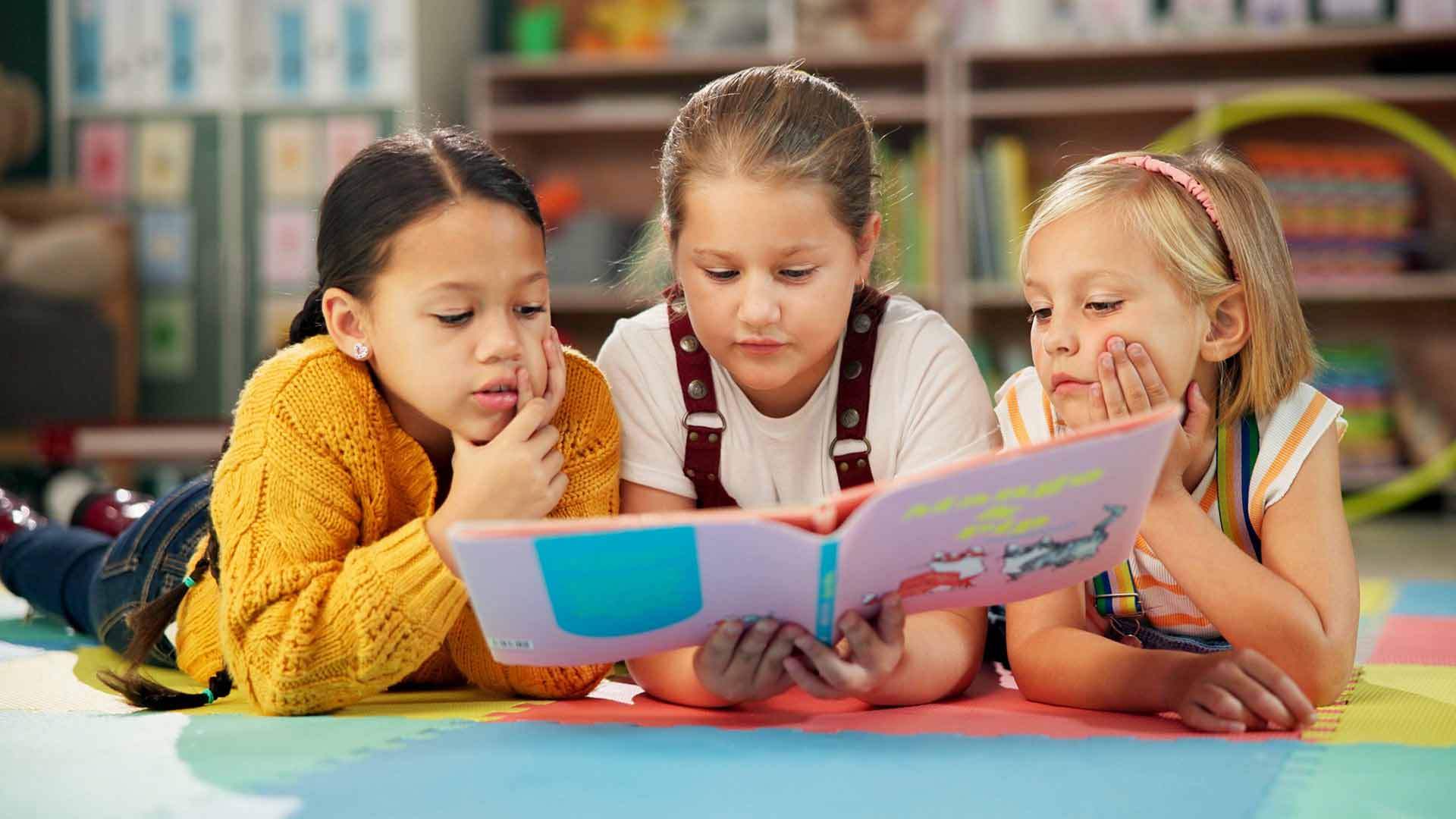
In my 20 years as an oral storyteller, I have visited thousands of schools across the world – but only recently did a teacher say “I never would have expected them to enjoy that story”.
Apparently, her pupils – aged six to seven – quickly lost interest whenever she produced a book with an animal on the cover. Yet, I had just captivated them with a 30-minute tale of a spider and some fish, without a puppet or magic trick in sight.
This teacher’s mistake with her class is one that many others, along with booksellers, authors and publishers, make when engaging children with books. They present books as complete, finished products, about which young readers must make one decision: will I like this book or won’t I?
Without knowing how the story ends, that’s an impossible decision. Save for the enthusiasm of friends (more on that later), young readers can rely only on their familiarity with creative works that have a similar cover – and that will typically be limited. You’re asking for commitment before gaining their confidence.
So, what’s the storyteller’s secret? And, more importantly, how can publishing professionals harness it to turn an unsure listener into an avid reader? I used to believe there was some mystical power that storytelling evoked, until a reviewer for Primary Times wrote this insight about one of my shows: “It felt more like a conversation than a performance.”
That sentence reveals the true mechanism. When storytelling, not a minute of ‘script’ goes by without me checking in with the audience for their understanding, their thoughts, and – quintessentially – their enjoyment.
Each storytelling session feels like an improvised performance. After describing the forest looming over Little Red, one might ask, “Would you go in there?” To the child who yells “Yes!”, one might reply: “You’re braver than me! Can you stay nearby so I don’t get too scared?”
To the child who says “No!”, one might reply: “Me neither! But Little Red had no choice. Do you think she’ll be OK? Shall we find out?”
The storyteller’s solution, though, is useful to teachers, authors, and booksellers alike: begin by asking, “What mood are you in right now? Adventurous? Silly? Smart? Why don’t we try this...”
Either way, the audience is invited to play with possible scenarios in their head. They’re no longer deciding whether they like the story – they’re already part of it. This investment is what keeps them engaged all the way through to the payoff.
This can absolutely be achieved through live readings of any book, whether at a school, festival or bookshop. Rather than sparking a desire to own the story, you generate a feeling that they’re one with it – so, reading a book, or taking it to the till, is the natural next step.
Of course, teachers often need their classes to engage with specific texts. Authors want audiences to engage with their texts. By contrast, booksellers and librarians can offer the luxury of choice. But that luxury can be a double-edged sword: fail to guide the customer to a good first option and you reduce their trust in your ability to offer any good option.
The storyteller’s solution, though, is useful to teachers, authors, and booksellers alike: begin by asking, “What mood are you in right now? Adventurous? Silly? Smart? Why don’t we try this…”
You’re not matching a genre, you’re matching a moment. Their answer may guide the bookseller or librarian towards a particular book – but even if it doesn’t, or if you’re restricted to a specific title, you can adjust your delivery to meet them where they are.
Taking the forest example again: to the adventurous child, one might say, “Would you go in there?” To the silly one, “It doesn’t sound like the kind of place I’d want to go, would you?!” To the smart one, “Do you think Little Red should go in there?”
There are other advantages to this style of reading. If a child expresses confusion over the words used, take a moment to share their uncertainty, discuss what it could mean and agree what fits right with what you already know about the story. Doing so models contextual comprehension without appearing didactic and reframes difficulty as discovery – thereby removing a common barrier to purchase.
If you’re not the author, you shouldn’t worry about being disingenuous when doing this. Every writer sets out to evoke a world within one’s imagination, so the reader’s own creativity is implicitly required. Taking the time to explore the text helps potential young readers connect with the story while also enhancing their appreciation of how it’s presented.
Which brings us to the importance of sharing. Storytelling is innately a minimum two-person activity, and has always involved one human attempting to pass an interest to another. We see children continuously share their favourite stories with one another, whether they first encounter them through books, TV, video games or even pure play. Their eagerness is infectious.
Likewise, improvised readings give you the opportunity to inject that enthusiasm into potential young readers at the point of discovery, and see them leave with books that will bring them and their friends back to you for reading recommendations.
So, remember: children’s books are never finished products. They only become so when they’re picked up and played with. Demonstrate this wherever you’re showcasing them, and turn browsing into buying, classes into curiosity – and reluctance into recreational reading.