
You are viewing your 1 free article this month.
Sign in to make the most of your access to expert book trade coverage.
Roald Dahl’s problematic views have not dented his popularity on the stage.
The Royal Shakespeare Company’s big seasonal show is a new stage version of a popular novel by Roald Dahl, in this case The BFG, his 1982 novel about a big friendly giant.
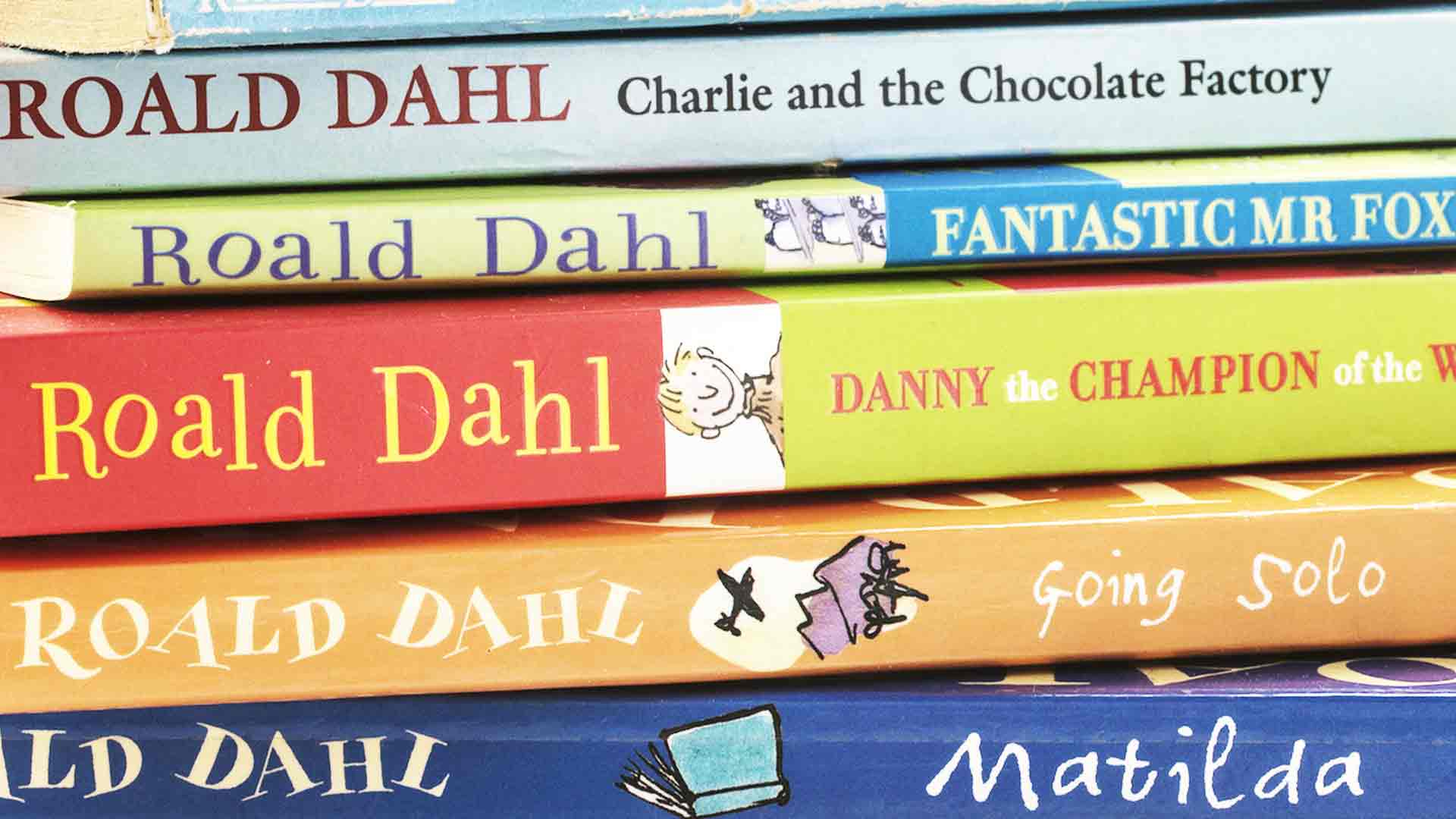
This is, of course, not the first time the company has staged a lavish adaptation of one of Dahl’s novels. Matilda the Musical is one of the biggest success stories in RSC history. Based on Dahl’s 1988 book, it featured music and lyrics by Tim Minchin and a book by playwright Dennis Kelly.
Premiering in Stratford-upon-Avon in 2010, it later transferred to the Cambridge Theatre in the West End, where it continues to run. It has gone on to become a global smash, with a film of the musical, directed Matthew Warchus, who helmed the stage version, premiering on Netflix in 2022, as part of the streaming service’s larger acquisition of the Roald Dahl Story Company.
The RSC tried to replicate this success in 2019 with a musical version of David Walliams’ children’s book The Boy in the Dress, adapted by Mark Ravenhill, with music and lyrics by Robbie Williams (yes, that one), Guy Chambers and Chris Heath. While it received a glowing review from Michael Billington in the Guardian, most reviews were lukewarm.
Now the RSC has pivoted back to Dahl. Presented in collaboration with Chichester Festival Theatre and the Roald Dahl Story Company, The BFG is adapted for the stage by playwright Tom Wells, who specialises in tender, delicate storytelling, and directed by Daniel Evans, one of the RSC’s two co-artistic directors along with Tamara Harvey.
The creative team has worked on some of theatre’s most spectacular shows. The illusions are the work of Chris Fisher, whose has work featured in Stranger Things: The First Shadow and Back to the Future: The Musical, while the puppets are the work of Toby Olié, who kicked off his career on War Horse and has gone on to work on Spirited Away at Tokyo’s Imperial Theatre, and Disney’s The Little Mermaid.
While puppets will play a big part in recreating Dahl’s iconic character, the production will experiment with scale, and the Big Friendly Giant will also be played by actor John Leader (sporting a pair of oversize ears). In interviews Evans has spoken of how important these shifts in scale will be in conveying the power dynamics in the story. ”The audience’s perception of scale changes according to how powerful a character might feel within a given moment,” he explained.
Unlike in Germany, we seem able to absorb [the] contradiction that Dahl was at once a beloved children’s author and someone with repellent views, who was not shy of voicing them
If it feels like I have spent a lot of these columns talking about Dahl and his legacy, that’s because Dahl’s work remains inescapable in UK theatre scene. This in part because the Roald Dahl Story Company, which manages the intellectual property of the author, continually works with companies – including Netflix – to develop new film, TV and theatre projects based on his books. This is just the latest in a string of major stage productions of his work in recent years including The Witches and The Enormous Crocodile.
Dahl remains immensely popular. The original novel, with its spiky illustrations by Quentin Blake, is estimated to sell more than one million copies around the world yearly. I adored it as a child, as I imagine did many readers. Dahl’s ability to capture the imaginative world of children, and to spark wonder, was unparalleled. I don’t think many people would argue with that.
However, at a recent theatre festival I attended, I was reminded by a German dramaturg that Dahl’s works were all but off limits in Germany. There is no way a production like this would be staged in the country, never mind by one of the country’s leading theatre companies. Why, he asked, are you so obsessed with Dahl over there?
Dahl’s vocal anti-Semitism, which is acknowledged by the Roald Dahl Story Company – they issued an apology in 2020, and there’s a (short) statement about it on the company website – makes him unstageable in Germany. The extent of Dahl’s anti-Semitism was tackled head-on by Mark Rosenblatt in his Broadway bound play Giant. That play, which originated at the Royal Court before transferring to the West End, is one of the most successful new plays in recent years. It has sparked multiple conversations about Dahl, his words and his views. Yet, unlike in Germany, we seem able to absorb that contradiction, that Dahl was at once a beloved children’s author and someone with repellent views, who was not shy of voicing them.
The RSC is clearly hoping to have a Matilda-sized hit on its hands and I’m as excited as anyone to see whether this new production of The BFG will capture the book’s magic. But think, it never hurts to remember the wider conversation around Dahl’s work, and the commercial machinery behind it, that while Dahl’s work remains enchanting it is also lucrative.
The BFG is at the Royal Shakespeare Theatre, Stratford -upon-Avon, until 7th February and then Chichester Festival Theatre from 9th March to 11th April 2026.