







The accidental honesty of Shy Girl
Hachette’s withdrawn novel is a warning that belongs to a very early stage of the AI problem.


Recently, three things happened in quick succession that I think should be looked at together.
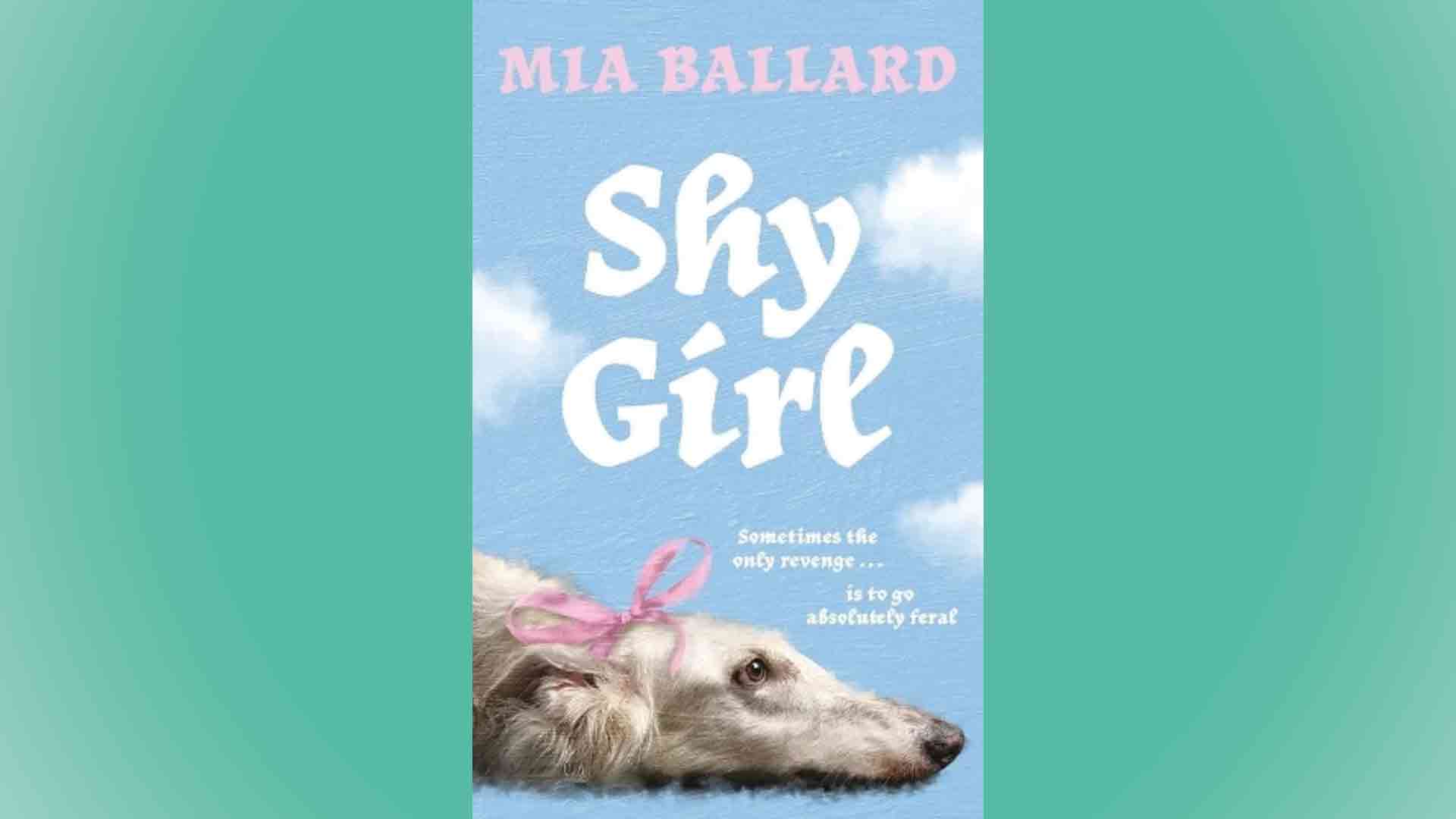
Hachette withdrew Shy Girl, a horror novel by Mia Ballard, after readers flagged suspicions it was heavily AI-generated. It had already been published in the UK, sold 1,800 copies, and had a US release scheduled for April.
Around the same time, Nous Research, a highly-respected, a cutting-edge AI research lab, released autonovel, an open-source pipeline that generates entire novels autonomously. Their first demonstration, The Second Son of the House of Bells, runs to 79,000 words across 19 chapters. The pipeline wrote the book, built the world, created the characters, drafted the chapters, ran multiple rounds of automated editing, revised, typeset the manuscript in LaTeX as a print-ready trade paperback, generated an ePub, produced cover art, created a multi-voice audiobook and built its own website. End to end. No human in the loop.
And this is only the first iteration. It will get better.
What sits inside the pipeline should be of interest to everyone in the publishing industry: detailed anti-slop and anti-pattern modules. These are, in effect, reverse-engineered maps of every signal that AI detection tools currently look for – predictable word choices, uniform sentence rhythms, flat information density, the vocabulary tics that make AI prose easy to spot. Nous Research is not trying to deceive anyone; the whole thing is published openly on GitHub. They actually want to make the output good. But the practical effect is that each generation of these tools will produce prose that is harder to distinguish from human writing. They are not hiding what they have built. They are handing out the recipe, and they are actively working to make it better.
Then on 18th March, the UK government stepped back from its preferred copyright exception for AI training, after a consultation in which licensing won overwhelming support.
That decision is about a different part of the chain – not what the machine produces, but what it was trained on. Whose books, whose words, who consented.
Set these events beside one another and the transition is already visible. Shy Girl is the early case – clumsy, scandal-friendly, detectable. Autonovel shows how quickly that detectability is being engineered away. The first two are problems of output – what the machine produces. The copyright shift points to the problem of input, i.e. what the machine consumes. That may be the only part that remains governable once you can no longer tell by reading.
That is what I want to think through here. The scandal will pass, but what it accidentally exposed is crucial: we are in a very brief window in which AI-assisted books are still easy to spot. Detection works right now because the seams show. That phase will not last. And if we build our entire response around catching people out, we will be left with very little when catching people out stops working.
If we build our entire response around catching people out, we will be left with very little when catching people out stops working
Publishing has seen a version of this before. When Photoshop entered book design, the early arguments were about authenticity and lost craft. Today, very few people would send a cover to press without it. The outrage receded; the tool became invisible.
The cold hard reality is that we are in a market in which authors, editors, freelancers and publishers are all using AI in different ways, disclosing it unevenly, and working from very different ideas of what counts as assistance and what counts as authorship.
The blur is already here. The Authors Guild’s Human Authored certification rightly allows AI for research, brainstorming, outlining and de minimis spelling or grammar help. That is an acknowledgement that this binary is already unstable.
It is worth pausing on what we are actually proposing to do here. By most measures, AI is the fastest-adopted technology in human history. This current generation of writers is already using it in ways that range from the invisible to the indispensable, and the next generation will grow up with it as a basic part of how they work. Some form of hybrid practice – AI involved at some stage, in some way, to some degree, is not a future possibility, it is already the present reality for a large and growing number of people who write. Knowing that, is a purity test really the atmosphere we want to be building right now?
A punitive atmosphere rewards concealment and silently favours those who are better positioned to launder the traces. It makes frank discussion harder – in contracts, in submissions, in editorial conversations and in public statements.
Detection deals with outputs, and its usefulness will fade. Copyright and licensing deal with inputs – who consented, who was paid, whose work trained the system. That question only grows more urgent as the outputs become harder to identify. The point is not that detection doesn’t matter. It is that it cannot be the foundation. The industry’s response needs to shift from catching undisclosed use to making disclosure ordinary – in contracts, in submissions, in editorial conversations. Shy Girl is a warning that belongs to a very early stage of the problem. The harder work begins as that stage recedes: building conditions in which people can speak honestly about what they use.
The quiet part, now audible, is this: if the industry makes honesty too costly, it will get less of it.
Read More