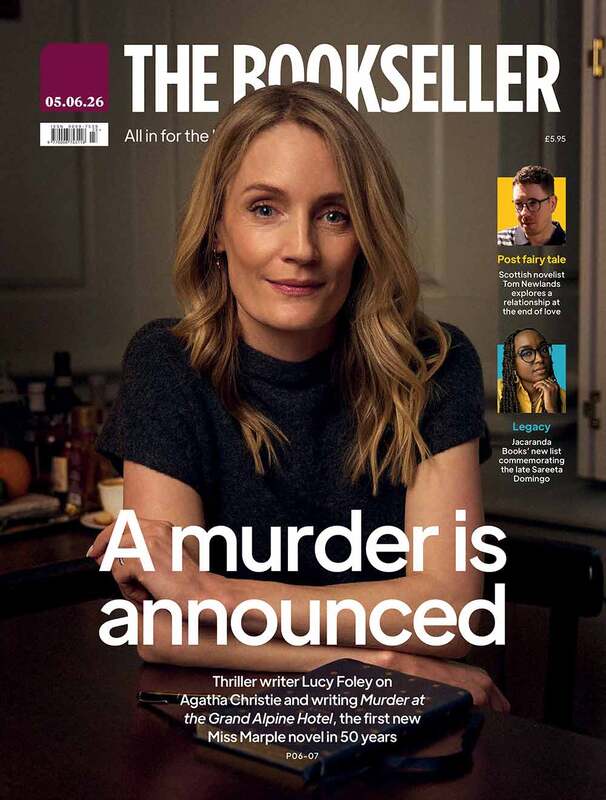






Lucy Foley on cracking the case of the Miss Marple continuation novel
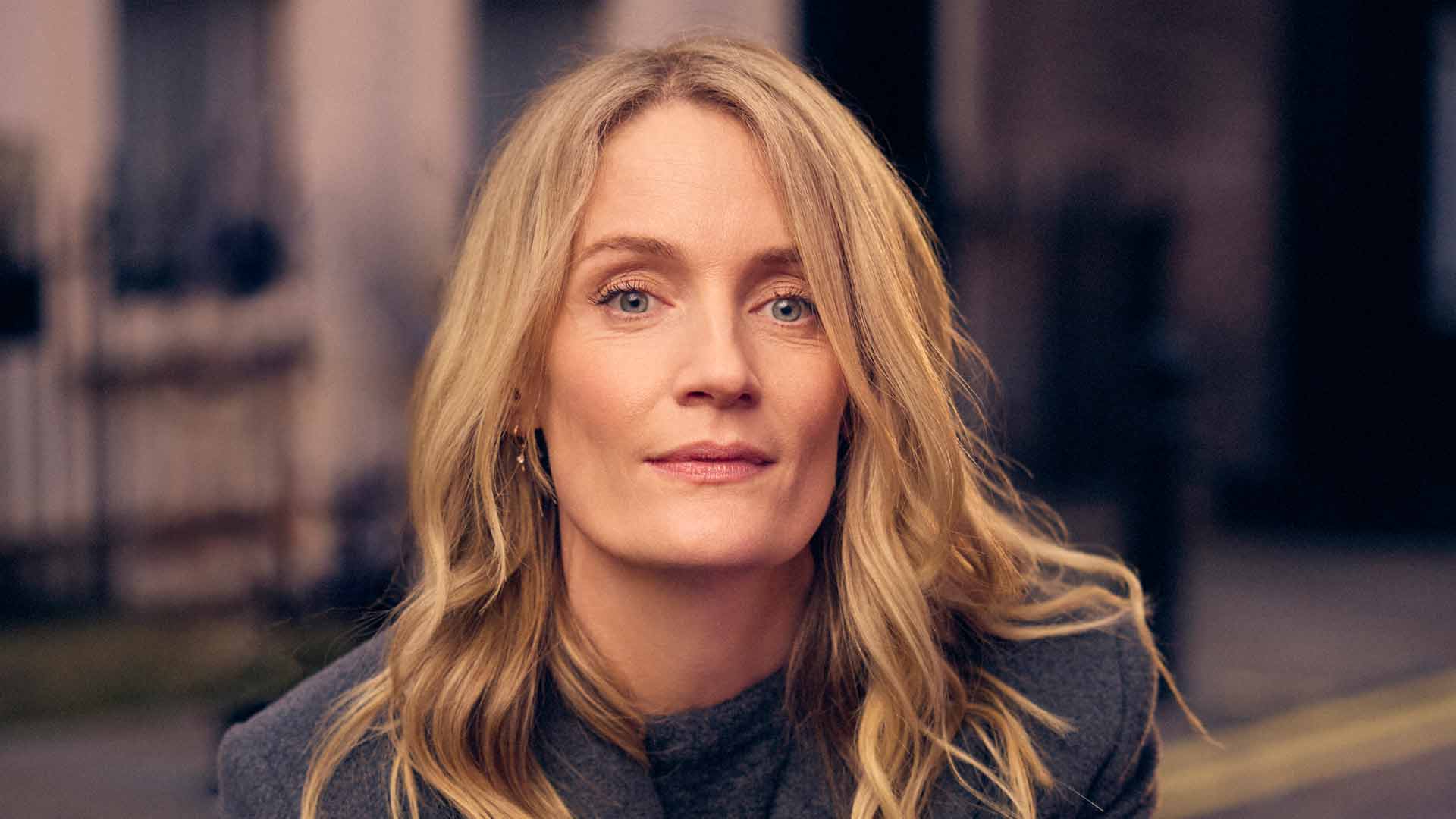
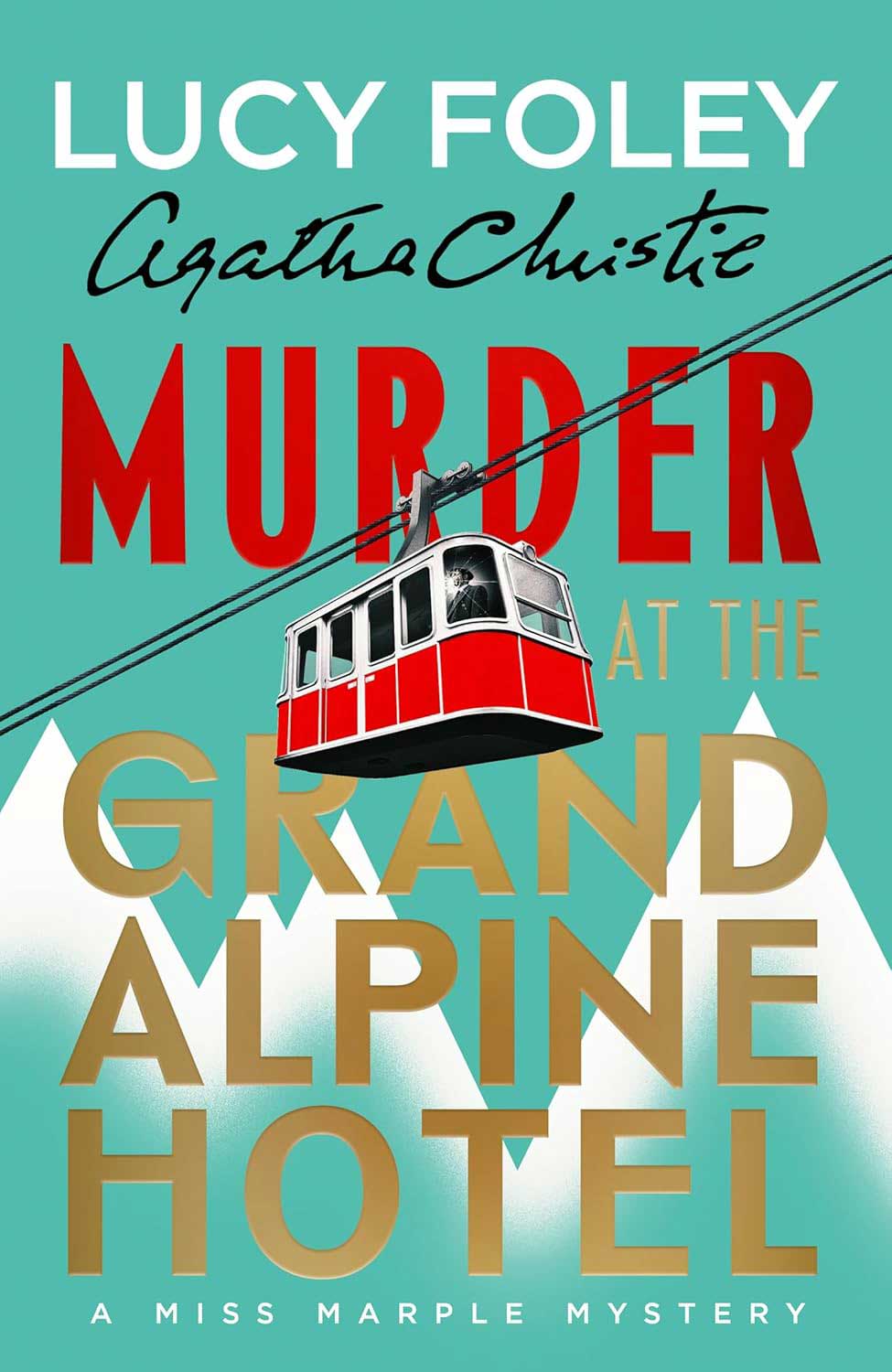
Foley’s new novel, Murder at the Grand Alpine Hotel, is an "homage" to Agatha Christie.


Should Lucy Foley ever tire of being a bestselling crime writer, she could easily move into academia writing her dissertation on the novels of Agatha Christie. When we meet on a blisteringly hot day in London in the coolish environs of Somerset House, over the course of our conversation she refers to dozens of Christie’s books, revealing an intricate knowledge of plot, character and motivation. Foley is clearly a superfan of the mystery author, and of one Christie creation in particular – portly, moustachioed Belgian detectives aside. So, it makes perfect sense that she was approached to write the very first full-length Miss Marple continuation novel.
Foley’s journey to Murder at the Grand Alpine Hotel began when she was asked to contribute to Marple: Twelve New Stories (2022) along with 11 other writers, including Val McDermid and Kate Mosse. Foley diligently did her research, re-read all the Marple books, enjoyed writing her story and “loved” being part of a sorority with the other writers when it came to promoting the book, but shortly afterwards had a baby and “didn’t think anything more of it”.
It seems, however, the short story may have been something of an audition. Her agent, Cathryn Summerhayes, rang and asked how she would feel about writing a full-length Miss Marple novel? “Bowled over” and “terrified” was Foley’s immediate reaction – but, of course, she said yes. Although she was “quite frightened of it for a couple of weeks”, she confesses now. “Until I had the idea for the book.”
I loved the idea of taking a very masculine setting... and putting these two little old ladies at the centre of it
From the beginning, Foley wanted to write a novel “that felt like it added something to the canon”. The book would be “an homage”: “It’s not trying to be a copycat. It’s trying to be its own thing.” She decided to take Miss Marple on holiday, feeling she “deserved another holiday because she was meant to go to the Nile and then Death on the Nile became a Poirot book. So, it felt like there was some room there in her story to do that”.
Murder at the Grand Alpine Hotel takes place in 1950, with a group of guests converging on the titular hotel, a luxury establishment high in the Swiss Alps. Among them are Anthony Narracott, a war hero turned politician, his coolly elegant society wife Catherine and Bruno Crane, a former wartime crony of the politician, who seems rather out of place. Hollywood siren Sylvia Sinclair, who fears she may be coming to the end of her shelf life, is joined by Diana Glass, an enterprising young woman who works as a paid companion to one Mrs Bantry, who is on holiday with her dear friend Jane Marple.
Mrs Bantry is, as Christie fans will know, the owner of the library in The Body in the Library. One of the challenges of a continuation novel is that it must work for both readers of the original books and those who might never have read a Miss Marple book before. Foley thought the character of Mrs Bantry could help to “bring out elements of Marple for readers that weren’t familiar with her… So, their interaction felt like [it] could be a shortcut to getting to know the character better, and her milieu”. And for true fans, Murder at the Grand Alpine Hotel is stuffed full of literary Easter eggs.
By setting her novel in 1950, Foley allows the long shadow of the war to fall across events. Part of her research involved reading post-war thrillers written by men and “full of very masculine derring-do”. She cites Ian Fleming, Eric Ambler and The Lonely Skier by Hammond Innes. “I loved the idea of taking that very masculine setting… and putting these two little old ladies at the centre of it.”
Continues...
Read More

And, of course, she went back to the original Miss Marples, re-reading them again, “multiple times”, to really immerse herself in the speech patterns and so on. But then it was important to put those books away – to “step away from checking my homework at every turn and feel free to just write that character”, says Foley. “But I did feel I was really, really, really obsessive about getting Marple right on the page because I felt that if I got Marple right, then I would have the licence to do the sort of other things that felt more me, I suppose, like the multi-POV and the present tense.”
Foley takes her time to set up the characters, with their foibles and possible motivations and, of course, a good sprinkling of red herrings. Then, Murder at the Grand Alpine Hotel shifts a gear, with the plot whiplashing around like a snapped cable. It helped that Foley, with four contemporary murder mysteries under her belt, already had her own voice: “I think I wouldn’t have had the confidence to do something that was in conversation with the original Marples, but wasn’t trying to be an original Marple… That would be like an act of forgery,” she says. “It’s like, well, why wouldn’t you just read one of the originals rather than a new ersatz version?”
It was on holiday as a young teenager that Foley read her first Christie. Having raced through the books she packed, she came across Murder on the Orient Express in the bookcase of the rented cottage and an obsession was born. Devouring the murder mysteries for the first time, she remembers being “hooked on the puzzle and trying to work out the solution and the satisfaction of knowing that all the clues were in there, if only I didn’t get waylaid by the red herrings along the way”.
It was as a slightly older reader, in her 20s, that she “came to appreciate [Christie’s books] for other things”. “You know, the portrait of Britain at the time, the way she plays with stereotypes, the darkness, the just deserts, all of that,” she says. Christie had a direct influence on Foley’s career, with Sarah Phelps’ television adaptation of And Then There Were None inspiring Foley to write her first murder mystery novel, The Hunting Party, after three historical novels. “I think it was that closed-circle setting, the idea of the past coming back to haunt them…[Phelps] did it so well; it reminded me what a brilliant book it was, so I went back to read the book again and then, yeah, made my turn to the dark side.”
This year marks 50 years since the publication of Sleeping Murder: Miss Marple’s Last Case, the final Miss Marple novel, yet the appeal seems as strong as ever. What is it about Christie that means people are still reading her? “I think it’s a combination of how brilliantly constructed the puzzle is and how fair she plays with the reader,” says Foley. “I think that’s really important. So, you know you’re going to be surprised, hopefully, but you’re never going to feel tricked. But I also think she never really stayed still. Take a book like The Pale Horse, wonderfully folk-horror-esque and Gothic, or a book like Endless Night, which has a Ripley-esque narration to it.” One thing Christie is not, says Foley, is a “cosy crime writer”. “I don’t believe that – but I think there is a cosiness to the experience. You know what you’re going to get and what you’re going to get is order being restored to the world at the end.”
Metadata
Imprint HarperCollins
Publication 22nd September 2026
Formats HB (9780008694821, £22); EB (9780008694845, £12.99)
Rights sold 29 territories, including the US (William Morrow)
Editor Charlotte Brabbin
Agent Cathryn Summerhayes, Curtis Brown