




Andrew Sean Greer's latest comic novel takes place at an Italian villa

The Pulitzer Prize-winning writer draws on his own experiences in his new novel, staging a young man’s journey of self-discovery in a remote Tuscan villa with a revolving cast of eccentrics.


The American author Andrew Sean Greer is wondering how he wrote such a British novel as Villa Coco. “There’s a great British tradition of sophisticated, gorgeous books that make you feel more alive,” he tells me over video call. Call it the charm novel – I Capture the Castle, The Pursuit of Love, Travels with My Aunt – often the books that steal our youthful hearts and we revisit throughout life. “Their interior logic is so different from our world that at first it’s funny and unsettling, and then the reader gets used to it and it’s a liberation. Alice’s Adventures in Wonderland has done that for millions.”
Now, the author of one short-story collection and six previous novels, including the Pulitzer Prize-winning Less, is re-energising the tradition with a bewitching comedy of foreign manners, blending the DNA of The Enchanted April with Greer’s unique gifts: the wry humility of the American émigré to Italy, the acute eye of the former travel writer and a whimsical delight in language. The resulting confection may slip down as easily as tiramisu, but beneath the mascarpone layers of lyricism and wit lies an espresso shot of wisdom about striving for a life that feels like freedom.
A graduate archivist arrives at a chocolate-box station in rural Tuscany in the early 1990s. Raised like his creator by scientist parents in the prosaic suburbs of Washington DC, he is employed to catalogue Villa Coco’s artefacts, and lands in its poetic atmosphere like a Martian at a village fete. Narrating retrospectively, cringing at his younger self, he recounts how meeting the 92-year-old Baronessa Coco – impatient, commanding, mischievous – and her motley retinue capsised his worldview. To “Giovedì” – Coco’s sly nickname, designating him her “man Thursday” – America is the centre of the universe. How deflating, then, to be told by Coco’s royal friend Pippa, enunciating clearly, “The American dialect… Is. Beyond. Me.”
I’m a buttoned-up son of Puritan scientists… I love experiences where my logic doesn’t function, and that was much of the joy of living in Italy with this set of friends
The Baronessa instructs Giovedì to improve his clothes, Italian and cultural knowledge, but he is itching to get cataloguing, about which Coco is curiously evasive. Instead, he is reluctantly swept up in a sewage drama, marten-snaring and hosting a parade of guests, including Coco’s bookishly handsome young cousin Giacomo. As Giovedì’s eyes are opened to a modus vivendi utterly alien to his upbringing, he can’t help feeling that “we were playing a parlour game to which I did not know the rules”. For little is as it seems at Villa Coco – until secrets are gradually revealed.
Greer moves from Little, Brown to Sceptre via a five-way auction with this novel. It was inspired by the Santa Maddalena Foundation, a Tuscan writers’ retreat where Greer was executive director from 2016 to 2018, following a “life-changing” 2005 visit when he befriended its founder, Baronessa Beatrice Monti della Corte von Rezzori, now aged 100. Working there was “a different kind of comedy, living in the particular chaos of that place and being forced to get a sense of humour about everything every day”. His duties included imploring visiting authors not to put hats on the bed, a superstition that Giovedì falls foul of in the novel. Greer has fictionalised his Baronessa, but Villa Coco is a love letter to her and to Italy, where he now lives in Venice with his husband, writer and critic Enrico Rotelli.
Greer is hyperaware that Villa Coco joins a long line of novels about an Anglo taking a formative trip to Italy – but it actually happened to him. Recalling his early 20s, he synthesised those feelings of inexperience with the cultural revelation of living in Italy aged 35. He wanted to avoid clichés, so the novel subverts our expectations of its genre and characters. It features three gay men who have taken vows of chastity, including Giovedì, who feels he overindulged at the undergraduate “carnival of flesh”. As well as being a plot device, this may reflect Greer’s hard-working youth in the shadow of AIDS, when many men his age were “strangely celibate” and focused on their art.
Continues…
Read More
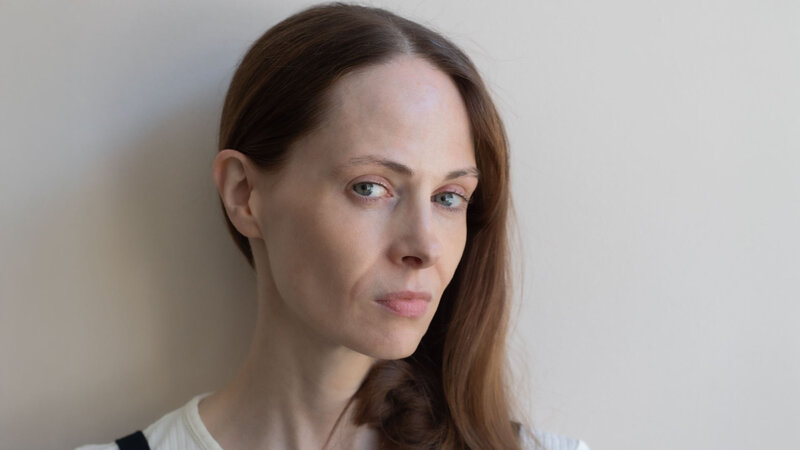



In this bildungsroman, the hero’s journey is a liberation from moral rigidity towards pleasure and style – “not what’s in fashion, but imagination and paying attention,” specifies Greer. “I’m a buttoned-up son of Puritan scientists and I have spent my whole life trying to break that open and surprise myself without turning into a California mystic. I love experiences where my logic doesn’t function, and that was much of the joy of living in Italy with this set of friends.” Among Coco’s arts is the ability to transform anything into an entertaining story – something Greer does with his own life while writing a comic novel. Villa Coco began as a series of vignettes, exaggerated real events interwoven with fiction.
The epigraph – “the trick to life is knowing what you want” – echoes Coco’s words: “We have to choose something.” Through this central idea Greer articulates what he has tried to teach himself about inventing your own path. “You look at the list of things possible, and you have to write the ones that are omitted because no one knows. And that’s hard to do when there’s so much pressure to participate in society’s list of things.”
With its emphasis on liberty, beauty and the refusal to accept second best, there is an exhilarating life-force to this novel, embodied in Coco. “Being a writer, my job is to pay attention to every detail. That, to me, is celebrating life,” says Greer. “But you don’t have to make art to do it, you just have to be very present and aware of the choices you’re making.”
Winning the Pulitzer bestowed the freedom to take risks without worrying about the market. Greer wanted to write Villa Coco, whether people needed it or not. “By terrible mischance, I think people do need it. I hadn’t counted on such an awful world.” He sought to do justice to the material because it is inspired by a dear friend. “I didn’t want to hold back. I wanted to be free. And I am happy with what I did.”
Metadata
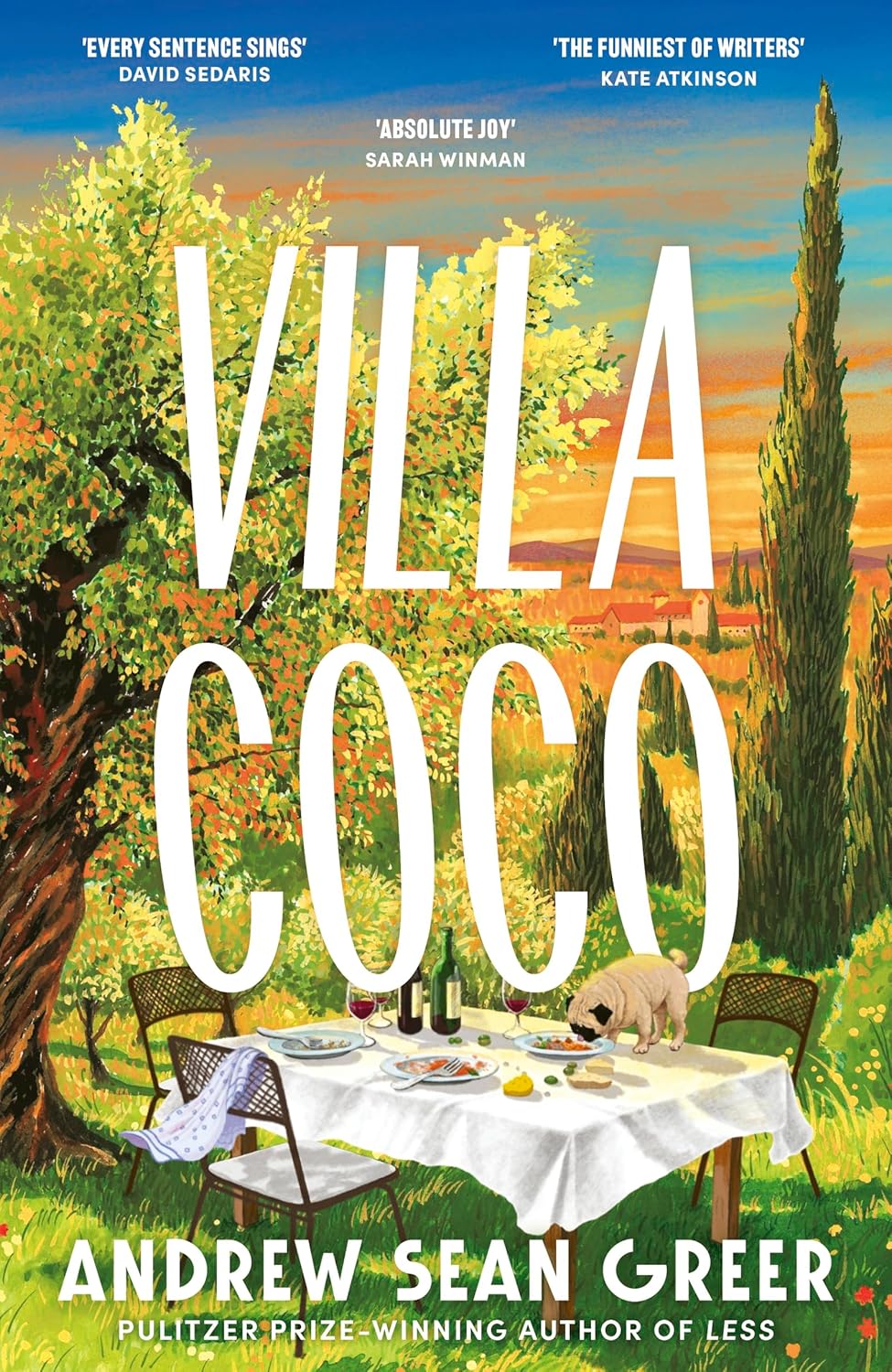
Imprint Sceptre
Publication 9th June 2026
Formats HB (9781399757287, £16.99); EB (9781399757317, £9.99)
Rights sold Three territories including the US (Doubleday)
Editor Federico Andornino
Agent Claire Conrad, Janklow & Nesbit