




Sam Beckbessinger's werewolf satire sinks its teeth into perimenopause
 Katie Fraser
Katie Fraser is The Bookseller's deputy books editor and chair of the New Adult Book Prize. She has chaired events at the Edinburgh
...moreFemale anger and repression are examined via lycanthropy in this darkly comic horror debut.


Katie Fraser is The Bookseller's deputy books editor and chair of the New Adult Book Prize. She has chaired events at the Edinburgh
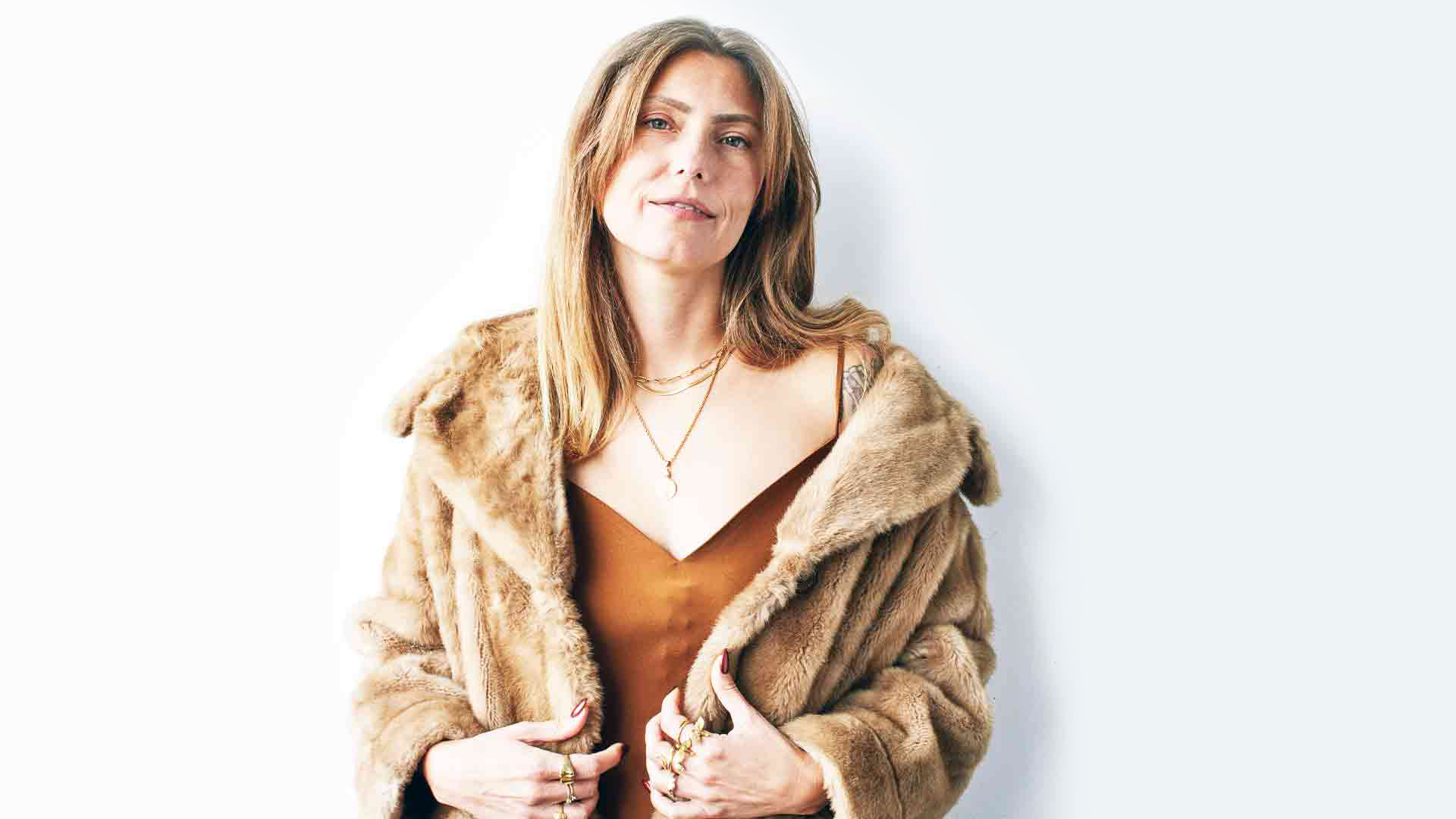
...moreSam Beckbessinger was refueling the car and queuing for the bathroom after 10 days off grid at “South Africa’s version of Burning Man” when her phone started “downloading literally 800 messages” with the news that her adult debut was going to auction in the UK and the US wanted to pre-empt. “It was the best way to pee,” she laughs.
We are chatting on a bright wintry day in Bloomsbury’s London office about Beckbessinger’s blazing horror novel, Femme Feral. Darkly humorous and violent, the novel follows Ellie, a formidable woman in her mid-40s working at Tranquility in London, a company that provides meditation recordings via an app. She is on the way to what should be the crowning achievement of her career – her appointment as CEO – when she is hit by a bike. Injured and surrounded by a crowd of worried pedestrians, including an odd elderly lady, Ellie, unfazed, makes her way to the office.
But Ellie does not get promoted. In front of her peers, it is announced that Andreas, a new hire from outside the industry, will take the helm. Full of outrage and disbelief, her head injury from the morning throbbing, Ellie faints. In the hospital, reeling off a list of symptoms, Ellie is informed she has entered perimenopause. But could these symptoms be caused by something else? Something that would explain her sudden craving for meat, untameable body hair and waking up in strange places, gore in her hair, the morning after the full moon? “I think there’s a joke at the centre of this book, which is that the medical industry knows about as much about perimenopause as it does about lycanthropy,” says Beckbessinger. “What so much of this came out of was my deep anger watching my friends needing help at this stage of life, needing practical medical help, and there’s nothing.”
There are layers of anger and retribution in the novel. One is Andreas whose name is no happenstance. In the wake of the UK Supreme Court ruling last year that the legal definition of a woman is based on biological sex, authors Jeannette Ng and Lauren Beukes established the Genre Creators for Trans Rights auction. Not having a finished book to contribute, Beckbessinger sold the rights to name Femme Feral’s antagonist: “I was like, I will name them after whoever you want and bad things will happen to them in the book.”
A decade spent working in fintech informed much of the workplace scenes and goings-on in the novel. Like Ellie, Beckbessinger’s boss was passed over for promotion. Hoping to push Andreas out, Ellie suggests a disastrous AI tool that produces meditations based on the user’s needs. One of the AI meditations in the novel was created using ChatGPT to “mock” the bot’s ability to produce meaningful content. It begins: “Let your thoughts be the guide and the path to destiny is and you are not afraid of the guide.” Beckbessinger finds AI “deeply, profoundly disturbing” and uses this nonsensical babble as a way of “skewering” the idea of AI therapy. “I think that in general what the tech world does is [say] ‘Here’re these really complicated, human problems. Here’s a simple solution.’”
Beckbessinger’s werewolf is terrifying. She wanted to do “something a little bit surprising” and took inspiration from the horror films of David Cronenberg, particularly The Fly. “There is something quite insectile” about Ellie’s wolf-form, she explains. It scuttles, clambers, her limbs awkward at disjointed angles: an eldritch monster stalking the streets of Walthamstow. Ellie must work out what is happening before she is caught. But someone is on her tail – Brenda, an octogenarian vigilante determined to track down the beast that killed her cat. Alongside Brenda and Ellie’s alternating chapters, Beckbessinger includes one from the perspective of Ellie’s daughter, Paige, a student at the London School of Economics who is also recovering from an eating disorder. Something triggers Paige to spiral, and we see a young woman, full of hurt and anxiety, direct all this pain and anger onto her body. Events collide, bringing the truth to the surface and forcing the three women through a brutal reckoning.
Continues…
Read More
Brenda has, like Beckbessinger’s own mother, macular degeneration, a condition that affects her eyesight. “My mum had an incredibly difficult life and I drew on bits of her for both Ellie and Brenda… And I think for me, fundamentally, I was projecting forward slightly: ‘Like, wow, I’m just repressing so much. I’m hyper-functioning and I’m not dealing with a lot of my shadow.’ I could see how those coping mechanisms that have worked for me my whole life were starting to breakdown.”
She continues: “As I was mid-writing it, my dad died and the wheels came off my life in a lot of ways. It was this kind of recognition of this ugliness that I haven’t been looking at and I’ve been feeling like I’m fine and I think this is what’s so powerful about the midlife shift for women, for so many of us, it is this moment where we have to look at a lot of things that we’ve been putting up with that are not good for us. Actually, a little bit of anger is protective. It’s part of us saying: ‘This isn’t okay what I’m putting up with.’ It came from a very personal place and I think Ellie in many ways was my werewolf to some extent because she’s the parts of me that I don’t like the most, the parts that are too controlling and too repressed.”
We all know an Ellie: hyper-functioning, seems to have everything together, a good job, a stable family. It all seems too good to be true – and it is. Ellie’s life is governed by the “List”, an infinite checklist that is a productivity hellscape that ensures she thinks about everything except how she is feeling. In the novel it is called “The-System-That-Keeps-My-Entire-Life-Functioning”. This system is about to break down.
In her 2021 Times essay Me, Drugs and the Perimenopause, Caitlin Moran wrote: “Female anger (and rage) is fascinating. Because it is largely absent in young women, it’s presumed that it’s unfemale, something women will never do… Older women, as the months and years go on and their hormones dwindle ever more, settle in to their newfound anger and realise it will be a permanent part of what they are now.” Moran’s piece “frames so much” of how Beckbessinger thought about the novel. “Female anger is something that is taboo in our culture… we find it hard to imagine women being violent and aggressive.” Beckbessinger challenges this taboo. Ellie’s werewolf is a manifestation of the anger and desire she has tamped down for years.
“Anger is a hideous, pointless emotion,” writes Beckbessinger from Ellie’s perspective. “Better to focus on what you can control. I push the ugliness down, down, down.”
Through Paige, Ellie and Brenda, Beckbessinger shows how “when we start experiencing the world in a gendered way” it impacts the way emotion is processed. The three women depict the evolution of women’s anger and the devastating consequences when it is repressed. It is time to howl.
Metadata
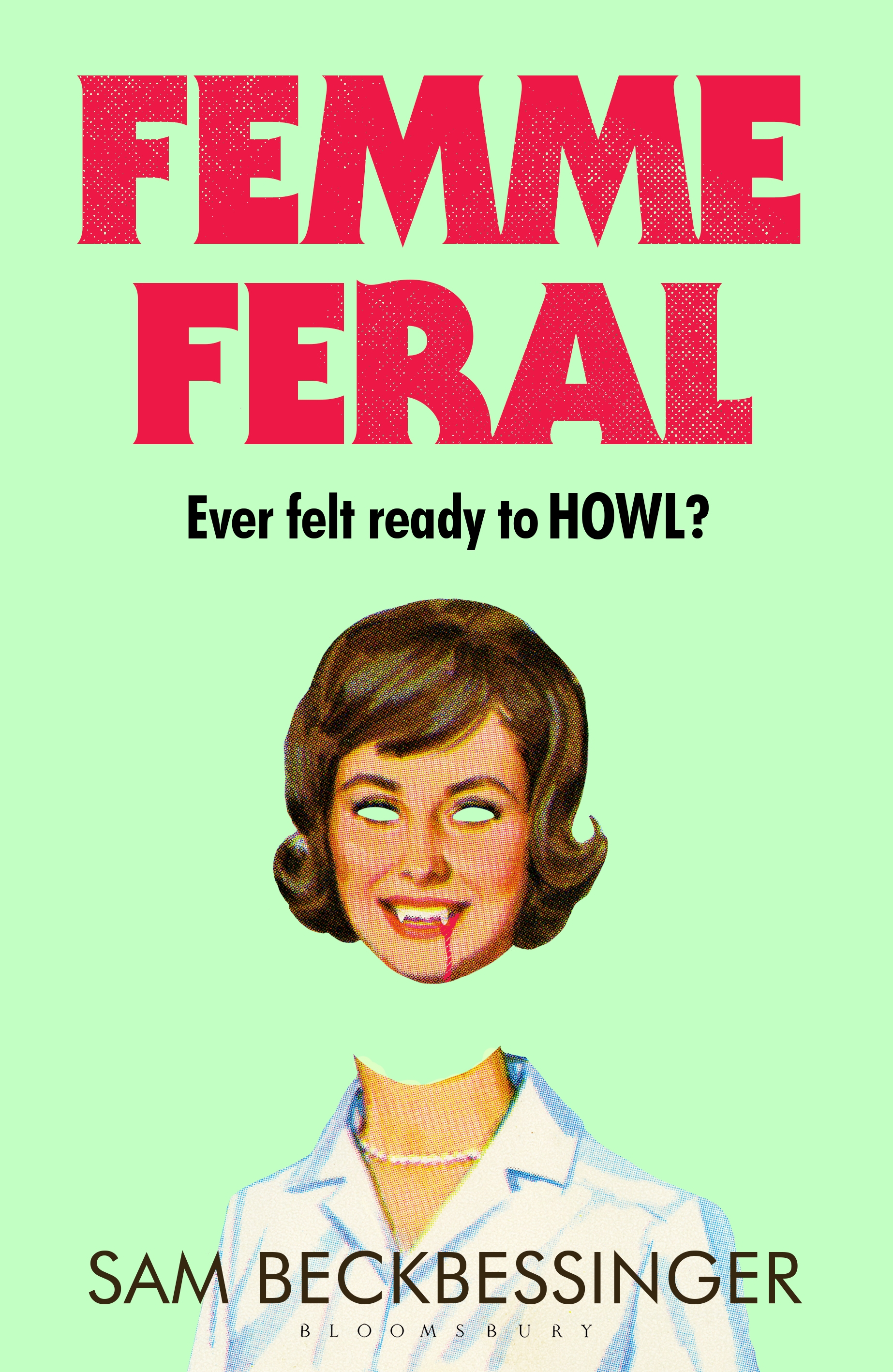
Imprint Bloomsbury Archer
Publication 9th April 2026
Formats HB (9781526687876, £18.99); EB (9781526687869, £11.99)
Rights sold US (Penguin Books)
Editor Vicky Leech Mateos
Agent Oli Munson, AM Heath