




You are viewing your 1 free article this month.
Sign in to make the most of your access to expert book trade coverage.
Josh Silver’s latest YA thriller explores how society deals with mental health and trauma, with a sinister dystopian twist
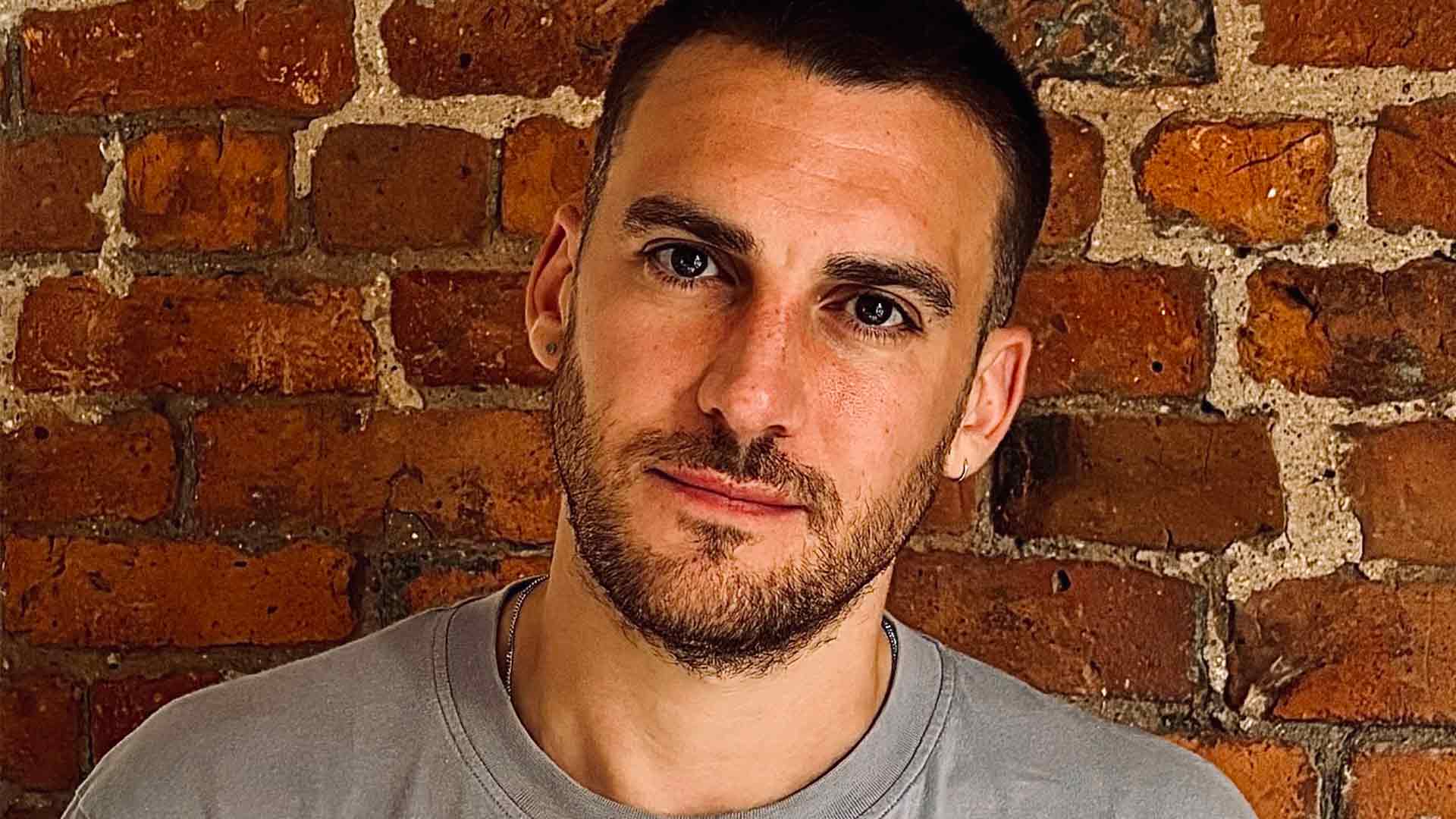
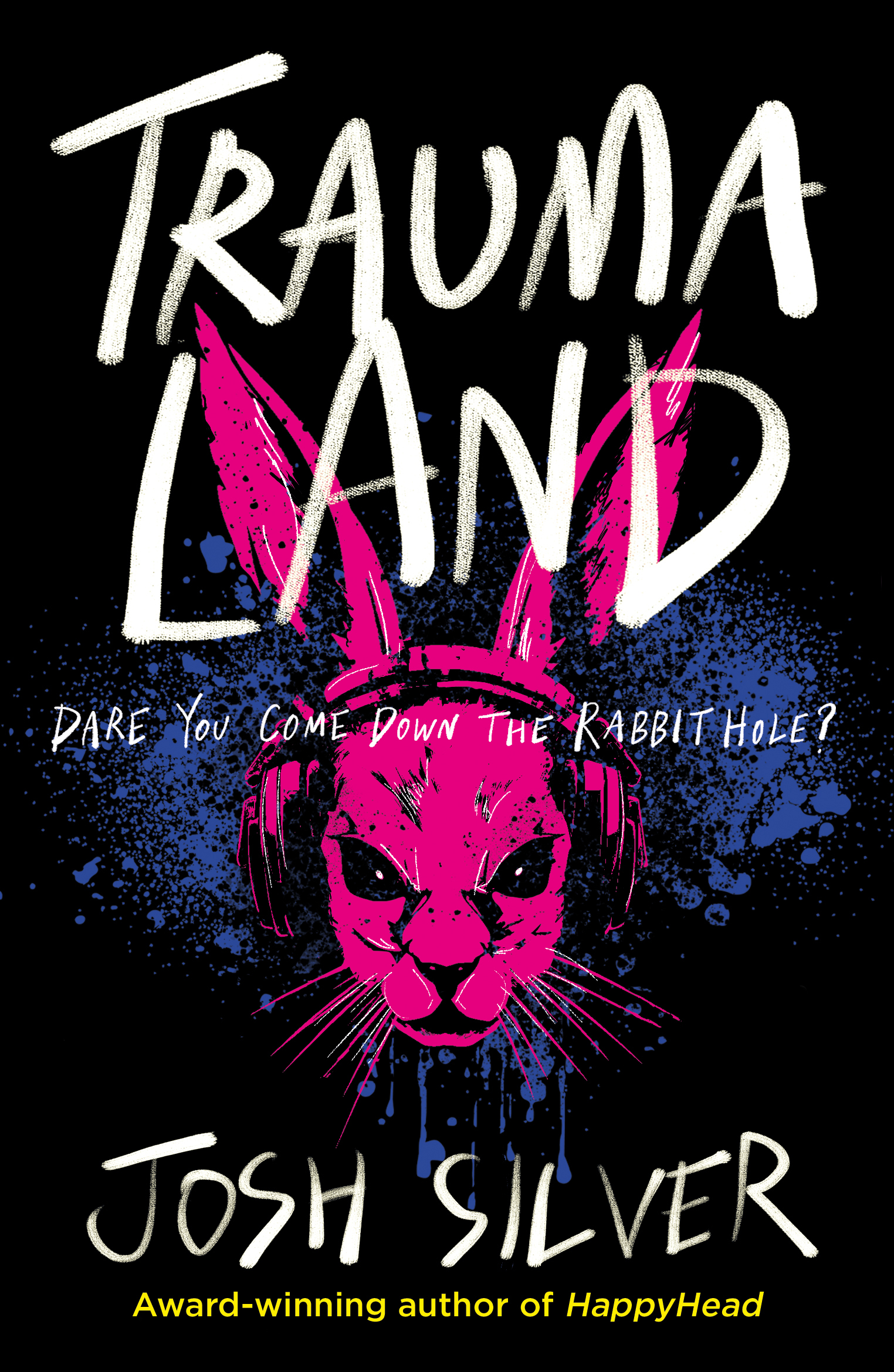
Silver’s latest YA thriller, Traumaland, deals with the realities of mental health and trauma, using technological advances to give a sinister dystopian twist.


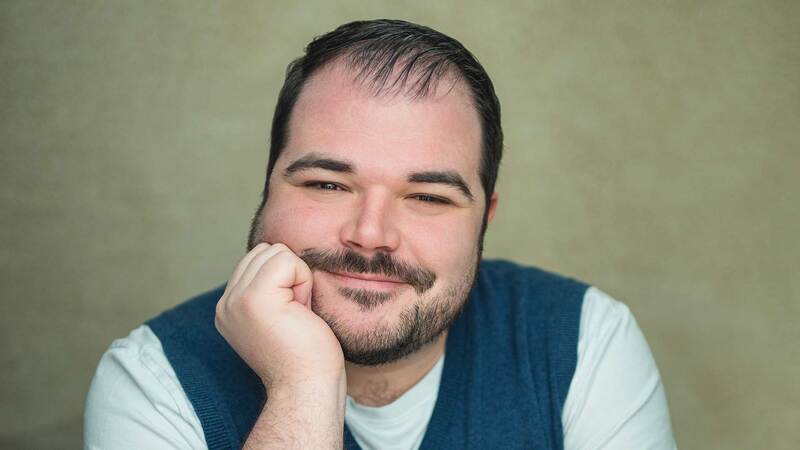
‘‘I wanted to write a book about the commodification of pain,” Josh Silver tells me, speaking over video call from his home in Manchester. We are discussing Traumaland, his new YA novel, which will be published by Rock the Boat in May. Drawing on his background as a mental health nurse, the book explores trauma and grief and considers how some approaches to “fixing” mental health might be exploited. ‘‘How can you fix something that is just human?” he asks. “I started to see how people could monetise it.”
Traumaland is a raw and compelling thriller with dystopian vibes. Seventeen-year-old Eli is struggling to deal with the fallout of a near fatal accident. He has been left emotionally numb, with no memory of the crash or the months that followed it. Desperate to feel something again, Eli discovers an underground club called Traumaland. The people he finds here are all seeking to experience new thrills by entering virtual-reality simulations of nightmarish scenarios. Things turn even darker when he enters the story of a boy called Jack, which sets him off on a dangerous journey to the truth behind Traumaland and the source of his own pain.
Silver’s initial idea was that of a club where you could go into different rooms and experience horrific things as a new form of high, drawing on his own love of horror films. “Watching horror gives me a thrill, it jolts me out of the reality I’m in and puts me in an altered state,” he explains. He wanted to examine, Black Mirror-style, how the advancement of technology might enable people to seek their highs in new ways. “We live in a society that numbs. We scroll, we’re constantly online, always plugged in. I wanted to project an idea where people are becoming so sick of that feeling that they want to feel alive again.” In Traumaland, this idea applies not only to the thrill-seeking entertainment world, but also to the mental health industry.
In his work with young people, Silver has been struck by the way things have shifted and changed for teenagers over the past 20 years. “The thing that remains,” he asserts, “is these completely insane standards and expectations.” While there is new language, Silver continues, around mental health and the LGBTQ+ community, he feels there is also immense pressure for teenagers to be a certain way. “Social media gives us doctored versions of perfection and what happiness or wellness looks like. I find it absolutely terrifying that young people are inhaling this.”
The result, Silver argues, is that young people are terrified of their own emotions. “I feel like we’re a world that loves to avoid pain and loves to avoid uncomfortable things, especially in England where we’re so buttoned up.” During his school events, he surprises students by reframing feeling deeply as something to celebrate, not to be ashamed of.
We live in a society that numbs. We scroll, we’re constantly online, always plugged in. I wanted to project an idea where people are becoming so sick that they want to feel alive again
“I also experience joy very deeply. I don’t want to not feel anything in my life. I want to experience the emotions of being a human.” Silver expresses caution about the wellness industry, and how it uses mental health for commercial gain, likening it to the commercial-isation of the LGBTQ+ movement, with supermarkets selling bars of soap emblazoned with the Pride flag. “If you’re going to use that because it’s now ‘cool’, and you are selling a product and using the experience of a community, are you going to appropriate the pain, the difficulty? No, you’re just going to make money. It’s an uncomfortable conversation.”
While Eli pursues the truth behind the club and his own lost memories, Silver explores this idea of avoiding pain and how it could be exploited, even if initially pursued with good intentions. “The mental health world is very money driven, very figures driven,” he says.
The book asks: what if we could remove your trauma? “What I know is that we have to experience these things to grow as human beings.” Although Eli has a black hole in his memory, something still tethers him to those emotional experiences. Silver explains: “I wanted to write a book about this nostalgic pull to something he doesn’t understand because he can’t remember it, but the lingering residue of the emotion is still there in his body.”
For all the book’s darkness and gripping pace, Traumaland has some surprisingly funny and tender moments, thanks to Eli’s sarcastic humour and the warmth and humanity given to characters like Nisha, who works at the club, and Jack. There’s also a slow-build romance. As a queer writer, Silver very much wanted the romance to be just one part of Eli’s story, and not the driving force. “I’m fortunate that my publisher allows me to put the thriller or dystopian elements of the plot to the forefront. It’s so important to see LGBTQ+ romance but it’s also important to see incidental representation.”
Silver trained at the Royal Academy of Dramatic Art, acting in the West End and on Broadway for seven years before addiction struggles motivated him to get sober and change his life. Building on his interest in psychology and human development, he trained as a mental health nurse. He did, however, miss the creativity of his previous career, which prompted him to begin writing.
HappyHead, Silver’s debut novel, was published in 2023; he calls it “a dystopian origin story of where mental health could go”. Although he didn’t specifically set out to write for young people, he realised that the context was suitable for a YA audience and is now passionate about writing for that age group.
Until he began writing, he hadn’t considered how formative those teenage years had been: “How they would dictate my life; not only how I would navigate the world, but also how I viewed myself. When I go into schools and meet young people, that’s when I remember and realise the importance of these narratives. I always leave feeling that sense of fulfilment.”
Read More
Metadata
Imprint Rock the Boat, Oneworld
Publication 8th May 2025
Format PB (9780861549283, £8.99)Rights sold US (Delacorte, PRH), Germany and Poland
Editor Katie Jennings
Agent Becky Bagnell, Lindsay Literary Agency (now represented by Clare Wallace, Darley Anderson)