






Ita O'Brien's landmark book draws on her experience as an intimacy practitioner for stage and screen

 Caroline Sanderson
Caroline Sanderson worked as a Waterstones bookseller, and as a book publicist before becoming a freelance writer in 1997. The Bookseller’s
...more
From professional dancer to actress, to becoming the leading intimacy practitioner for film, TV and theatre, O’Brien’s trailblazing career has resulted in a book for the ages.


Caroline Sanderson worked as a Waterstones bookseller, and as a book publicist before becoming a freelance writer in 1997. The Bookseller’s
...moreIn her acceptance speech after winning a BAFTA Best Actress Award for her lauded TV series I May Destroy You, actor and writer Michaela Coel dedicated her win to Ita O’Brien, saying: “Thank you for your existence in our industry, for making the space safe, for creating physical, emotional and professional boundaries so we can make work about exploitation, loss of respect, about abuse of power without being exploited or abused in the process.”
O’Brien is described in her publisher biography as a leading intimacy practitioner for film, TV and theatre. In fact, she invented the role, blazing a trail by devising the Intimacy On Set Guidelines, which are now being used around the world and have been adopted in leading production houses, including HBO, Netflix and the BBC. Previously, when working on intimate scenes, directors would have typically told the actors what they wanted and asked them to just get on with getting it on.
Now, thanks to O’Brien, that often fraught and potentially unsafe state of affairs is radically changing. Drawing on this pioneering work and her 40-year career in the performing arts, O’Brien has now written a book, Intimacy: A Field Guide to Finding Connection and Feeling Your Deep Desires. And while O’Brien’s intimacy co-ordination credits include such sexually frank TV productions as Sex Education, Gentleman Jack, Normal People and It’s a Sin, her sage and sensitive debut book is much more than a guide to better sex. Rather, she seeks to recast how we think of intimacy across a much broader spectrum, starting by forging deeper and healthier connections with our own bodies, before creating safe spaces where we can navigate intimacy, not only in our closest relationships, but also more widely in society. In our world of #MeToo and porn saturation online, it could not feel more necessary.
“Honouring and telling authentic human stories, that is what my work is about,” O’Brien tells me when we meet at the offices of her publisher, Ebury. “So to bring that same sense of authenticity to this book was important, [while] exploring ways in which we can take a step back, truly listen to ourselves and think, what do I actually want?”
In our world of screens, we might be more connected to each other virtually, but physically we are increasingly less so, argues O’Brien. Therefore, learning to better inhabit our own bodies before we try to bring them physically together with anyone else’s is vital. As O’Brien takes us through different stages of building intimacy, she includes illuminating exercise sections that draw upon her own “embodied practice”, and other diverse teachings from around the globe.
These include 20 Connected Breaths, an exercise designed to bring you to a place of centredness and calmness; Mirror Affirmations as pioneered by Louise Hay by which you practise appreciating your physical self in all its glory; and Body Pleasuring (not quite what you might be thinking). I particularly love her Waterfall exercise as a way of marking a defined end to the working day, which is important when one works from home as I do.
O’Brien’s lifelong love for and preoccupation with bodily movement and choreography began with ballet lessons at the age of three

O’Brien’s lifelong love for and preoccupation with bodily movement and choreography began with ballet lessons at the age of three. Born and brought up in Bromley, Kent, her Northern Irish Catholic mother and Irish Catholic father came separately to the UK and met at an Irish dance in Brixton. While she speaks warmly of her “beautiful, fabulous, passionate” family, O’Brien’s Catholic upbringing was also a strict and traditional one, where – interestingly given her later career – “talking about sex and intimacy was just not on the agenda”.
O’Brien trained at the Royal Academy of Dance, and worked professionally as a dancer from the age of 18. Her first TV role was on the Benny Hill Show, and while Hill himself “looked after the dancers who worked for him”, others continually pushed boundaries in terms of the smut and sexual innuendo required. This kind of dangerous and abusive dynamic persisted in the performing arts until it reached a tipping point in 2017 with Harvey Weinstein and the #MeToo movement. By that time, O’Brien had retrained as an actress and then as a movement teacher and director. Her experience working on the intimate scenes in a devised piece called Does My Sex Offend You?, in which the dynamic between perpetrator and victim was explored, crystallised her conviction that a code of conduct was needed. She took the idea to Equity, and before long, her guidelines, admirably distilled to 14 powerful points (you can read them in an appendix to the book) were being endorsed across the industry.
O’Brien was then invited to bring her expertise to the making of season one of Sex Education (2019), and from there her career snowballed. O’Brien has since been in high demand and has travelled the globe sharing her wisdom. And there are now many other intimacy practitioners working worldwide.
Intimacy is a beacon of a self-help guide in encouraging us all to nurture relationships that are open, physically confident and which allow us to, as O’Brien puts it, “call boundaries when we need to, and know they will be listened to and honoured”. But the more you consider the issues it raises, the more vital a book it becomes on a societal level. From the dangers of toxic masculinity to teenagers who learn their sexual behaviour from watching porn, there are many issues with our understanding of what true intimacy constitutes that must be addressed. Says O’Brien: “Intimacy On Set Guidelines are fundamentally about respect for everyone. And that’s no different elsewhere in life.”
Intimacy – which also feels to me a shining example of how the performing arts can help us live better lives – is written for readers of all ages and preferences; for example, it includes a sensitive and moving chapter on later-life intimacy. But it is when talking about equipping young people for intimacy that O’Brien is perhaps at her most ardent. “Humans are physical beings, hard-wired for pleasure. So instead of this fear-based sex education centred on not getting pregnant, not getting an STD, let’s teach young people that their sexual awakening is a glorious thing. That it goes hand in hand with pleasure, but also with communication and respect. Let’s teach them that intimacy is only ever about freely given consent. And from there we can all create something healthy and beautiful.”
Extract…
A common misconception is that the work of an intimacy practitioner (who is known as an Intimacy Director in live performance or an Intimacy Co-ordinator in TV or film work) is confined to the bedroom scenes we see on screen or on stage. But as with our own intimate lives, we know that it is the work we do beforehand, both with ourselves and with our partners, that creates the foundations for satisfying connection and truly intimate encounters. I want to focus on how some of the tools of an intimacy practitioner, that we use to build trust and empower open communication, can help us build stronger relationships everywhere in our lives.
Metadata
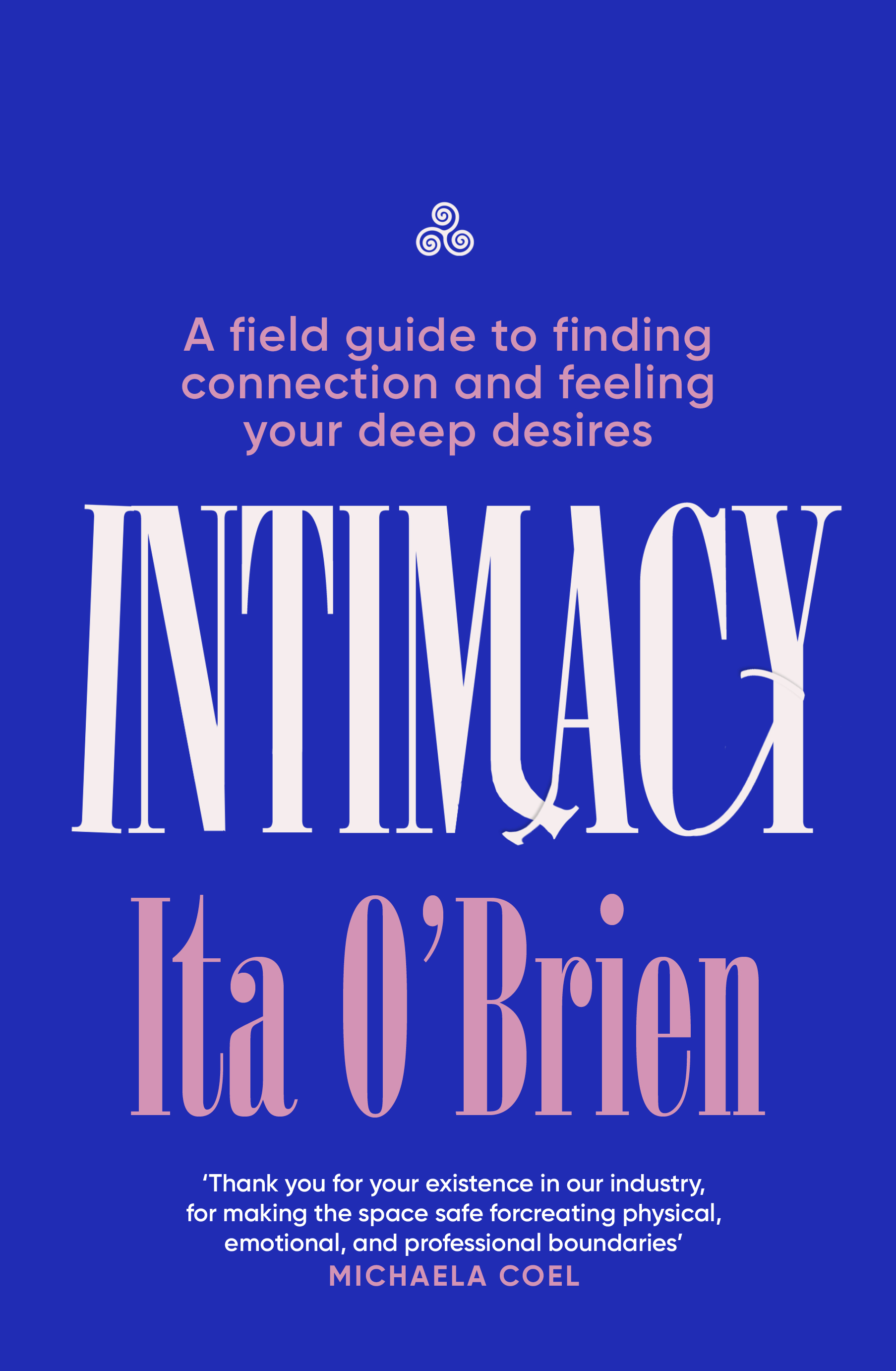
Imprint Ebury
Publication 5th June 2025
Format/s HB, £16.99, 9781529954036
Rights sold US (Dial Press)
Editor Robyn Drury
Agent Chris Wellbelove, Aitken Alexander Associates