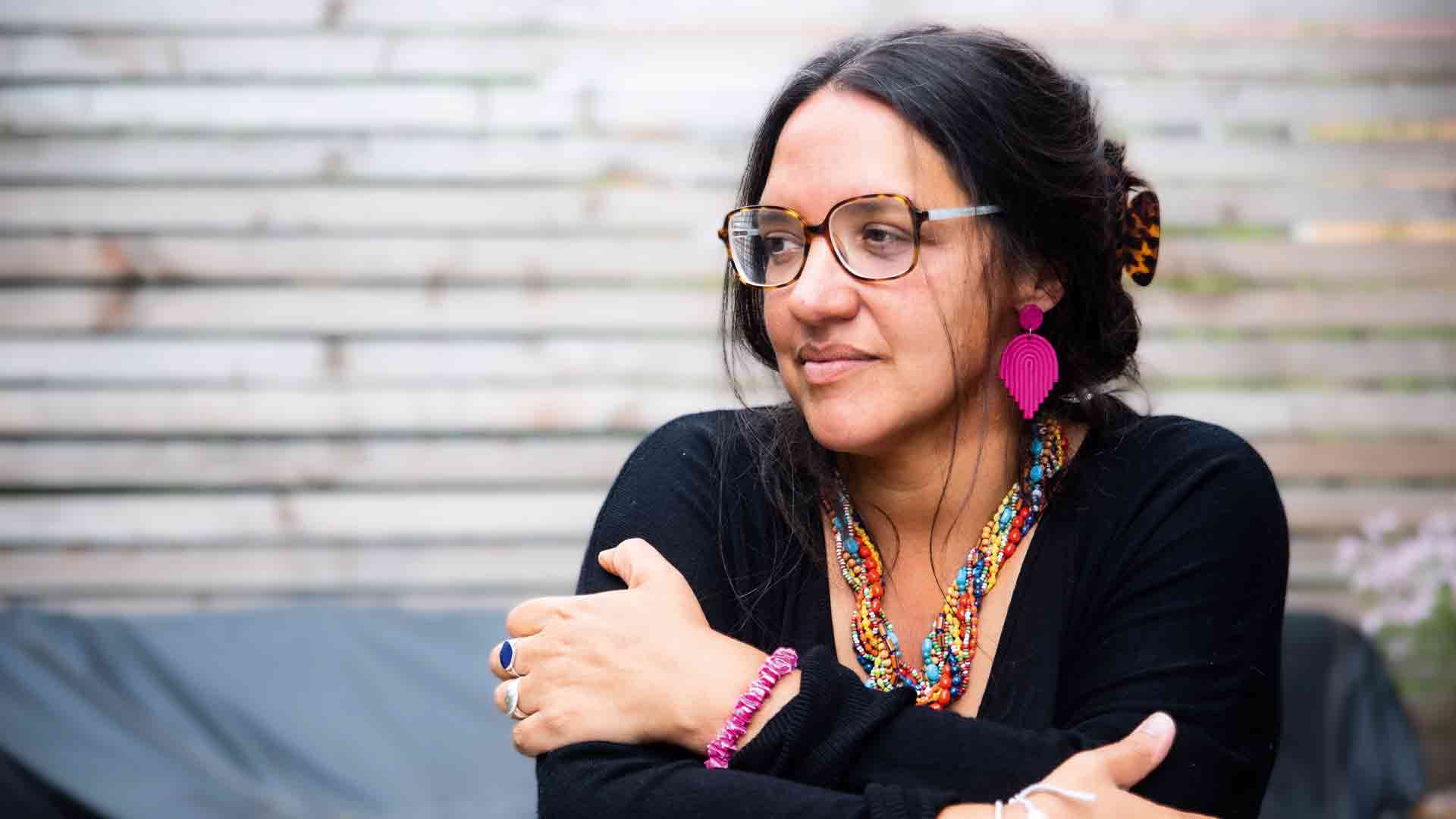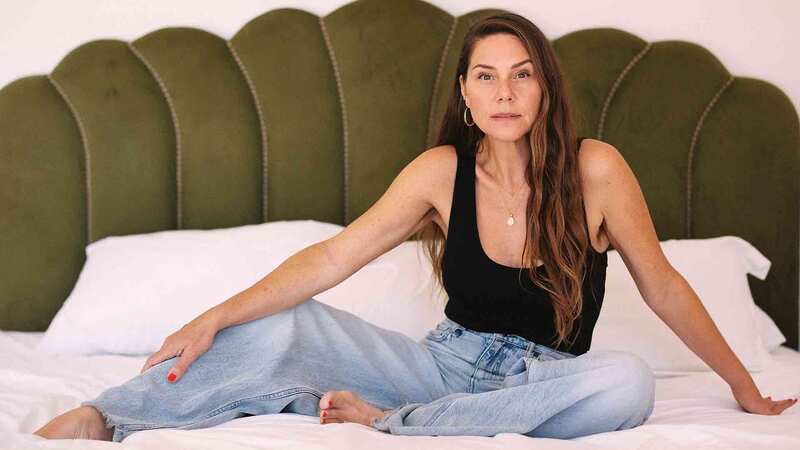

The former Edinburgh Makar and playwright talks about her year of using poetry as a means to bear witness.
‘Sometimes, our job is just to witness. To record. To say we saw it happen.” Hannah Lavery, the former Edinburgh Makar (the city’s literary ambassador), is describing the motivation behind her searing new poetry collection, Everything Everyday: A Year of Empty Promises (Polygon).
In visceral verse, Lavery captures the numb horror of swiping past funny cats and fitness reels to find a video of a mother burying her child. Anyone with access to a smartphone understands what Lavery is conveying, but the beauty of her poetry brings all the latent feelings, the ones we might have tried to scroll away from in these troubled times, firmly into focus.
The collection is a week-by-week record of a year of international conflict and the unfolding human cost, much of which is witnessed through phones and the news cycle, framed by Lavery’s life and work in Edinburgh. Distinctly personal observations of a wider story are connected by a series of sonnets voiced by a trio of mythical characters. The 12 linked sonnets running through Lavery’s year of poetic witnessing are not a conventional corona. “It’s not quite a crown of sonnets, more like a tiara,” Lavery says. But she keeps to the famous poetic form, in which the final line of the last sonnet is identical to the first line of the next, saying: “I felt safety in writing sonnets. As if they could contain the wildness of the moment.”
There is a quote from a Skunk Anansie on the opening page of the book: “Yes, it’s fucking Political/everything is Political.” Lavery’s work, as both playwright and poet, always shines a light on important contemporary issues. Her plays for National Theatre of Scotland, The Drift, Lament for Sheku Bayoh and Protest, have toured extensively. Lament for Sheku Bayoh, which Lavery also directed, is rooted in the real tragedy of Sheku Bayoh, 31, who died in 2015 after being restrained by police in Kirkcaldy. Indeed, the two art forms – poetry and plays – are distinct but interlinked for Lavery. “The poetry I’m influenced by is from the long oral tradition in Scotland. We all get brought up reciting Burns at primary school,” she says. “I didn’t meetpoetry on a page, I heard it.”
Having been Makar from 2021 to 2024, with three poetry collections – her debut, the Saltire Award-shortlisted Blood Salt Spring (Polygon, 2022) and Unwritten Woman (Polygon, 2024) – and an impressive CV of theatre credits, you would be forgiven for thinking Lavery has been doing this for decades. But the former teacher only started writing in her 30s when her three children were tiny. They are now teenagers, but mothering is another political theme that runs through her words. “I think hard about what it means to mother through these times,” she says, “how to keep hope for our children.”
The mythical characters recurring in Lavery’s sonnets offer an opportunity for the poet to speak with different voices. There’s Beira, the mother of the gods in Celtic mythology. “She’s the winter goddess, who made the lochs and the mountains. She helps to show that we’re living through aeons of history each day,” she says. Then there is Sister Icarus, a metaphor for the rise of the far right, who emblemises what it feels like to watch someone you love fly towards the sun and then, ultimately, fall.
Most moving of all is when Lavery’s poetry speaks in the voice of Tahlequah, an orca whale, who in January 2025 was discovered for a second time swimming with her stillborn calf. “There was just something about the image of Tahlequah at a time when I was constantly reading the numbers of children being killed in Gaza,” she says. “Every day there was this list of children dying. I thought of this whale swimming with her stillborn calf, and I felt that I wanted to give those children to the orca, for her to carry them, too.”