

Katie FraserKatie Fraser is The Bookseller's deputy books editor and chair of the New Adult Book Prize. She has chaired events at the Edinburgh
...moreWith her new anthology of short stories and poetry, the Canadian-Lebanese author showcases the literary possibilities of the SFF genre

Katie Fraser is The Bookseller's deputy books editor and chair of the New Adult Book Prize. She has chaired events at the Edinburgh
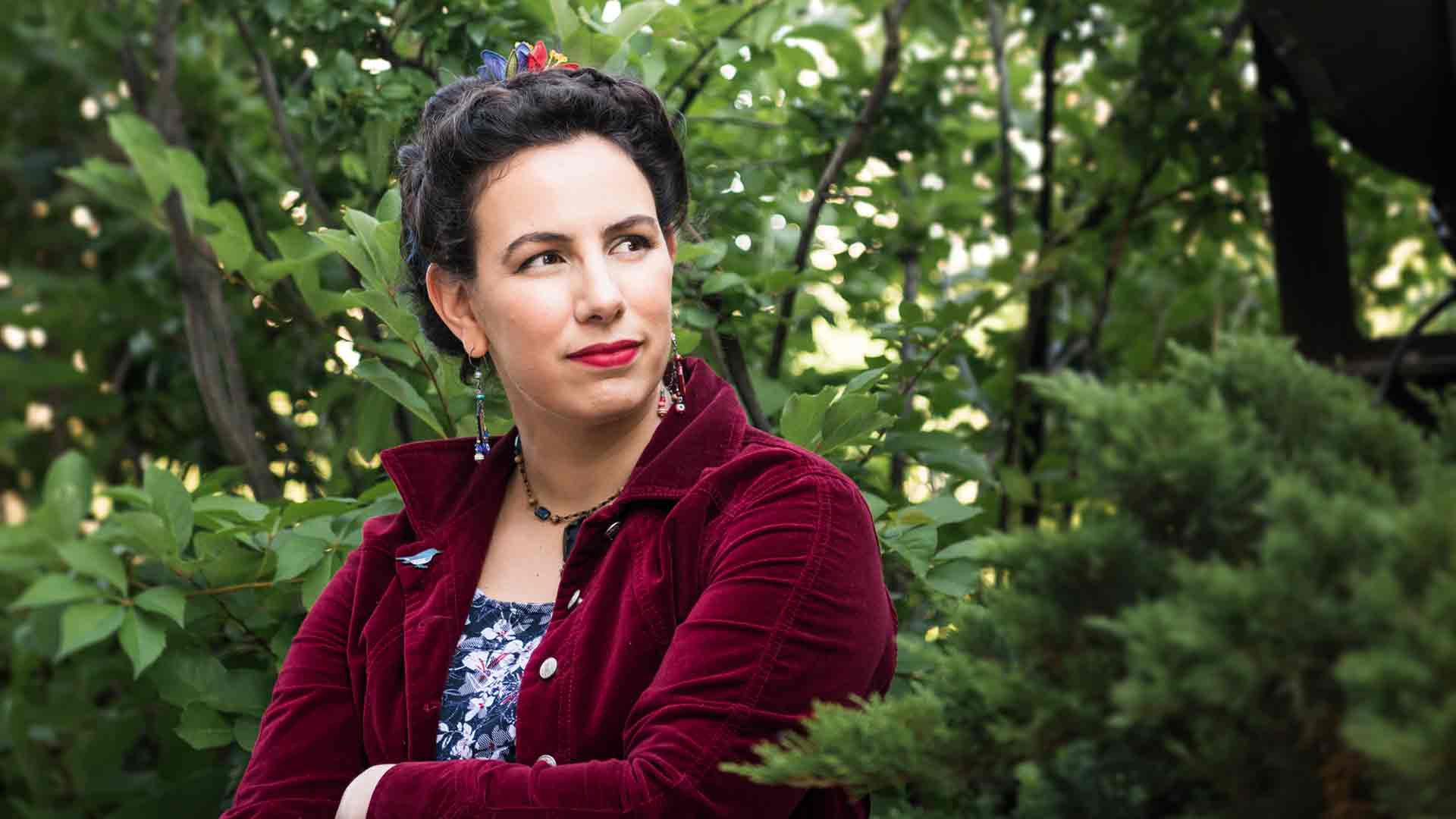
...moreCanadian-Lebanese author Amal El-Mohtar often glances out of the window to watch either a “giant crow or a normal-sized raven” during our chat about her new collection, Seasons of Glass and Iron: Stories. Her fascination with birds began as a child when, after moving from the suburbs to rural Quebec, an “elderly birder” asked if he could watch the shorebirds on the family’s property. The gentleman could identify birds by their call. To young El-Mohtar, it seemed like magic.
Now, she too can bird by ear, a skill that she describes as like “learning a new language…[you] realise there is this layer of the world that is legible to you now in a way that wasn’t before”. It is little surprise, then, that birds, particularly owls, can be spotted throughout Seasons of Glass and Iron: Stories, an enchanting collection of short stories and poetry originally published between 2008 and 2023 either in a magazine, an anthology or the internet.
The compiled works – 14 stories and four poems – were never intended to be published together in one book, but the result is an exquisite landscape demonstrating what is possible in SFF writing. The collection stands as a “capstone” to years spent writing short fiction as El-Mohtar transitions into writing longer prose as part of her four-book deal with Tor US and Arcadia.
The collection’s short fiction includes everything from sentient green books, teleportation and shapeshifting to witchcraft, psychic powers and the ability to craft dreams. Together, the poetry and prose showcase 15 years of El-Mohtar’s life. “My stories that I’m proudest of are now in a room together, interacting with each other and saying things to each other and I like that, it feels good.” It is like, she adds, throwing a party, inviting friends from disparate parts of your life and “hoping they gel”.
Seasons of Glass and Iron, the story from which the collection takes its name, opens the book. It is one of El-Mohtar’s most recognisable works and clinched her the Hugo, Nebula and Locus Awards after after its original publication in the anthology The Starlit Wood: New Fairy Tales in 2016. The tale follows two women, Amira and Tabitha, each bound by a spell. Amira is stuck atop a glass hill to escape her suitors, and it is there she meets Tabitha, who climbs the hill to wear out her iron shoes. Tabitha must wear down seven pairs of these shoes to free her husband from a curse. It is a beautiful, mystical story that reads like a modern fairy tale and displays El-Mohtar’s understated lyrical prose in full force. “I will see a river raise its skirt of geese, and listen to them make a sound like thunder,” she writes.
The story sets the tone for the collection. El-Mohtar describes it as her “thesis statement”, explaining: “It is two women not only talking to each other, but reading each other’s stories against their grain in order to help each other out. That is what I’m interested in pursuing and seeing what a conversation can do is something that I’m very interested in, in terms of storytelling.”
Seasons of Glass and Iron: Stories focuses on connection and the ways that perspectives can shift because of meaningful discussion. “As a reader, I often feel frustrated by what I see as the short-changing of the transformative capacity of a conversation,” El-Mohtar adds. “I’m interested in what happens when people talk to each other and I’m interested in the ways in which that can open new avenues of story.”
The four poems in the collection provide context for the geopolitical and personal environment El-Mohtar was living in while penning these fantasy worlds. The quartet includes a celebration of Damascus; a grief-stricken poem about the war in Gaza, dedicated to Palestinian journalist Bisan Owda; a meditation on El-Mohtar’s “experience of language” as someone who has lived in four countries and speaks three languages and, finally, one about the Syrian civil war. They mark “the continuity of my life and the forces that have been shaping my life and my family’s life. My parents’ experience and their parents’ experience is one shaped by imperial forces and war. My parents met in Canada because they both fled the civil war in Lebanon”.
Continues…
For El-Mohtar, “chasing timeliness is, I think, a fool’s errand, but dwelling in whatever your truth is is a kind of timeless endeavour”. This truth, and El-Mohtar’s creative work, is inseparable from her family and the events that have affected them. “With short fiction, there’s just so much of my family experience that I draw on a great deal,” she explains.
“I can’t fathom putting out any work that doesn’t touch, in some way, on what is happening in Palestine. It is difficult to explain to people, who only encounter it from the discontinuities of the news, how long this process has been happening and how much it has shaped my life very specifically. I mean, the civil war in Lebanon is inseparable from the establishment of Israel and the displacement of Palestinians.”
In the introduction, the only piece written specially for the collection, El-Mohtar writes: “I love these stories and poems, these earnest time capsules of my younger selves striving out in pursuit of friendship and belonging, certain that a better world would be just over the horizon if they could only find the words to shape it into being.” The short fiction in Seasons of Glass and Iron: Stories is fantastical and grounded in real-world concerns. A Hollow Play is a story of shape-shifting birds and what it means to be a refugee; A Tale of Ash in Seven Birds examines the politics of nation-building through metamorphosis; while The Lonely Sea in the Sky is a critique of capitalism framed through the discovery of teleportation. Her writing asks the reader to look at the world differently. A stanza from the poem Pieces reads: “My voice is in pieces/I cannot swallow/But if you would hear it/I will put a sliver in your eye/slide it stinging into place/It is glass.See through it/Change.”
Seasons of Glass and Iron: Stories solidifies El-Mohtar’s place as one of the most exciting SFF authors writing at the moment. She describes birdwatching as a “pleasure that I comprehend through my relationship to language while they are also utterly beyond language. I’m so aware of the ways in which we layer birds with meaning… and yet the deepest pleasure of watching a bird is of just watching something live”. This synergy is clear in El-Mohtar’s writing – it, too, sings.