





You are viewing your 1 free article this month.
Sign in to make the most of your access to expert book trade coverage.
Tributes paid to publisher and 'wonderfully decent man' Christopher Sinclair-Stevenson



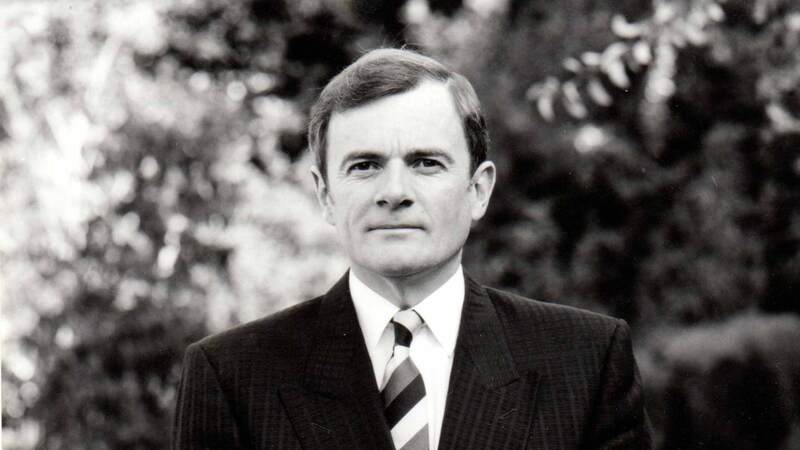
Members of the book trade have paid tribute to publisher Christopher Sinclair-Stevenson, who died in January aged 85.
Sinclair-Stevenson became an editor at Hamish Hamilton in 1961 before becoming managing director in 1974. In 1989, he founded his own publishing company, Sinclair-Stevenson Ltd, which was later subsumed by Random House Group in 1997.
Over his career, he worked with authors including Peter Ackroyd, Rose Tremain, Susan Hill, Isabel Colgate, Paul Theroux and William Boyd. Sinclair-Stevenson became Boyd’s publisher in 1970, with the Any Human Heart (Penguin) author telling The Bookseller “we last saw each other a couple of years ago before he fell ill”.
“It was a long and enduring friendship. We had regular lunches, year on year. He was a vitally important figure in my career, picking my book of short stories, On the Yankee Station (1981), out of the slush-pile and commissioning my first novel, A Good Man in Africa (1981).”
Boyd recollected one story about Sinclair-Stevenson that “reflects his uniqueness as a publisher and as a wonderfully decent man”. “He gave me a kind of autonomy over my book jackets that was unheard of. For my fourth novel, The New Confessions (1987), I came up with this idea for a version of the famous Man Ray painting Observatory Time: The Lovers – a pair of disembodied red lips floating over a landscape. He even allowed me to choose the designer.
“Anyway,” Boyd continues, “the book was published with this cover and the Man Ray estate sued Hamish Hamilton for plagiarism. Christopher had to pay them £5,000 for permission to use the image. This was 1987 – approximately £18,000 today. And not a single word of rebuke for the impetuous and mortified author, though Christopher couldn’t have been best pleased. Perhaps the most expensive book-jacket ever? A true gentleman – and great fun. Our lunches were a gossip-fest.”
Continues...

Author Julian Evans, who started his career as an editor and quit publishing after 10 years to write his first book Transit of Venus: Travels in the Pacific (Eland Publishing), told The Bookseller: “Christopher gave me my first opening in the book world as an extremely junior editor, telling me he thought editors should have modest salaries but generous expense accounts, so you could meet and entertain potential authors.”
He says what characterised Sinclair-Stevenson was “his loyalty and enthusiasm, his attention and wisdom – as well as joyful lunches and decent advances”. He continued: “He would read a manuscript as soon as he received it, arrange lunch and offer plenty of praise. He embodied a civilised era of publishing that now looks like an irretrievable golden time, in which an editor’s judgement, not sales figures, determined whether he’d take you on as an author.
“These days it’s hard to believe that an actual business of publishing books was based on those values, but he took risks and was extremely astute, so many of them paid off. He also let you take risks: he encouraged me to buy Patrick Süskind’s Perfume and to fly to New York to buy an unpublished work by Hemingway from under the nose of Hemingway’s American publisher. Going to work, to the Hamish Hamilton office in Long Acre, was an addictive blend of business and pleasure every day, and Christopher was simply one of the most stimulating, courteous and entertaining men I’ve ever known. He hugely enriched my life and I owe him a tremendous amount.”
Francis Bennett, managing director of Marble Hill Publishers, was Sinclair-Stevenson’s boss in the 1980s and they were close friends for 45 years.“Many writers owe the start of their careers to Christopher’s gift for spotting true talent early on,” he said. “He was a wonderful editor and agent, always loyal to his authors. He may be a representative of a publishing world that has passed but his achievements deserve to be celebrated.”
Obituaries to Christopher Sinclair-Stevenson have also been published in the Guardian , the Telegraph and the Times.