





You are viewing your 1 free article this month.
Sign in to make the most of your access to expert book trade coverage.
European publishers call for 'new equilibrium' as 'challenge' of English-language editions spreads


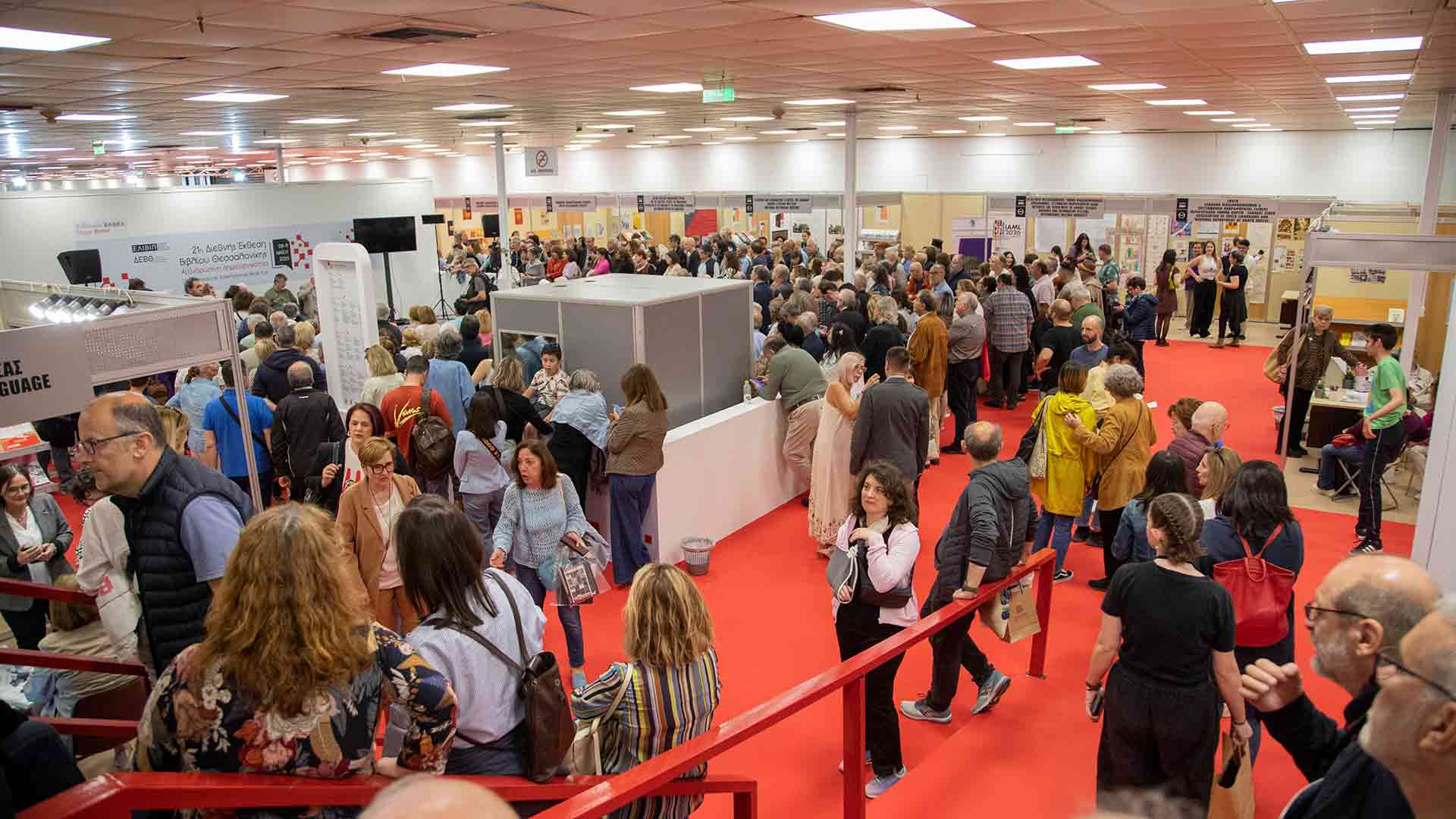
The impact of English-language export editions on local books sales and translation revenue dominated conversations at the 21st Thessaloniki International Book Fair (TIBF), held from 8th to 11th May 2025 in Greece.
The phenomenon first emerged in territories such as the Netherlands, the Nordics and the Baltics, but the competition between translated and export editions is also impacting the Greek market today, according to publishers and agents at TIBF.
“The problem with English-language export editions is that they are priced aggressively and distributed widely online, often reaching our local market faster and cheaper than we can bring out the Greek translation,” said Argyris Kastaniotis, head of Kastaniotis Editions – one of the largest and most well-known Greek publishers. “For readers comfortable with English, which includes most of the younger generations, this creates a real challenge to the viability of the domestic edition.”
This is particularly impacting commercial fiction aimed at readers aged 18 to 30, who have strong English literacy skills, according to agent Nike Davarinou of the Read n Right Agency. “Publishers are trying to deal with this by publishing simultaneously with the American/UK publishers, or by releasing a special edition, [featuring] sprayed edges or a hard cover, so that the book also becomes a collectible object,” she explained.
Greek publisher Dioptra released Rebecca Yarros’ Onyx Storm, translated by Eliasa Noela, simultaneously with Piatkus in the UK and Red Tower Books in America. The publisher noticed a “better response” to the translated edition by giving readers the option to choose this over the English-language book upon publication, according to social media and content assistant Klaudia Didati.
As well as co-ordinating publication dates with English-language publishers, Dioptra is also focusing on creating “deluxe” editions that are a “jewel for the bookcase”. However, Didati noted that concerns about the quality of the text in translation, in comparison with the original, could be driving some readers to opt for the English-language edition.
Acquiring non-exclusive English rights – which enables publishers to release a version of the English book for their markets – is becoming increasingly popular, especially when it comes to the big releases, as local publishers strive to remain competitive. “Acquiring non-exclusive English-language rights allows us to publish a local edition that’s tailored to our market – usually with a new cover, localised metadata and targeted distribution – at a price point that makes sense for Greek readers,” Kastaniotis explained.
Continues...
Read More

However, despite the benefits to local markets and authors alike, The Bookseller heard that English-language publishers are not always in favour of local publishers acquiring these types of rights.
Jacoba Casier, an acquiring editor for the Dutch publisher De Geus – which publishes authors including Bernardine Evaristo and Olga Tokarczuk – said it is “getting more and more difficult” to acquire non-exclusive English-language rights. She claimed that a publisher in the UK recently “threatened the agent [with] cancelling the deal” if De Geus published the book non-exclusively in English in the Netherlands.
This ultimately harms a book’s reach, she argued, since local publishers are better equipped than their English-language counterparts in getting English-language books to bookshops and readers across the country. “Our distribution is better, because our sales people go around the country every day; the UK sales people come over twice a year – so we are able to reach the whole country, instead of two bookshops in Amsterdam,” she said.
English-language editions remain a big concern in the Netherlands, and Casier described weighing whether it is even “worthwhile” to publish translated English books in this increasingly competitive landscape.
“If we stop publishing translated authors, they won’t appear in the newspaper in the Netherlands, because the English publisher is not putting any effort in [the] PR and author’s visit,” she said. “But when we have an English author coming over to the Netherlands, we see at the end of the speech two thirds of the copies sold in English.”
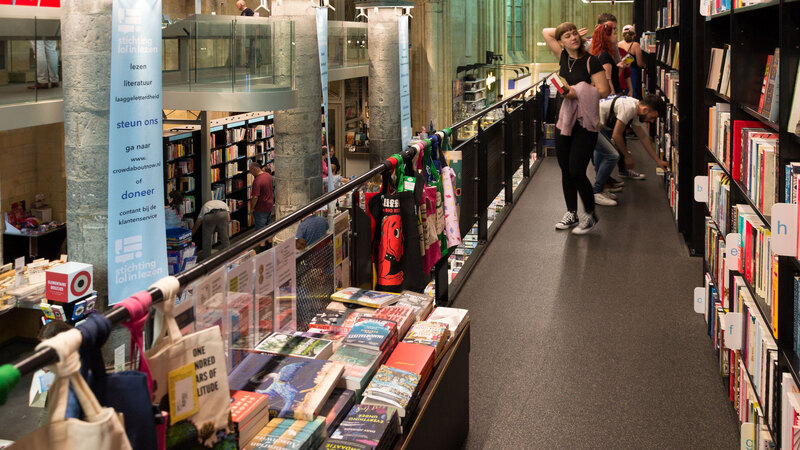
Casier spoke about the need for “a new equilibrium”, citing the example of a leading bookshop in Amsterdam, where an entire wall is dedicated to a UK independent publisher’s books, which are also published in Dutch by De Geus.
However, some markets including Spain and France still remain relatively unscathed by the impact of English-language export editions.
French literary agent Laure Pécher of Astier-Pécher argued that this could potentially be attributed to lower levels of English proficiency in France, but said that this could change with the younger generation of readers. For example, she noticed young people gravitating towards “huge American bestsellers” written in English “for the first time” during the most recent Paris Book Festival. “It’s not yet an issue, but maybe it will be in a few years,” she explained.
Equally in Spain, English-language export editions are “not an issue”, according to Ricardo López of the Spanish publisher Armaenia Editorial SL. “Although there is a growing portion of the population that speaks English,” López said, “most of [the] sales are in Spanish or regional languages, [including] Catalan [and] Basque.”