





Bookshop Spotlight: Housmans Bookshop
Housmans Bookshop in north London has stayed true to its roots with a focus on political books.


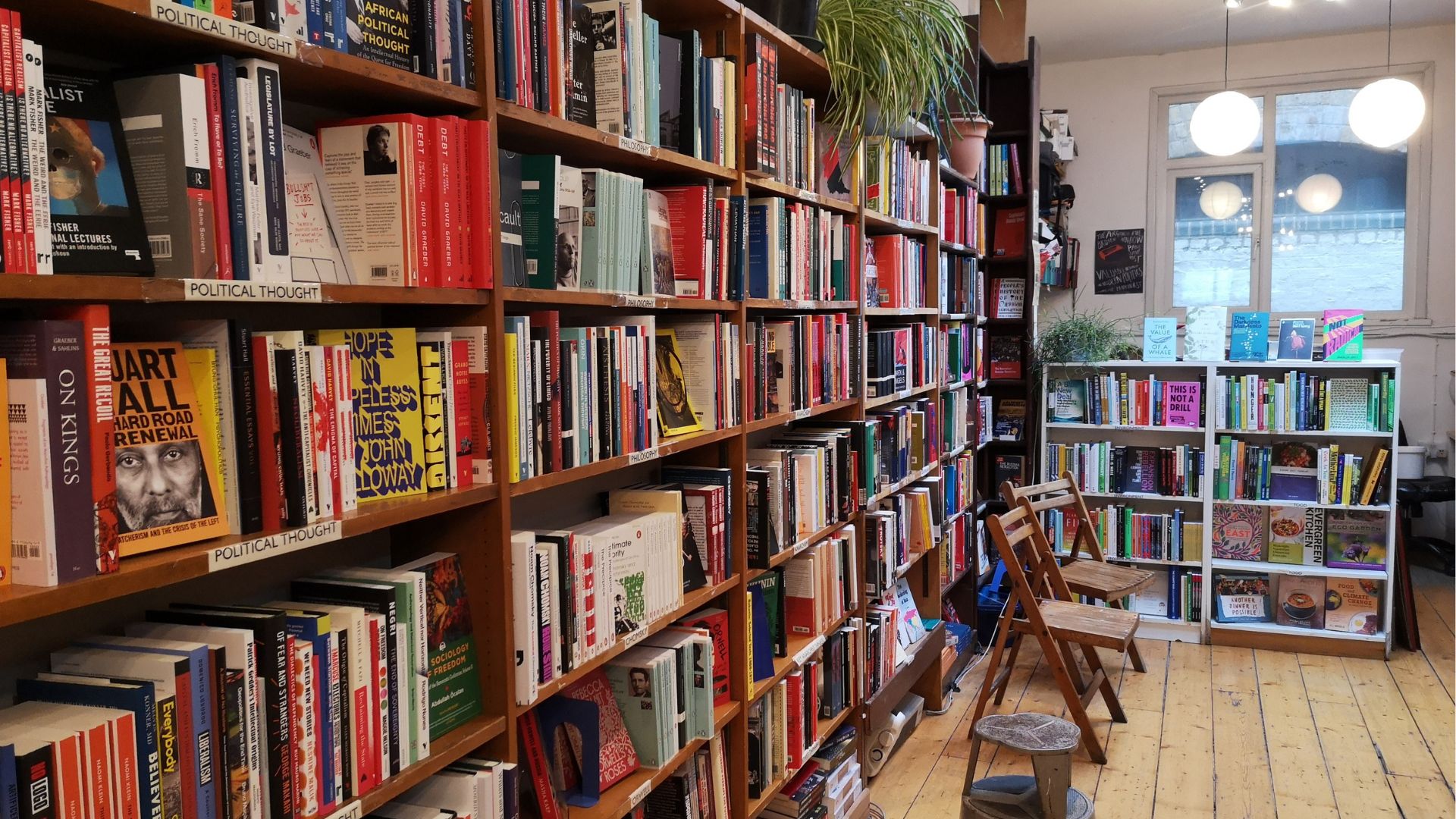
Housmans Bookshop, 5 Caledonian Road, London N1 9DY
Housmans Bookshop was founded in 1945, at a time when anti-war sentiment pulsated through the streets of London. The shop’s founder was writer and playwright Laurence Housman, who was also a sponsor of the Peace Pledge Union, one of the UK’s oldest pacifist organisations. His aim was to start a shop that would stock books promoting notions of peace and human rights. He got others on board and found the shop’s initial premises; a bombed but repaired space they could rent cheaply.
The years that followed presented serious challenges for Housmans. The bookshop closed, moved and reopened. In 1974, an IRA bomb exploded a pillar box outside it, shattering its windows; years later, a letter bomb caused a staff member to suffer burns. This was all followed by a long period of libel actions targeting the “anti-fascist” literature on its shelves.
Today, Housmans has become one of the UK’s longest-standing radical bookshops. It is the place for bold ideas and conversations, and a space in which activism and bookselling intersect. “Housmans was founded as a shop to make available literature that could play a part in creating a peaceful and just world,” co-manager Nik Gorecki tells me. “That spirit continues to inform what Housmans is and does to this day.”
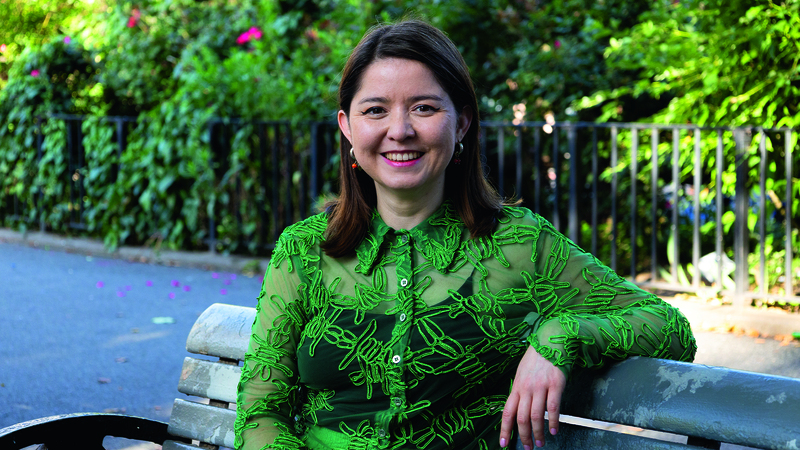
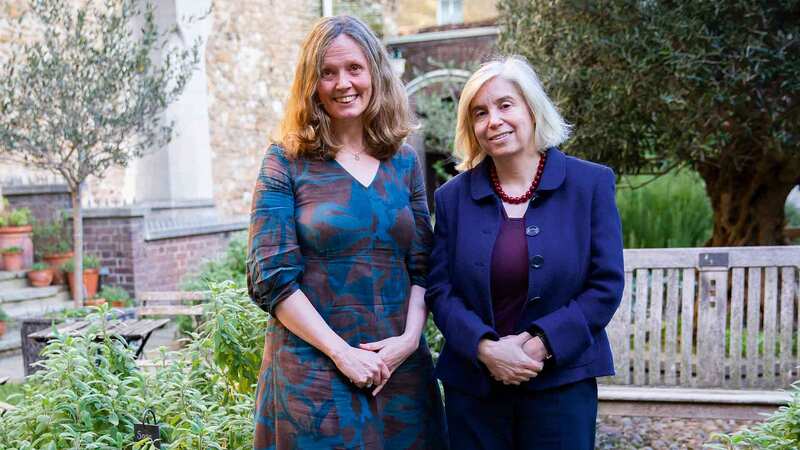
Gorecki is one of four co-managers; other members of the “non-hierarchical” team include Catherine Barter, Al Anderson and Cristina Ros. “Laurence was a very interesting figure, a playwright, atheist, humanist, openly homosexual man and leading male supporter of the Suffragette movement,” Gorecki says of the shop’s founder. “However Laurence was just one of many people involved in the shop, and over the bookshop’s now 78-year history, there have been so many people who have contributed enormously to its survival and flourishing.”
Coming from various different backgrounds, what unites the team is their “political drive”, as well as their desire to get books into the hands of readers. The staff all have pay parity and the same job title, but their roles do differ. Each member has their own area of expertise and Gorecki explains that they try to divvy up the workload.
“I’ve never worked anywhere like Housmans before,” Anderson tells me. “As a queer, neurodivergent person I was always haunted by the notion that things didn’t have to be the way they are in working environments,” the bookseller explains. “When I started at Housmans I finally felt vindicated; the collaborative, non-hierarchical management structure creates an atmosphere of genuine support and inclusion that I’ve never experienced anywhere else.”
The shop carries a range of titles on topics such as queer politics, feminism, Black politics and anti-racism, as well as socialism and environmentalism. Beyond non-fiction, it also stocks poetry, fiction and children’s books, but all the titles on its shelves are “socially engaged and political in some way”, as Barter tells me.
“Looking at the publication calendar it’s often easy to spot the things which will be relevant because we are so specific, but we also know that certain authors and publishers (such as Pluto Press and Verso Books) will always publish titles our customers are interested in,” Barter says. Reviews and prizes are not as important to how the team selects the books the shop sells; what they pay close attention to is their customers’ reading interests.
“Our stock is much broader than anti-war and pacifist books now, but it remains focused on books that advocate for social justice and collective liberation—and our belief is that a more equal world is also a more peaceful one, so our core values haven’t changed,” Barter says. “Although we’ve expanded in recent years to stock more poetry, fiction and children’s books, it’s vital to us that we retain our political focus—partly because there aren’t many bookshops like ours anymore, and partly because the world needs these sorts of books more than ever.”
The 1,408 sq ft shop feels somewhat spacious and the booksellers aim to make it a place for conversation and connection. Before the pandemic, they would host book launches and discussions on a weekly-basis. Tickets were priced at £3, which customers could use against anything they bought in the shop. The sessions would draw in customers of different ages and backgrounds, and although it was difficult to transition such a diverse community to online events, they achieved good turnouts.
Going back to in-person again now, the co-managers are aiming to space out events. “As a small team we decided to take a bit of a break from organising events on a weekly basis,” Ros says. They are also now looking to organise events where the audience is encouraged to actively participate, which will require an even higher level of planning. “Events certainly contribute to spreading the word about what type of shop we are and attract new customers, we get told this frequently, but more importantly, it is another space for the radical political community to meet and get together, so events are and always will be an integral part of Housmans,” Ros says.
The shop has built a base of loyal customers throughout the years, yet the booksellers continue trying to bring more people through the doors each day through the use of social media. They also recognise the role that various communities have played in helping Housmans build its own. “Above all else, it’s the British radical community, and its networks, to whom we owe everything: the anti-war, queer liberation, anti-imperialist and anti-capitalist movements and cultures of mutual aid and solidarity which have all played such a vital role in our history,” Anderson says
From the shop floor
Waterstones confident of Blue Yonder Christmas
Waterstones chief operating officer Kate Skipper has told The Bookseller that the retailer’s focus ahead of the autumn and Christmas season is on “last Blue Yonder developmental sprints”. Then the retailer will pause work on the system to enable the warehouse team to concentrate on delivering stock to shops over the peak trading month. Skipper said she expected a “stable” operation.
Amazon to open Stockton fulfilment centre
Amazon is planning to create 2,000 jobs in the north-east with the opening of a new £450m fulfilment centre in Stockton-on-Tees, County Durham, in October.
Melanin Magic opens in south-east London
Kelly-Jane Nicholls, founder of children’s book subscription box service Woke Babies, has launched a new physical bookshop. Melanin Magic on Norwood High Street, south-east London, opened its doors on 24th July with a book signing featuring author and children’s book illustrator Dapo Adeola.
Glasgow’s Gallery set to double its footprint
In September, The Gallery Bookshop in Glasgow will be opening a new gallery, double the size of its existing one, featuring a small art and photography bookshop.